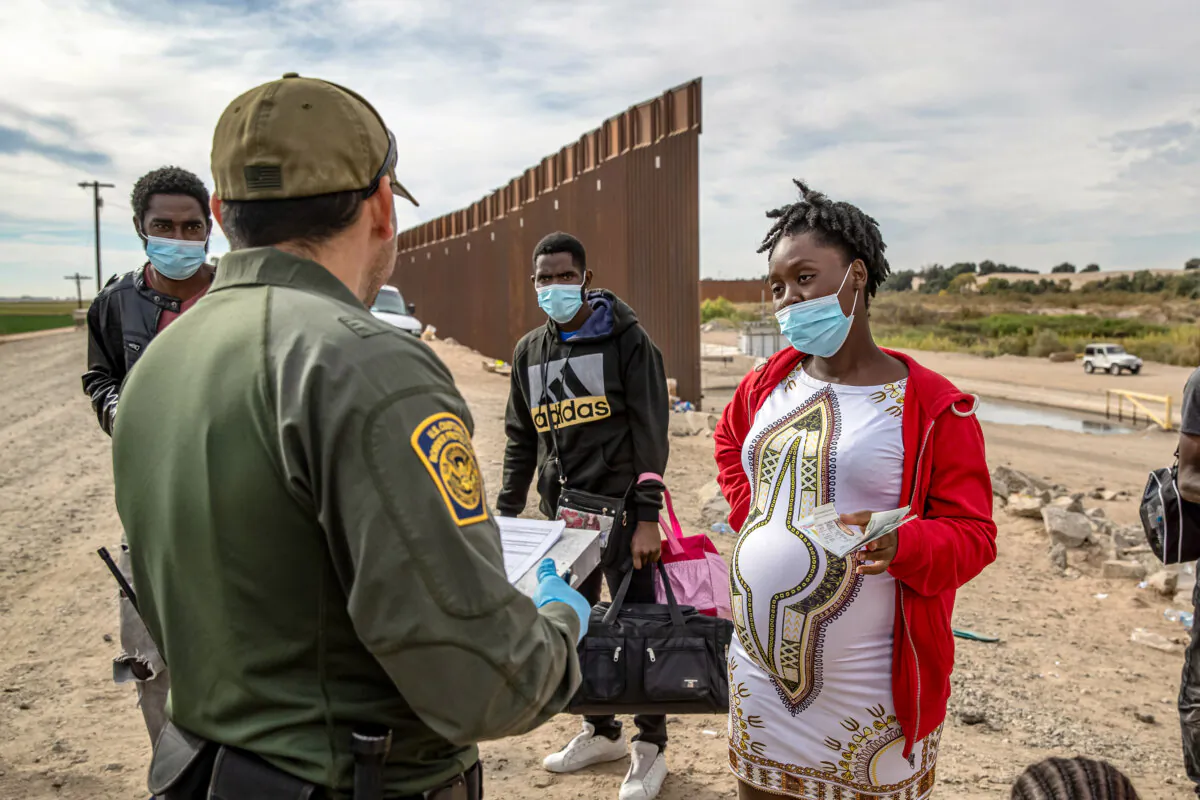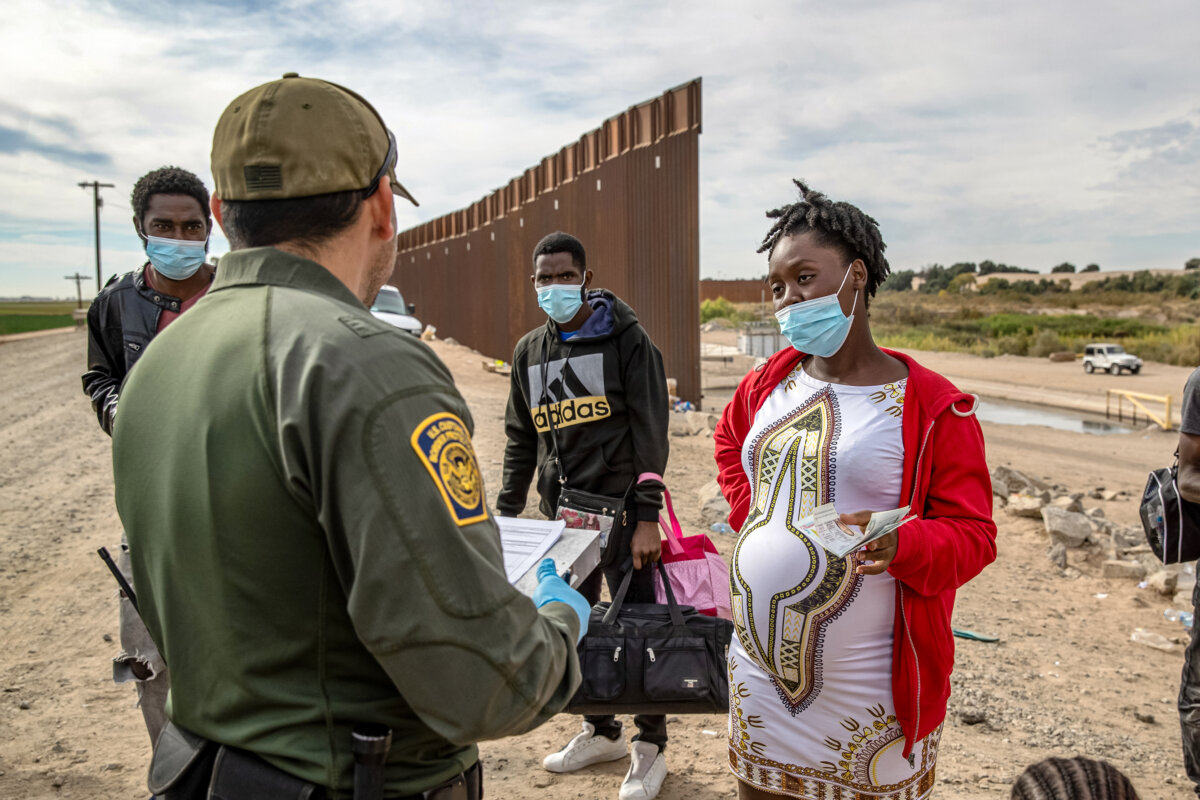

The Department of Homeland Security (DHS) is ending family reunification parole programs for immigrants from Colombia, Cuba, Ecuador, El Salvador, Guatemala, Haiti, and Honduras and their immediate family members, U.S. Citizenship and Immigration Services stated in an alert on Dec. 12.
The family reunification parole (FRP) program aims to help U.S. citizens and lawful permanent residents bring their foreign family members to the United States as a first step toward obtaining permanent residency. This is a temporary authorization to enter and remain in the United States.
Once in the country, they can adjust their residency status while applying for a green card or other eligible programs.
U.S. Citizenship and Immigration Services (USCIS) said security gaps in the FRP program, caused by insufficient vetting of applicants, enable malicious actors to exploit these vulnerabilities to enter the United States, posing “an unacceptable level of risk” for the country.
“This administration is ending the abuse of humanitarian parole, which allowed poorly vetted aliens to circumvent the traditional parole process,” USCIS said.
“Parole was never intended to be used in this way, and DHS is returning parole to a case-by-case basis as intended by Congress. Ending the FRP programs is a necessary return to common-sense policies and a return to America First.”
According to USCIS, if an immigrant was paroled into the United States under FRP and his or her parole is not set for expiry before Jan. 14, 2026, it will be terminated on that date.
The only exception is if the immigrant has a pending Form I-485, Application to Register Permanent Residence or Adjust Status, on Jan. 14, that was filed on or before Dec. 15, USCIS said.
In such situations, the immigrant’s parole will continue until its expiry or until authorities make a final decision on the application status, whichever occurs first.
If authorities deny Form I-485, the immigrant’s parole period is terminated, and he or she must leave the country immediately, the agency said. When the parole ends, the immigrant’s employment authorization will likewise be revoked.
“The desire to reunite families does not overcome the government’s responsibility to prevent fraud and abuse and to uphold national security and public safety,” USCIS said.
“DHS is prioritizing the safety, security, and financial and economic well-being of Americans.”
This is one of the latest actions taken by the Trump administration to tackle the United States’ immigration issues.
On Dec. 12, the DHS said its secretary, Kristi Noem, was terminating the Temporary Protected Status (TPS) for Ethiopians. TPS allows foreign nationals to temporarily live and work in the United States if their home nations experience natural disasters, armed conflict, or other extraordinary conditions that prevent their return.
Under the previous administration, TPS was expanded to cover hundreds of thousands of migrants from nations such as Haiti, Ukraine, Venezuela, and Afghanistan. In recent months, DHS terminated TPS for nationals from Haiti, Venezuela, Burma, Syria, and South Sudan.
Changing Immigration Policies
The Trump administration has faced legal setbacks over its immigration policies.
On Nov. 19, Judge Katherine Polk Failla of the U.S. District Court for the Southern District of New York temporarily blocked the administration from ending TPS benefits for more than 6,000 Syrians while a legal challenge to the termination proceeded, observing that the abrupt termination was likely illegal.
Failla said the government had, in a matter of months, ended TPS for hundreds of thousands of immigrants from several countries, suggesting the administration was not giving careful consideration to each case, as is mandated by federal regulations.
In the case of Syrian TPS beneficiaries, the judge said that DHS had not followed proper procedures to revoke the status, such as reviewing the conditions in Syria, and that the TPS termination decision was influenced by political considerations.
The administration has appealed the case to the Court of Appeals for the Second Circuit.
In a Dec. 12 post on X, DHS said the previous administration “recklessly accelerated” refugee admissions from nations with terror and gang problems, including Somalia, failing to prioritize rigorous vetting of who comes in.
Currently, Noem is taking what she said is corrective action to ensure that “those who are present in the United States deserve to be here,” DHS said.
USCIS had announced on Dec. 5 that it was setting up a new specialized unit to tighten immigration screening.
The initiative aims to strengthen the ability of the country’s immigration system to screen for criminal aliens, terrorists, and other foreigners who pose “potential threats to public safety or who have committed fraud or other crimes.”
The upcoming facility, the USCIS Vetting Center, headquartered in Atlanta, will draw upon the full spectrum of classified and nonclassified screening and vetting capabilities when fully operational.
Under the previous administration, the agency was “pushed to expedite the immigration and naturalization processes with little regard for how that affected national security and the safety of [U.S.] communities,” USCIS Director Joseph B. Edlow said.
“We changed that approach on day one of the Trump administration. Under President [Donald] Trump, we are building more protective measures that ensure fraud, deception, and threats do not breach the integrity of our immigration system.”
 Friends Read Free
Copy
Facebook
Tweet
Friends Read Free
Copy
Facebook
Tweet