
The Democratic National Committee (DNC) said it aims to build a network of 10,000 online content creators by the end of November 2026, part of a push to expand the party’s digital messaging before the midterm elections.
The plan was laid out in a June 3 post from Matt Rein, the DNC’s influencer and creative partnerships director, who said the party’s creator program has grown from 25 participants at its relaunch in mid-2025 to a flagship messaging group of 550 creators with a combined following of more than 75 million.
Rein said his role is to work with online creators to carry Democratic messaging “across the new media landscape,” and that the committee built the network to counter what he described as “a massive and well-funded right-wing media machine.”
The party’s goal, Rein wrote, is to “identify and engage 10,000 creators across many different niches, from politics and news to lifestyle and sports,” so that every Democratic candidate and state party would have a creator network ready to deploy in the midterms.
He outlined four priorities for the program: building long-term relationships with creators, supplying daily clips and guidance, connecting creators with elected officials, and deploying the network to help state parties and committees.
Rein pointed to recent activity as evidence of the program’s reach.
In Texas, he wrote, the DNC sent 10 local creators to cover congressional redistricting hearings, producing content he said drew more than 1 million views. The committee has hosted 25 sponsored events, including a Latino creator roundtable in Los Angeles, briefings with figures such as Sen. Ruben Gallego (D-Ariz.) and former Attorney General Eric Holder, and a creator panel featuring Carlos Eduardo Espina at the party’s spring meeting in New Orleans.
The effort follows the 2024 election in which analysts said online creators played a growing role. Both parties invited influencers to their conventions in 2024, and both President Donald Trump and Vice President Kamala Harris’s campaigns utilized influencers as part of their strategy.
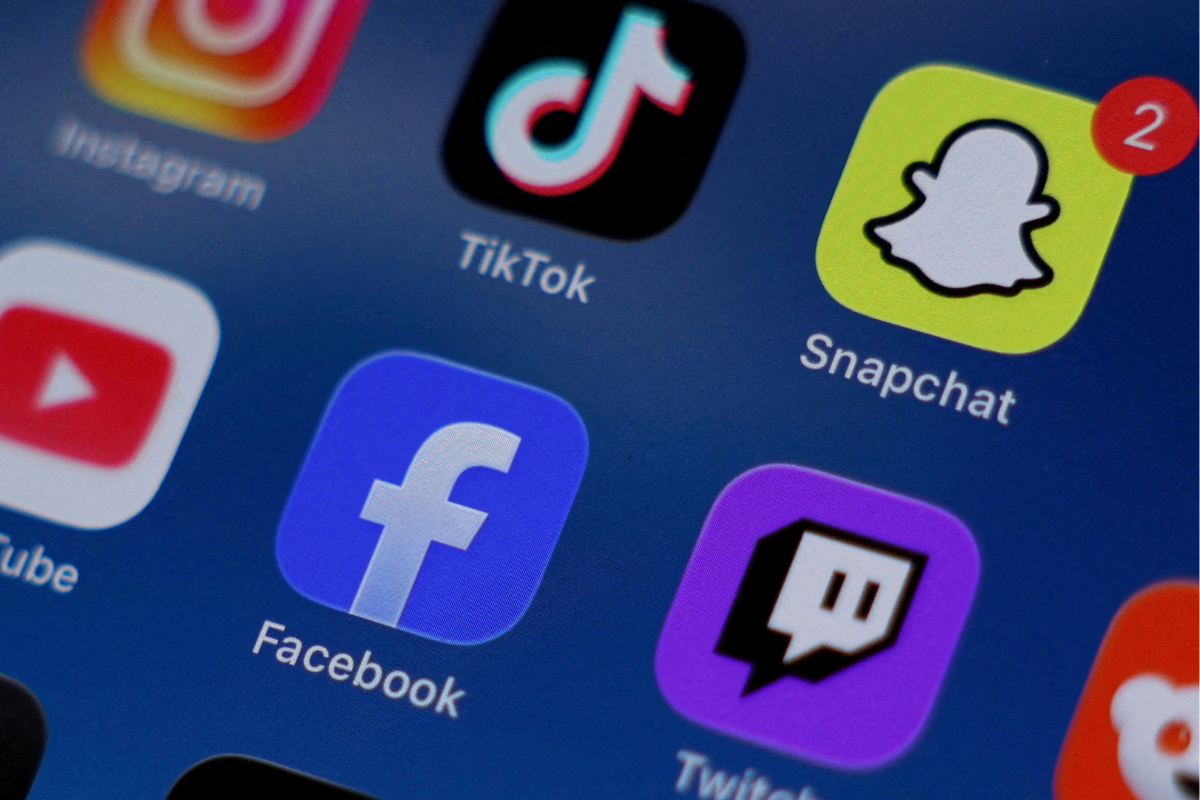
Rein framed the expansion as a response to shifts in how Americans consume news. The post said 58 percent of Americans prefer to get news from digital devices, “surpassing TV, radio, and print combined,” and that one in five Americans, and nearly 40 percent of adults under 30, “now rely on social media creators for their political news.”
The post did not cite a source, but the figures appear to align with Pew Research Center figures.
Pew found that 86 percent of U.S. adults get news at least sometimes from a smartphone, computer, or tablet, including 56 percent who do so often, making digital devices the most common way Americans get news, while 64 percent get news from television at least sometimes.
Pew separately found that about one in five U.S. adults and 37 percent of those ages 18 to 29 regularly get news from news influencers, based on a survey conducted in summer 2024.
The same survey showed slightly more news influencers explicitly identified as Republican, conservative, or pro-Trump (27 percent) than as Democratic, liberal, or pro-Harris (21 percent).
The expansion comes as the DNC works to rebuild its finances. The Epoch Times previously reported, based on Federal Election Commission filings, that the national committee carried net debt while the party’s congressional campaign committees held larger cash reserves.
The June 3 post did not detail the program’s budget or say whether the DNC compensates the creators in its network. Rein wrote that the party remains “lagging behind the infrastructure that the right has built over decades.”
In response to their strategy, Republican National Committee National press secretary Kiersten Pels said in an email to The Epoch Times, “The DNC is millions of dollars in debt, yet their answer appears to be spending even more money on the same influencer strategy that failed in 2024. Democrats’ own leaked autopsy report made clear that voters rejected their approach and yet they’re doubling down on them.”
The DNC did not respond to The Epoch Times’ request for comment on this report.
 Friends Read Free
Copy
Facebook
Tweet
Friends Read Free
Copy
Facebook
Tweet