
The Democratic National Committee (DNC) announced on Aug. 14 that it is creating a Southern States Resource Hub, a program the committee says will give Democratic state parties across the South help with hiring, fundraising, voter data, and messaging.
The committee said the hub is meant to address years of underinvestment in Southern state parties and to prepare them for the 2026 midterms, the 2028 presidential race, and beyond.
The DNC did not say how much the program will cost. The Epoch Times has asked the committee for a figure.
DNC Chair Ken Martin said in a statement that the committee is directing resources toward the South because of where the country’s population is heading.
“I like to say Democrats need to skate to where the puck is going, and for the future of politics in this country, one thing we know is that the puck is heading to the South,” Martin said. “The new DNC Southern States Resource Hub is a historic investment to ensure Democratic state parties in the South have the resources they need to compete, protect voters, and win, because lasting power is built long before Election Day.”
According to the announcement, the hub has four parts.
On staffing, the DNC said it will connect Southern state parties and coordinated campaigns to a centralized pool of prospective entry- and mid-level staff through two existing programs, BlueMatch and the Battleground Leadership Project. The committee said its Organizer Bootcamps have trained hundreds of organizers in the South to date.
On fundraising, the DNC said it will give several Southern states individualized support and professional design resources to build fundraising materials and what it described as sustainable financial programs.
On data, the committee said its data team will provide state-specific voter contact strategies and voter registration analysis to help states find opportunities to expand the electorate.
On messaging, the DNC said it will share findings from its voter-listening calls with Southern state parties, drawing on conversations with hundreds of thousands of voters in battleground communities and focusing on black and Latino voters.
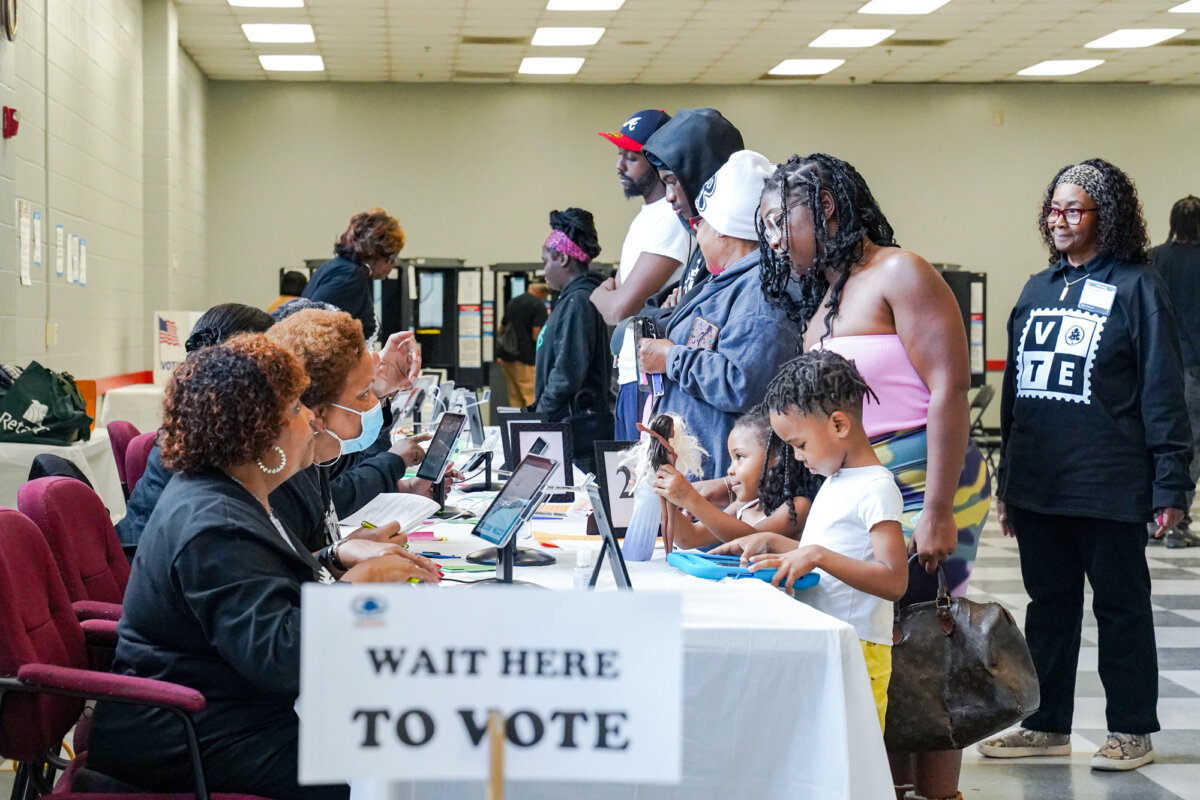
The committee also said it is focused on Southern voters whose political power it accused Republicans of suppressing through redistricting and stricter voter ID laws.
The Court Ruling Behind It
The DNC said the hub is part of its response to the Supreme Court’s decision in Louisiana v. Callais.
The court ruled 6–3 on April 29 that Louisiana’s congressional map, which included a second majority-black district drawn to comply with Section 2 of the Voting Rights Act, was an unconstitutional racial gerrymander. Justice Samuel Alito, writing for the majority, held that plaintiffs bringing Section 2 vote-dilution claims must show that a state intentionally redistricted to reduce the opportunity for minority voters to elect their preferred candidates.
Justice Elena Kagan, in a dissent joined by Justices Sonia Sotomayor and Ketanji Brown Jackson, wrote that the ruling made “a nullity of Section 2” and threatened “a half-century’s worth of gains in voting equality.”
Several state legislatures have since considered or enacted changes to their maps that have eliminated Democratic-held districts ahead of the 2026 congressional elections in line with the court’s ruling—as other states have moved in the opposite direction to reduce or eliminate Republican-held districts.
Existing Southern Spending
The DNC noted programs it has expanded under Martin, including the State Partnership Program, the Red State Fund and the NextWave Regional Bootcamp.
Under the State Partnership Program, state parties receive $17,500 per month, which the committee said is a $5,000 monthly increase over previous years. The Red State Fund adds $5,000 per month for parties in Republican-controlled states, bringing their total to $22,500 per month.
The committee said state parties are using the money to hire organizers, communications staff and voter protection teams, and to build voter registration programs and volunteer networks.
The South and the 2028 Calendar
The announcement follows a months-long argument inside the party over the South’s place in presidential politics.
Twelve state parties applied in May for early slots on the 2028 presidential nominating calendar, and five of the applicants were Southern states. North Carolina Democratic Party Chair Anderson Clayton told the DNC Rules and Bylaws Committee at the time that “by the next census, four out of every 10 Americans is going to live in the South,” and that the party would have to compete there to build lasting power.
Census Bureau estimates show the South is already the nation’s largest and fastest-growing region, home to about 39 percent of Americans. The DNC linked its 40 percent claim to projections released in July by the University of Virginia’s Weldon Cooper Center, which project the South’s share of the U.S. population rising from 38.1 percent in 2020 to 42.7 percent in 2050. The center’s report does not give a figure for 2030.
Georgia Democratic Party Chair Charlie Bailey told the committee earlier this year, “If you win Georgia, you win the country.” Tennessee state Sen. London Lamar (D-Memphis) said, “If we win the South, we take the nation every single presidential election.”
The Rules and Bylaws Committee voted on July 24 to have South Carolina open the 2028 calendar, with 26 votes to Nevada’s 19 and New Hampshire’s four. The panel also expanded the early window from five states to six. In the approved order, South Carolina is projected to vote Jan. 22, 2028, followed by Nevada, New Hampshire, New Mexico, Michigan, and Virginia.
DNC members are meeting this week in Austin, Texas, for the committee’s summer meeting, where the full body is scheduled to ratify the calendar.
 Friends Read Free
Copy
Facebook
Tweet
Friends Read Free
Copy
Facebook
Tweet