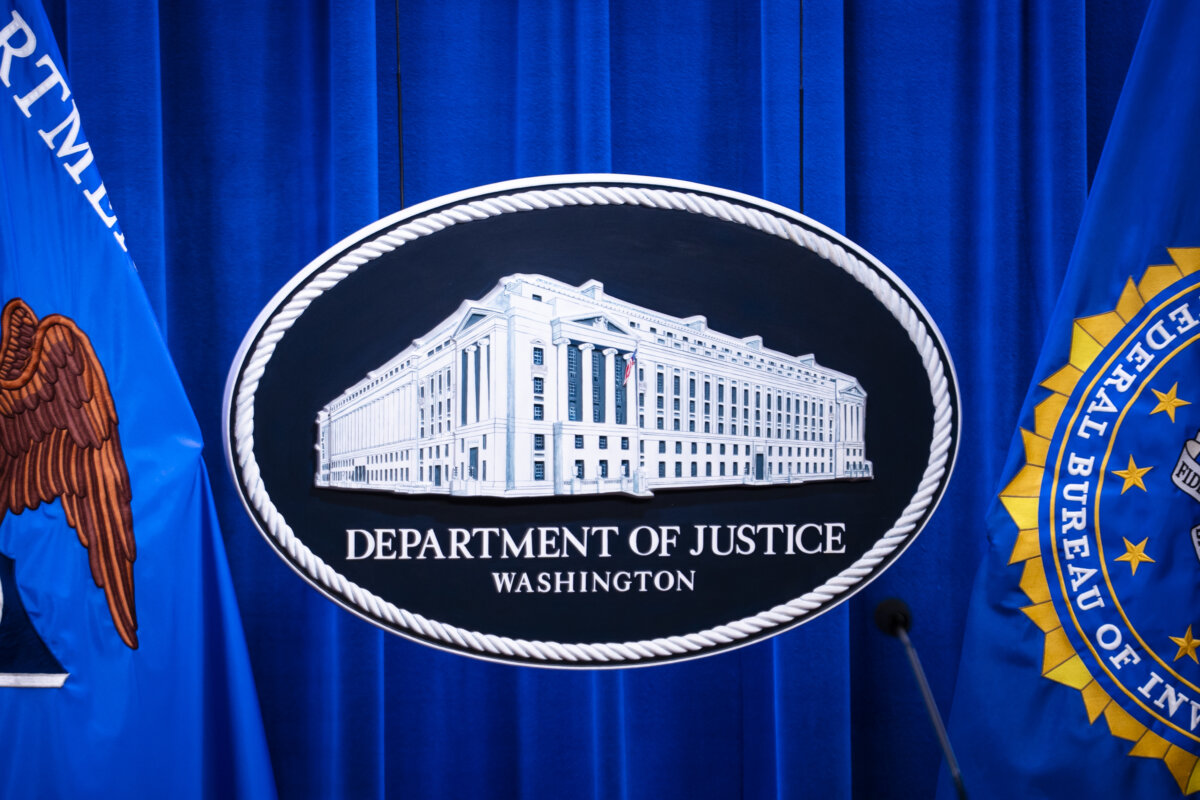

The Department of Justice (DOJ) filed a complaint on May 13 against the D.C. Bar, alleging that it has acted as a “partisan arm of leftist causes.”
According to the DOJ, the agency seeks to advance President Donald Trump’s directives to end the weaponization of the federal government while nullifying the D.C. Bar’s prosecution of former Assistant Attorney General Jeff Clark.
D.C. Disciplinary Counsel Hamilton P. Fox III, the D.C. Office of Disciplinary Counsel, the D.C. Court of Appeals, the District of Columbia itself, the D.C. Bar, and others are named as defendants and accused of unlawfully prosecuting Clark based on his internal deliberations of potential fraud in the 2020 presidential election.
The Epoch Times reached out to the D.C. Bar for comment and was referred to the D.C. Board on Professional Responsibility, which did not respond to a request for comment.
Clark wrote a draft letter for his litigation on potential fraud, which was never issued, and the D.C. Court of Appeals’ disciplinary authorities punished him over it, according to the complaint.
The D.C. Bar and others’ investigation and discipline of Clark were improperly based on “their disagreement with Mr. Clark’s performance of his discretionary Executive Branch duties, particularly with respect to a predecisional and deliberative document about potential election fraud in Georgia, which remains the subject of criminal investigation and civil litigation years later,” the complaint states.
Allowing proceedings against Clark to continue would mean state bar authorities can exert control over the executive branch, the DOJ stated.
“That is not the law,” the department stated.
The DOJ cited the supremacy clause of the U.S. Constitution, or preemption, as a cause for dismissing proceedings and discipline against Clark. Preemption, the DOJ stated, prevents states and the District of Columbia from regulating or interfering with federal officials performing their duties.
In the complaint, the DOJ also argued that a 2024 Supreme Court decision, Trump v. United States, offers protection for Clark.
In that landmark ruling, the justices said the president is entitled to absolute immunity “for conduct within his exclusive sphere of authority” because the president should have the “maximum ability to deal fearlessly and impartially with the duties of his office.”
The president would enjoy little immunity if federal attorneys could be targeted and disciplined for internal deliberations, the complaint said.
In the statement, the DOJ said this filing furthers Trump’s executive order “Ending the Weaponization of the Federal Government” and his presidential memorandum “Preventing Abuses of the Legal System and the Federal Courts.”
“The D.C. Bar will no longer be permitted to probe sensitive Executive Branch deliberations and target Executive Branch officials with whom they happen to politically disagree,” Associate Attorney General Stanley Woodward said. “Federal attorneys will once again be free to share their candid legal advice with their bosses and colleagues.”
In a similar case to Clark’s, the DOJ stated that it filed a statement in support of former interim U.S. Attorney Ed Martin, who is looking to have the D.C. Bar’s prosecution of him taken up in a neutral federal court.
The DOJ noted in its statement that three former attorneys general have acknowledged that the D.C. Bar’s push to discipline federal attorneys “for making recommendations, factual assertions, and providing legal advice during confidential internal agency deliberations on law enforcement and sensitive public policy” is “improper and constitutionally impermissible.”
“President Trump promised to put an end to the weaponization of the legal process, and today’s lawsuit against the D.C. Bar makes good on that promise,” Woodward said.
 Friends Read Free
Copy
Facebook
Tweet
Friends Read Free
Copy
Facebook
Tweet