
The Department of Education will make a one-time investment of more than $174 million in historically black colleges and universities (HBCUs) across the United States.
This is in addition to HBCUs’ regular annual federal funding, which already includes a share of the $255 million in permanent FUTURE Act money for HBCUs and other minority-serving institutions.
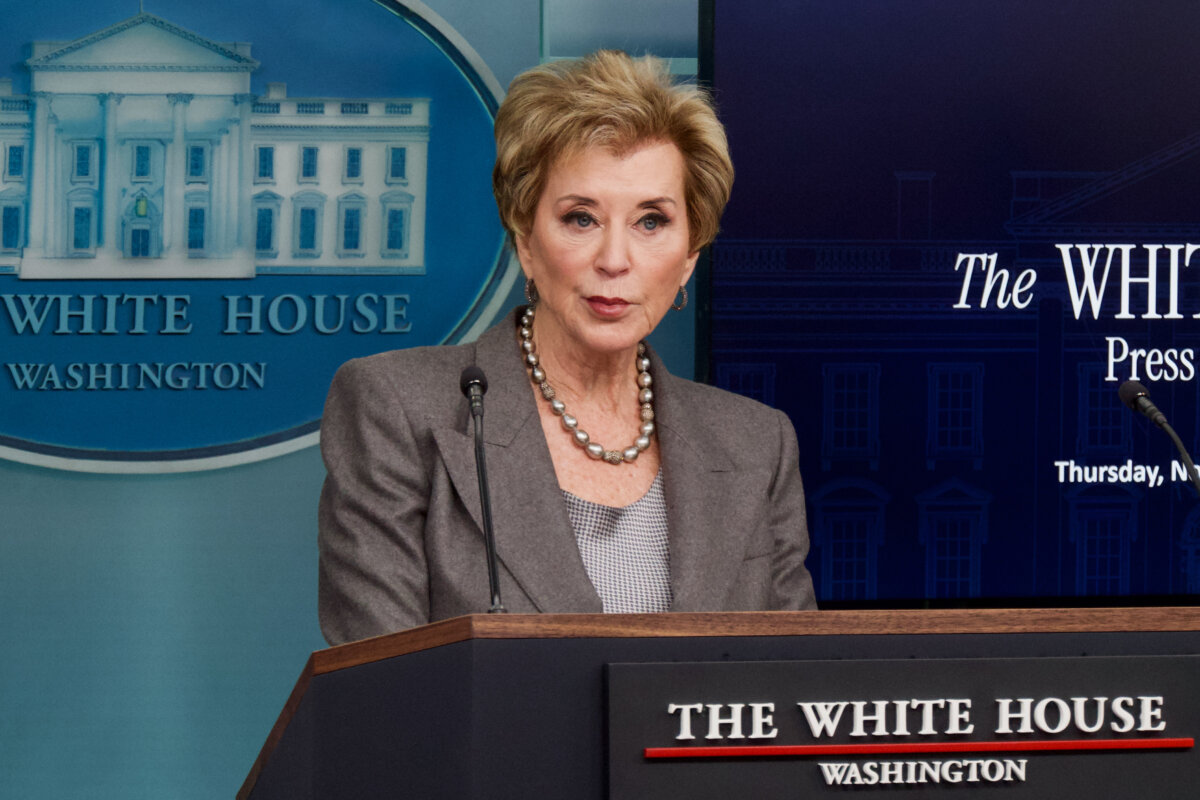
Secretary of Education Linda McMahon announced the investment at an HBCU summit at the White House, according to a Sept. 22 department statement.
“This new investment will help ensure these vital institutions have the resources they need to continue delivering world-class education and to prepare students for success in a rapidly evolving economy,” McMahon said.
“For nearly 200 years, HBCUs have been engines of opportunity in communities, advancing critical innovations and uplifting local industries across the nation.”
In April 2025, President Donald Trump signed an executive order, the “White House Initiative to Promote Excellence and Innovation at Historically Black Colleges and Universities,” to support HBCUs.
The order established the White House Initiative on HBCUs to boost these institutions’ ability to deliver high-quality education, according to an April 2025 White House fact sheet.
One focus area of the initiative is addressing barriers HBCUs face in receiving federal and state grant dollars. The effort also seeks to improve these institutions’ competitiveness for research and development funding.
The latest $174 million funding follows another one-time investment of $438 million last year for HBCUs. For fiscal years 2025 and 2026, the Trump administration has committed a combined one-time investment of more than $612 million for these institutions.
Besides HBCUs, the Trump administration will make a one-time award of more than $61 million in extra funds for tribally controlled colleges and universities.
Civil Rights Review
Meanwhile, the Trump administration is reviewing some college programs that give benefits to HBCU graduates, saying they may violate race-neutral rules.
Last month, the Department of Justice said it opened a civil rights review of the Virginia-based College of William & Mary over certain student benefits and scholarships that it said could use race as an eligibility criterion.
One program under scrutiny is the college’s Lemon Legal Scholars Program, which offers financial assistance and mentorship to HBCU graduates admitted to the law school’s J.D. program.
Responding to the DOJ review, William & Mary said in an Aug. 17 statement it was committed to “nondiscriminatory learning environments across our campus” and that the institution complies with all federal and state regulations.
As of 2022, there were 99 HBCUs in the United States, spread across 19 states, the U.S. Virgin Islands, and the District of Columbia, according to data from the National Center for Education Statistics. While HBCUs were initially established to educate black students, the institutions also enroll students of other races.
A key challenge faced by HBCUs has been federal research funding, according to a September 2025 report from the Center for American Progress.
In fiscal year 2023, HBCUs received 0.91 percent of federal research and development spending allocated to colleges and universities despite making up 3.2 percent of four-year, degree-granting colleges and universities, the center said.
The United Negro College Fund (UNCF) welcomed the latest $174 million funding from the Trump administration in a Sept. 22 statement. Dr. Michael L. Lomax, UNCF president, commended Trump and McMahon for prioritizing HBCUs.
“The needs on HBCU campuses are too severe; but this investment will surely yield a great return. Our grateful community is appreciative, and we look forward to investing the funds well into our campuses, programs, and most importantly, our students,” Lomax said.
 Friends Read Free
Copy
Facebook
Tweet
Friends Read Free
Copy
Facebook
Tweet