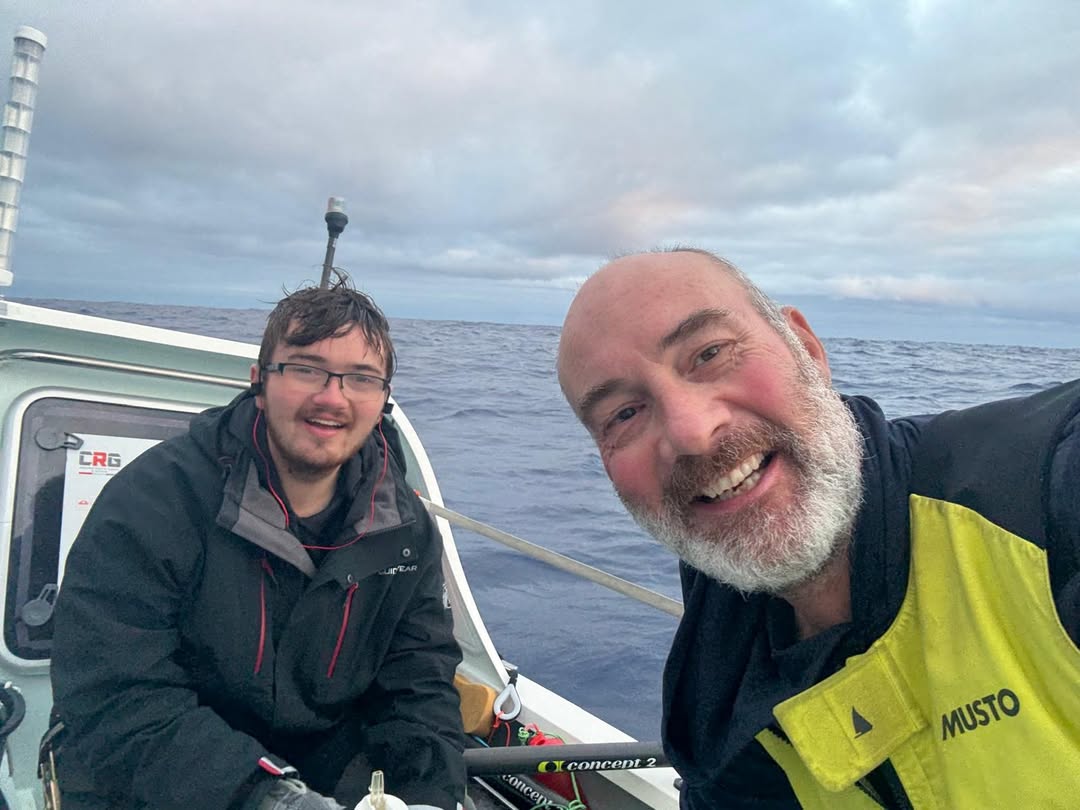

In an endeavor that could be the first father-son team to row across the Pacific, Tim Crockett and his 19-year-old son, Harrison, rowed 2,400 nautical miles from Sausalito, California, to Hilo, Hawaii, in a 24-foot boat. Their mission is to campaign and support veteran mental health and the adjustment back to civilian life.
From June 3 to July 20, they were on their own at sea, battling physical and mental exhaustion for 48 days.
“Somebody’s rowing constantly for two hours, and then somebody is in the cabin, either sleeping, resting, or having to do other little jobs up on deck,” Tim Crockett told The Epoch Times. “So on a good day or a good shift, you may be lucky to get about an hour’s worth of real sleep, but yeah, sort of catnapping throughout the day.”
Crockett, 53, a veteran of the UK Special Forces, reconnected with an old military friend in late 2016. Six weeks later, he learned the friend had died by suicide. After that, Crockett decided to honor his memory with a solo trip across the Atlantic in 2018.
From then on, he has been dedicated to raising awareness for veteran mental health and fundraising through a campaign called “Tame the Kraken.” Crockett says the mythological creature is an analogy for post-traumatic stress disorder, the dark monster many veterans must face and overcome.
He said his son, who was intrigued by the expedition, prepared well mentally and physically for the trip, and so he was not afraid.
“He said he was never really scared. … [It was] just kind of exhilarating,” Crockett said. “And now that we’re here and safely back on dry land, hopefully we’ll get verification that he’ll be the youngest person to ride the Pacific. He’s got the bragging rights now, but he could start talking to his friends and everyone else.”
Tim Crockett’s wife, however, was nervous, but according to her husband, she knew they had been preparing and had the potential to undertake the journey.
“I’m allowed to go off and do something crazy every 10 years or so, and she knows that I’m prepared for that sort of stuff. Her baby boy? Now that is a different dynamic. So yes, I was told, make sure you bring my baby back in one piece,” he said.
Like most such endeavors, this one was not without challenges. There was the possibility of power loss, equipment damage, shark or whale encounters, and large ship impacts. Leaving San Francisco, they had to navigate through 40- to 50-foot waves that threatened to capsize their boat. They also experienced trying weather conditions. According to Crockett, during the 48 days, they only saw the sun about four to five times, due to a lingering gray overcast, which caused the sea to churn and become choppy.
“It was that constant and relentless grind for at least 45 days that I think was the hardest part of our crossing, because we always thought, oh, tomorrow is going to be better. Well, tomorrow never came,” he said. “While there is some physicality to rowing an ocean, it is very much a mental challenge. And then when you add in exhaustion and sleep deprivation, you really do have to be sort of disciplined and be focused to make sure that you’re not doing anything silly that could put you at risk.”
Onboard, they had a water maker that sucked in seawater, extracted most of the impurities, and created drinking water. It relied on solar power to generate about 3 to 4 gallons of water every day. In the event that there wasn’t enough sun to maintain their battery levels, they could resort to a hand pump. They had a solar-powered GPS and beacons to let nearby ships know their position to avoid a collision.
They ate a variety of freeze-dried camping food, energy bars, and fruit cups to replenish the 5,000 to 7,000 calories they burned each day.
When they made land in Hawaii, Tim Crockett’s wife, daughter, nephew, local residents, and veterans were there to greet them.
“When we sort of came closer to the shore, I kind of popped flares, and we just heard this huge roar of applause from the beach, [from] the hotel that we came into,” Crockett said, adding that there was a huge gathering. “We had a full blessing. We had Miss Hawaiian Teen singing the National Anthem and greeting us. There’s so many people here, and I just want to thank the local community here. It was such a great welcome.”
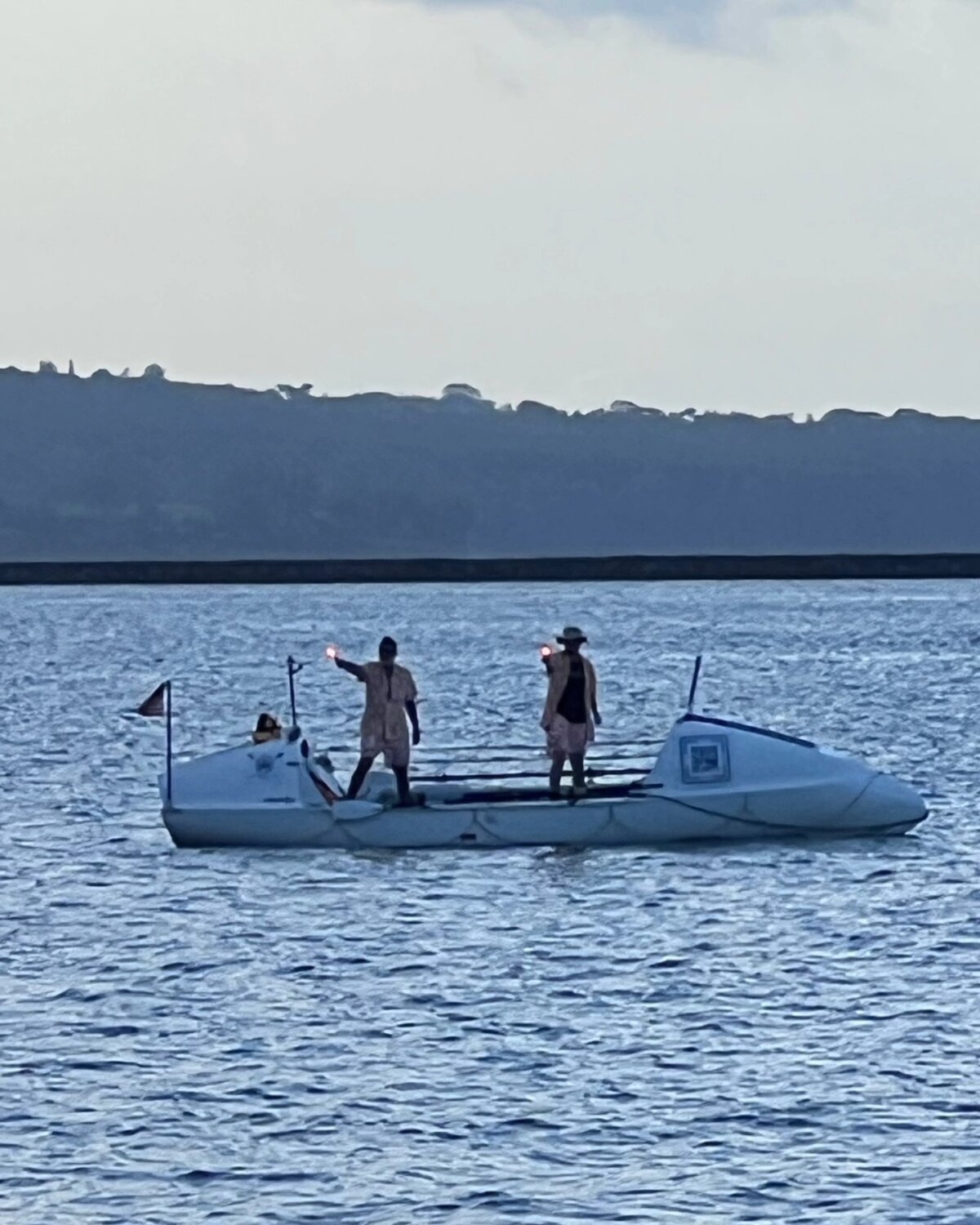
The first thing Tim Crockett wanted to eat was fresh fruit and a BLT. Harrison wanted a cheeseburger, fresh fruit, and a cold drink. He also said they looked forward to a soft, comfortable bed and a shower—things most people take for granted.
After they finish cleaning, packing, and doing some sightseeing, they will fly back home from Honolulu to Atlanta, Georgia, on Thursday, July 24.
Would they do this trip again? Crockett said it would be better to ask again in a few weeks after he had time to recover. But he left the possibility open for the future.
Back in Georgia, he will continue to volunteer as a coach at Atlanta’s rowing club. Through fundraising, he and his campaign will buy rowing equipment and provide training for veterans and others who are interested in rowing in their local communities without having to join a club.
“I think most veterans, a lot of what they’ve suffered is compounded by that lack of community when they do leave the service. So we want to try and create those opportunities where people can come back together and just talk through things, share experiences, and have the benefits of rowing,” Crockett said, adding that everyone can benefit from some physical exercise.
 Friends Read Free
Copy
Facebook
Tweet
Friends Read Free
Copy
Facebook
Tweet