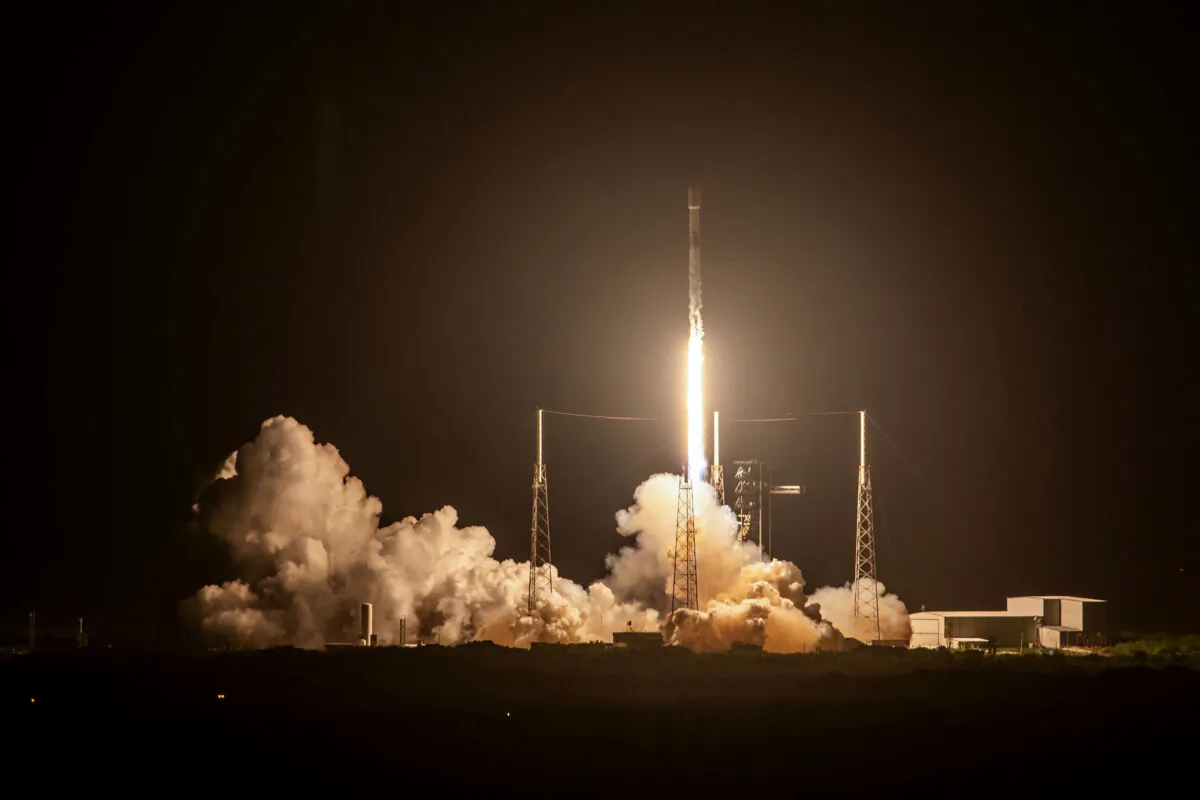

The Federal Communications Commission (FCC) granted Elon Musk-founded Space Exploration Holdings, LLC, popularly known as SpaceX, authorization to advance its second-generation Starlink satellite system through deploying an additional 7,500 satellites, according to a Jan. 9 news release from the agency.
The announcement marks a “significant milestone” in global broadband connectivity, with the latest deployment taking the total number of SpaceX satellites to 15,000 worldwide.
In 2020, SpaceX sought approval to deploy nearly 30,000 satellites. FCC denied full approval in 2022 and limited the company to 7,500 initially to “address concerns about orbital debris and space safety,” promote competition, and to protect spectrum and orbital resources for future use.
The new satellite expansion allows SpaceX to “deliver high-speed, low-latency internet service globally, including enhanced mobile and supplemental coverage from space.” Existing satellites can be upgraded with new technology, and the space company can operate across multiple frequencies, supporting both Fixed Satellite Service and Mobile Satellite Service, according to the FCC statement.
The recent development follows Starlink’s announcement that it has begun lowering its satellite constellation to around 480 kilometers from the current 550 kilometer orbit. This aims to increase space safety through lowering the amount of ballistic decay of the satellites and reducing the number of debris objects floating in space, which in turn, reduces the “aggregate likelihood of collision,” according to a post on X by Michael Nicolls, vice president for Starlink Engineering.
The latest FCC approval allows SpaceX to add “new orbital shells at altitudes ranging from 340 km to 485 km, optimizing coverage and performance,” while providing “direct-to-cell connectivity outside the United States and supplemental coverage within the U.S., paving the way for next-generation mobile services.”
According to the company, Starlink operates the world’s largest satellite constellation in a low Earth orbit to deliver low-latency global broadband internet.
The company connected more than 4.6 million new active customers in 2025, with a total connectivity of around 9.2 million people in more than 155 countries.
“President Trump is restoring America’s technology leadership,” said FCC Chairman Brendan Carr. “And this FCC authorization is a game-changer for enabling next-generation services. By authorizing 15,000 new and advanced satellites, the FCC has given SpaceX the green light to deliver unprecedented satellite broadband capabilities, strengthen competition, and help ensure that no community is left behind.”
Starlink’s services have come in handy to people in regions facing unrest and natural disasters.
Recently, in Iran, where protests against the Islamic regime are ongoing, the country’s leaders have curbed access to internet and telephone services. Protesters are calling for overthrowing the current regime presided over by Iranian leader Ayatollah Ali Khamenei.
“Iran has now been offline for 96 hours, limiting reporting and accountability over civilian deaths as Iranians protest and demand change; fixed-line internet, mobile data and calls are disabled, while other communication means are also increasingly being targeted,” reads a Jan. 12 post on X by internet watchdog NetBlocks.
On Jan. 11, President Donald Trump said he was talking with Musk to restore internet access in Iran.
Starlink’s satellite service can offer users the ability to access the internet without any wired connection.
Connection continuity also enables the outside world to understand what’s happening in the country.
Starlink has also been widely used in Ukraine, and more recently, the company offered free services in Venezuela after Trump captured former leader Nicolás Maduro.
 Friends Read Free
Copy
Facebook
Tweet
Friends Read Free
Copy
Facebook
Tweet