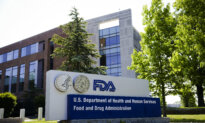

A top Food and Drug Administration official is doing a good job, the agency’s commissioner said on Feb. 26 after new rejections of drug applications prompted fresh criticism of the official.
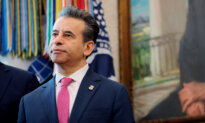
Dr. Vinay Prasad, head of the FDA’s Center for Biologics Evaluation and Research, is being subjected to a smear campaign, Dr. Marty Makary, the FDA’s commissioner, said during an appearance on CNBC’s “Squawk Box.”
“Vinay Prasad loves President Trump. He did support Bernie Sanders in the past. But he saw the incredible revolution with President Trump, and is an ardent supporter of President Trump,” Makary said when a host brought up how Prasad has in the past expressed support of Sen. Bernie Sanders (I-Vt.), a socialist, and socialized medicine.
“Just listen to his podcasts for the last four years, you’ll see that he has been an ardent supporter of everything President Trump has done and [is] trying to do,” Makary said.
Prasad, a professor at the University of California–San Francisco, became well known during the COVID-19 pandemic for views on related issues, including COVID-19 vaccines and vaccine side effects. He has repeatedly criticized the FDA for not demanding stronger evidence from vaccine manufacturers and approving certain drugs despite questionable clinical trial data.
Makary said that the government is focused on employing “the best scientific minds” and that Prasad “is a genius.”
Prasad joined the FDA in 2025 after Makary was confirmed as FDA commissioner. He departed in July 2025 after some Republicans pointed to some of his social media posts, including a 2022 post that outlined how he supported the Democratic Party stance on issues such as abortion and immigration.
Prasad rejoined the FDA several weeks later, with backing from Makary.
Prasad in recent days has faced a fresh round of criticism for the initial rejection of an application from Moderna for its experimental influenza vaccine, and the FDA’s decision to decline to approve certain other drugs.
“Dr. Prasad seems to believe the cost for drugs that receive accelerated approval exceed their benefits and that nothing short of large double-blind randomized controlled trials should be sufficient to prove a medicine’s efficacy,” the Wall Street Journal editorial board said on Feb. 24. “The result is that the FDA is squashing many promising orphan drugs.”
Makary said that the rejections with which Prasad has been involved were for drugs that showed no efficacy in testing, including one that was injected through a hole drilled in test subjects’ skulls.
“The randomized, clinical trial at the end of the randomization period found no benefit,” Makary said, adding that he has sympathy for patients seeking treatments, “but we’re not going to go ahead and approve something … that has morbidity associated with it if the clinical trial was stone cold normal.”
He said, “The process is pretty simple: If your drug works, it’s going to get approved by the FDA.”
 Friends Read Free
Copy
Facebook
Tweet
Friends Read Free
Copy
Facebook
Tweet