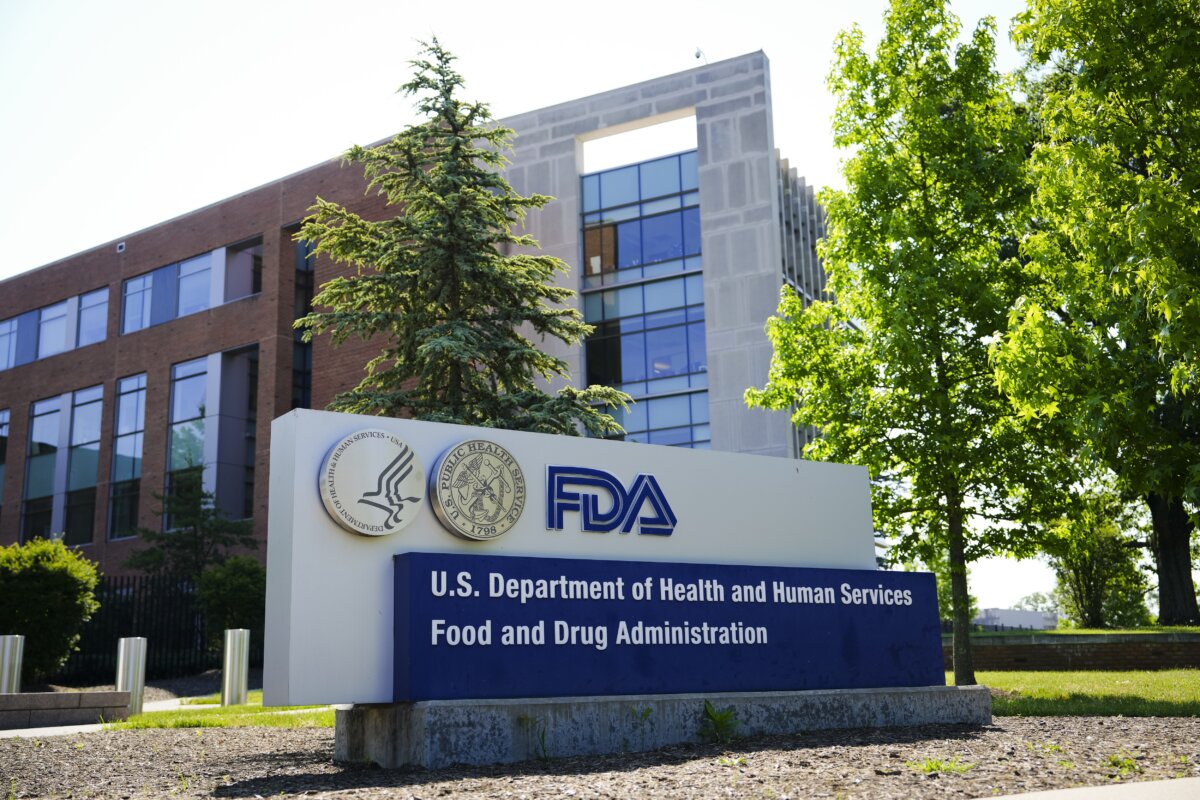

U.S. regulators on Feb. 23 formally unveiled a plan for speeding up the process of bringing drugs aimed at rare diseases to market.
The Food and Drug Administration (FDA) in draft guidance stated that it is proposing to make it easier to secure approval of genome editing and ribonucleic acid-based therapies for rare genetic disorders, or conditions that affect fewer than 200,000 people in the country.
Because of the limited number of patients, it may not be feasible to carry out randomized, controlled trials, the typical practice of confirming whether therapies work, the officials said.
Alternative forms of evidence, such as responses to exposure as detected among biomarkers or in clinical outcomes, may be sufficient to win approval for the drugs under the new pathway.
“This guidance is a critical step the FDA is taking to tailor our regulatory approach to patients with ultra-rare conditions,” Dr. Marty Makary, FDA commissioner, said in a statement. “It is our priority to remove barriers and exercise regulatory flexibility to encourage scientific advances and deliver more cures and meaningful treatments for patients suffering from rare diseases.”
Health Secretary Robert F. Kennedy Jr. said the move was an example of cutting unnecessary red tape.
Officials said they were inspired by researchers who appeared to cure a genetic disease in a baby called KJ by developing a custom editing therapy and administering it at about 7 months and 8 months of age.
“We realized we could do this over and over again,” Dr. Kiran Musunuru, director of the Penn Cardiovascular Institute’s Genetic and Epigenetic Origins of Disease Program and one of the doctors who worked on the therapy, said at an event in Washington on Feb. 23.
Kennedy said during the event that the baby’s recovery was “a medical miracle” and that, after he heard about it, he directed the FDA to broaden the availability of such custom therapies.
“Every child facing rare genetic diseases deserves the kind of treatment that baby KJ got,” he said.
The FDA’s guidance will be published soon in the Federal Register at Regulations.gov. Upon publication, members of the public will have 60 days to submit comments on the proposed updated guidance.
The pathway was first discussed by Makary and Dr. Vinay Prasad, head of the FDA’s Center for Biologics Evaluation and Research, in late 2025 in an article they wrote for the New England Journal of Medicine. The officials at the time said they would consider clearing bespoke therapies if companies showed success with as few as several patients.
“An appropriately designed study with a small sample size can support licensure of a product for which pharmacologic effect is aligned with biologic plausibility and congruent with observed clinical outcomes,” they wrote at the time. “That philosophy, in essence, embodies the plausible mechanism pathway.”
In the draft guidance issued on Feb. 23, the FDA stated that the plan to quicken rare disease therapy development was jointly designed by the center headed by Prasad and the FDA’s Center for Drug Evaluation and Research, whose acting director is Dr. Tracy Beth Hoeg.
Hoeg said at the Feb. 23 event that officials hope that the change, if ultimately implemented, will result in the timeline for drugs developed for such conditions being “sped up dramatically.”
 Friends Read Free
Copy
Facebook
Tweet
Friends Read Free
Copy
Facebook
Tweet