
None of the more than 9,700 federal buildings managed by 22 large agencies reach a 60 percent utilization threshold, according to General Services Administration data.
Maintenance of delinquent properties and empty space have plagued America’s real estate portfolio for decades, said Edward Forst, administrator of the General Services Administration.
“[The department] has built a roadmap for federal agencies to operate under one roof and deliver what the American people expect—results that respect their tax dollars,” Forst said in a statement.
That begins with moving the General Services Administration and the Office of Personnel Management under one roof, the agencies announced on April 20.
Starting in July, the General Services Administration will temporarily relocate to the Theodore Roosevelt Federal Building, current home of the Office of Personnel Management. The agencies will share space during renovations of the General Services Administration’s current building, which both agencies will occupy in December 2028.
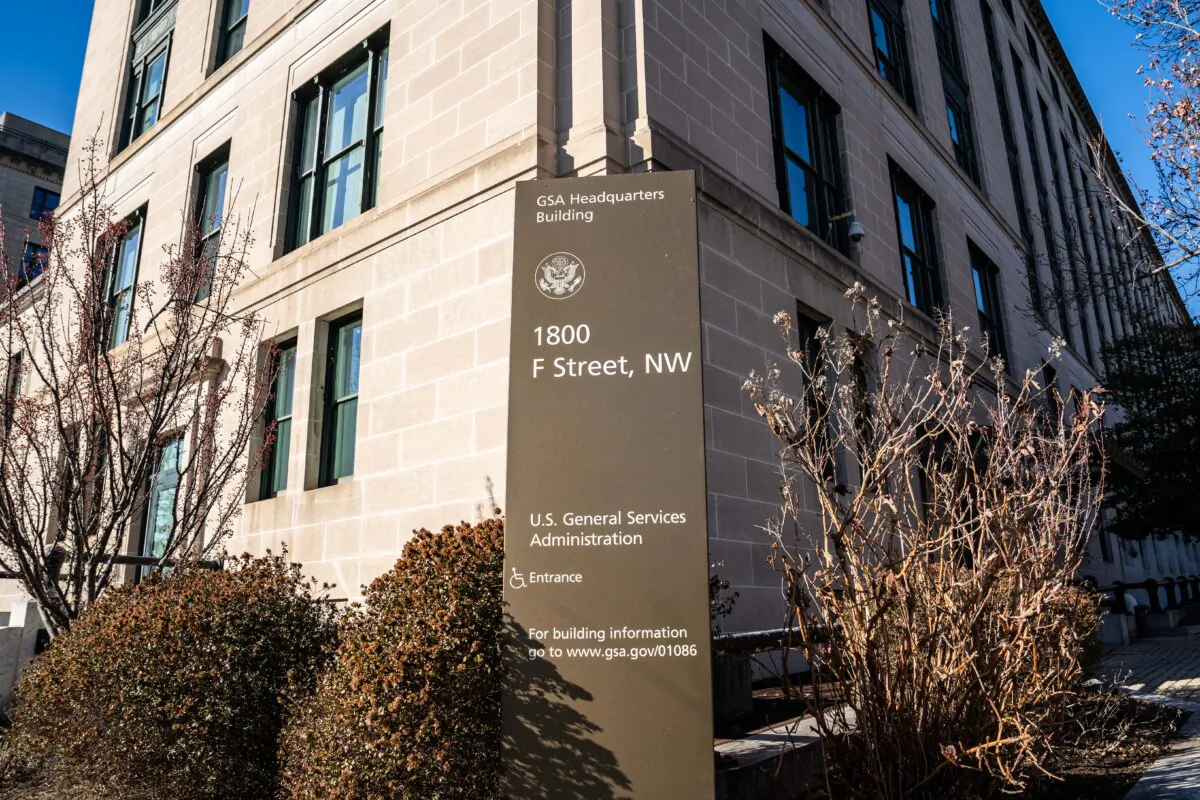
The General Services Administration’s current headquarters is located at 1800 F Street, near the White House. The 814,000-square-foot federal building was constructed in 1917 and is listed on the National Register of Historic Places.
The Theodore Roosevelt Federal Building will then be sold to reduce costs and unoccupied property.
The federal government is one of the largest property holders in the United States. Annual maintenance and operating costs for its 246,000 buildings exceeded $17 billion in fiscal year 2024.
Deferred maintenance and repair backlogs on these assets rose from $170 billion in 2017 to $370 billion in 2024.
Disposing of real estate that federal agencies do not need but continue to pay for has been a long-standing challenge, according to an April 9 report from the Government Accountability Office. The federal watchdog added unused government buildings to its high-risk list in 2025.
Selling Unused Properties
More than half of the sales of federal buildings completed since 2013 were accomplished in about one year, with 93 percent of the sales conducted via online auction. But some have taken more than 10 years to prepare and sell, according to the federal watchdog.
Securing funds for an agency to relocate is the most common reason disposals are delayed.
The longest delays typically occur when other government entities express interest in a property transfer or in using the property for public benefit purposes, according to the federal watchdog.
Offering the property to a government or an eligible nonprofit entity for public benefit purposes—such as educational facilities, historical monuments, and public parks—can be done at up to a 100 percent discount.
In those cases, the government needs more time to evaluate potential recipients of the property.
Since 2013, these real estate sales have generated $1.4 billion in revenue for the federal government.
Lawrence Wilson contributed to the report.
 Friends Read Free
Copy
Facebook
Tweet
Friends Read Free
Copy
Facebook
Tweet