
New York City can keep collecting its congestion tolls, for now, after a federal judge ruled that the Trump administration’s effort to kill the tax was unlawful.
In a March 3 decision, Judge Lewis Liman of the U.S. District Court for the Southern District of New York said Transportation Secretary Sean Duffy lacked authority to revoke the federal government’s prior approval of the tolling plan. The judge stopped short, however, of issuing a broader order that would bar any future federal action against the program.
The ruling is a win for the Metropolitan Transportation Authority (MTA), which operates the nation’s busiest public transit network and is relying on congestion-pricing revenue to modernize its aging subway and bus system that serves roughly 5 million riders a day.
The peak period toll rate applies from 5 a.m. to 9 p.m. on weekdays and from 9 a.m. to 9 p.m. on weekends.
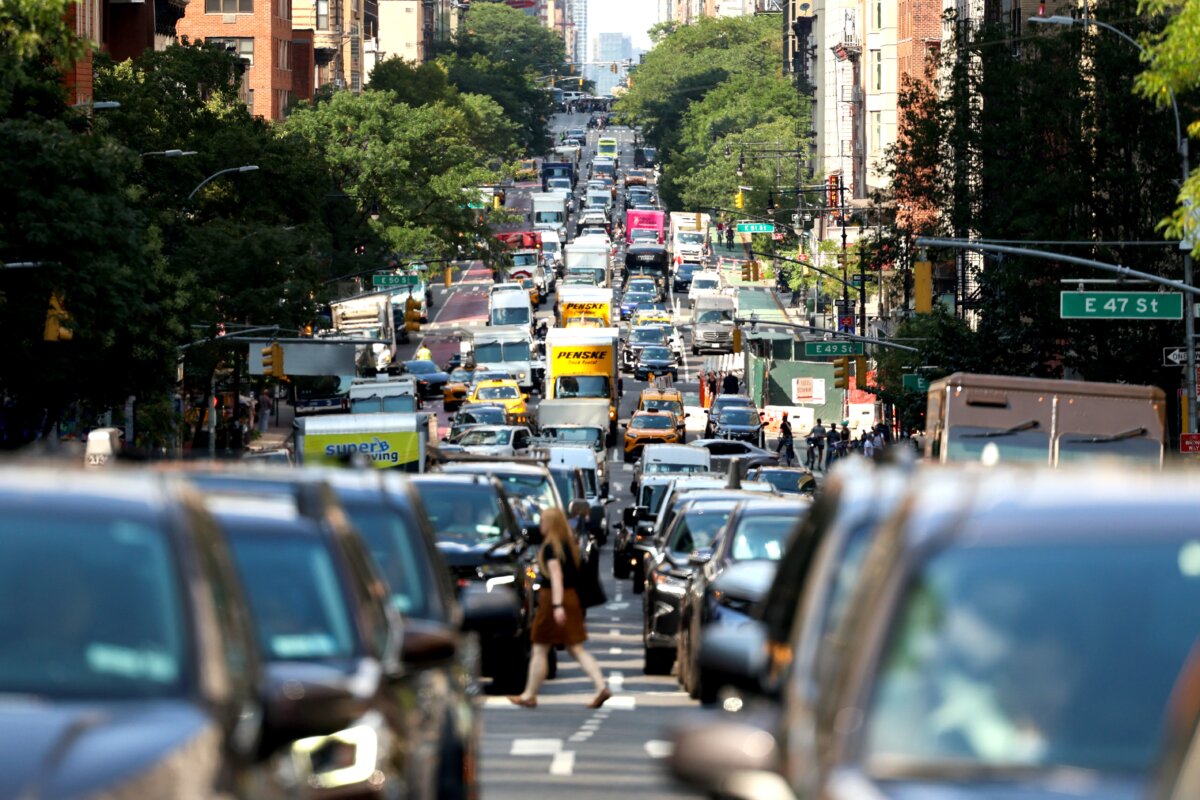
The Federal Highway Administration signed off on the program in 2024, and the MTA started to collect tolls in January 2025. It subjects most drivers to a $9 base toll during peak hours to enter Manhattan below 60th Street, with the stated goals of reducing traffic and pollution and generating dedicated funding for the MTA.
President Donald Trump is a vocal opponent of the tolls. He vowed on the campaign trail in 2024 to end them, calling the fees a “disaster for NYC” and a threat to business activity in Manhattan.
“I will TERMINATE Congestion Pricing in my FIRST WEEK back in Office!!!” he wrote on Truth Social in May 2024. “Manhattan is looking for business, not looking to kill business!”
The Trump administration followed through in February 2025, when Duffy sent letters to New York City officials, Gov. Kathy Hochul, and the MTA demanding that they stop charging the fees or face cuts to federal funding for other projects.
He said that because toll revenues are being used to fund public transit, congestion reduction is not the program’s primary goal, and so the Federal Highway Administration lacked the legal authority to approve the tolling plan.
“The revenues generated under this pilot program are directed toward the transit system as opposed to the highways,” Duffy’s letter read. “I do not believe this is a fair deal.”
Backed by Hochul, the MTA rejected the administration’s position and responded with a lawsuit seeking to block the move.
Liman, who had previously questioned whether the federal government could unilaterally make such a decision, concluded that the administration’s attempt to unwind congestion pricing and threaten New York’s transportation budget was unlawful.
The Transportation Department had argued in court that the executive branch has inherent authority to terminate federal agreements even when they do not explicitly provide for such termination, but Liman rejected that view.
“It would be difficult to imagine a more definitive repudiation of contractual obligations by any party to any form of agreement than the repudiation and rescission set forth in the Feb. 19 letter,” he wrote on March 3, referring to Duffy’s initial letter of demands.
Duffy’s office did not immediately respond to a request for comment. The legal fight could continue on appeal at the Second Circuit Court of Appeals.
Hochul’s office, meanwhile, welcomed the ruling.
“The judge’s decision is clear: Donald Trump’s unlawful attempts to trample on the self-governance of his home state have failed spectacularly,” Hochul said in a statement. “Congestion pricing is legal, it works, and it is here to stay.”
Janno Lieber, the MTA’s chief executive, struck a similar tone.
“We’ve said it all along, and Judge Liman’s clear, detailed ruling leaves no doubt: congestion pricing is legal,” he said. “It’s here to stay. And it works.”
The initiative generated more than $550 million in revenue over the past year, according to the state.
The program is also changing traffic patterns, the state said. From January through December 2025, an average of 72,600 fewer vehicles entered the tolled area each day—a decline of about 11 percent—and public buses operating below 60th Street are moving slightly faster.
 Friends Read Free
Copy
Facebook
Tweet
Friends Read Free
Copy
Facebook
Tweet