
A federal judge has struck down New York’s Climate Change Superfund Act, blocking the state from collecting $75 billion from fossil fuel companies to pay for projects addressing concerns the state attributed to climate change.
The Justice Department on Sept. 28 hailed the ruling as a “significant step in … protecting American energy from state overreach.” U.S. District Judge P. Kevin Castel issued a judgment against the law on Sept. 25 after stating two days earlier that it intruded on federal authority in multiple ways, including by regulating greenhouse gas emissions that cross state lines.
The law would have required large companies involved in fossil fuel extraction or crude oil refining to pay into a state fund over 25 years. Each company’s share would have been based on greenhouse gas emissions attributed to its products from 2000 through 2024. New York intended to use the money for infrastructure and other projects to help communities address issues the state blames on climate change.
The Justice Department and Environmental Protection Agency sued to block the law. They argued that New York’s law ran afoul of the legal doctrine of preemption, which says that federal law takes precedence if there is a conflict with state law.
The federal government said the Clean Air Act gives the EPA authority to decide whether and how to regulate greenhouse gas emissions. It said New York’s law would impose its own liability on fossil fuel producers based on emissions attributed to their products worldwide.
New York argued that its law did not regulate emissions. It said the payments would compensate the state for harm from past emissions and fund projects to protect New Yorkers from problems it attributed to climate change. Castel rejected the state’s argument, saying the charges effectively regulated interstate emissions.
Castel found that the law reached beyond New York’s authority even though the state planned to spend the money on local projects.
Castel also said the law infringed on foreign affairs by seeking payments from fossil fuel companies for activity outside the United States. Citing an earlier appeals court ruling, he said holding oil companies accountable for what they did outside U.S. territory would bypass diplomatic channels and “needlessly complicate the nation’s foreign policy.”
Two federal judges have now ruled on New York’s Climate Change Superfund Act because different plaintiffs brought separate lawsuits. There were 22 states and business groups that challenged the law in the Northern District of New York, where U.S. District Judge Brenda Sannes blocked it on Aug. 31.
The DOJ and EPA filed their own case in the Southern District, where Castel issued a second ruling.
“New York’s woke climate change law is not only unconstitutional, it is harmful, jeopardizing every American’s access to affordable and reliable energy,” said Associate Attorney General Stanley E. Woodward, Jr., in a statement on Monday.
“We are pleased with the district courts’ decisions finding New York’s law unlawful and recognizing that the Federal Sovereign, not the States, regulates our Nation’s energy market.”
Advocates such as the Fiscal Policy Institute had supported the Climate Change Superfund Act. The Fiscal Policy Institute had said that the $75 billion was needed to “adapt to rising sea levels and the increasing frequency of extreme weather events—measures that wouldn’t be needed but for the high emissions caused by these companies’ business activities.”
New York had said the federal government didn’t have standing in the case because it hadn’t shown how the state’s law would stop it from enforcing federal law or interfere with compliance with international agreements. The state also argued its law didn’t seek to regulate emissions, just compensation for harm it attributed to climate change.
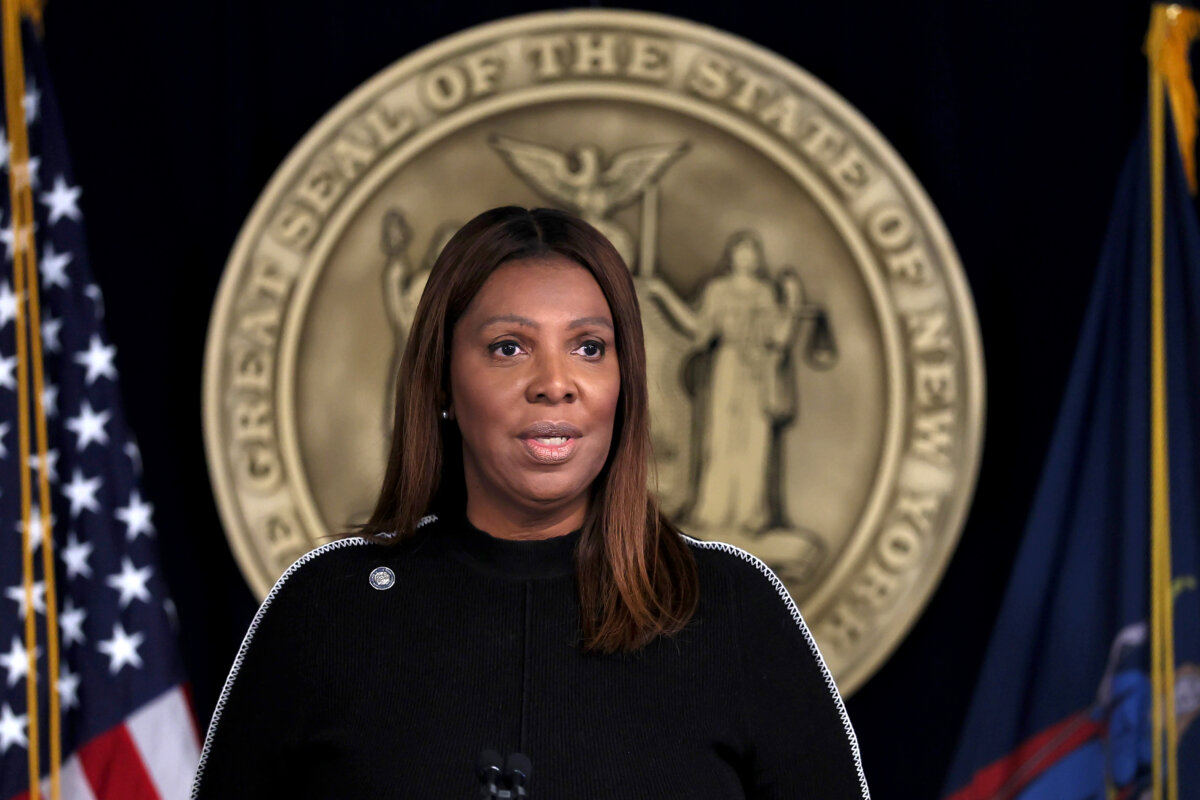
The office of New York Attorney General Letitia James did not respond to an emailed request for comment. James was named as a defendant in the lawsuit in her official capacity.
 Friends Read Free
Copy
Facebook
Tweet
Friends Read Free
Copy
Facebook
Tweet