Many Federal Reserve officials have agreed that raising interest rates might be necessary if inflation does not cool, according to minutes released on Aug. 19 from the most recent meeting.
The Fed voted 9–3 on July 29 to keep the benchmark federal funds rate—a key policy rate that influences borrowing costs for businesses and consumers—unchanged in the current target range of 3.5 percent to 3.75 percent.
Some participants believe that current financial conditions might not be restrictive enough to support a return to the institution’s 2 percent inflation target.
“Most participants anticipated that inflation would step down over the rest of the year as the effects of tariffs and earlier energy price increases wane, but many participants noted the possibility that inflation might be more persistently elevated,” according to the meeting summary.
A chorus of officials also stated that 64 months of inflation above 2 percent could affect inflation expectations, as well as wage- and price-setting decisions.
“Several participants remarked that successive supply shocks have repeatedly delayed the expected return of inflation to 2 percent in recent years, adding to concerns about persistently elevated inflation,” the document reads.
This echoed some of the recent comments from the three dissenters—Cleveland Fed President Beth Hammack, Minneapolis Fed President Neel Kashkari, and Dallas Fed President Lorie Logan—who supported pulling the trigger on a quarter-point rate hike.
Shortly after the July Federal Open Market Committee meeting, they argued that the central bank is not fulfilling the price stability side of its dual mandate and is not close to restoring its 2 percent inflation target.
“More than five years after the [post-COVID-19 pandemic] surge, prices have continued to rise too rapidly. Every month of above-target inflation compounds the strain on the budgets of American families and businesses,” Logan said in a July 31 statement.
“Even after accounting for productivity gains and temporary supply shocks, inflation appears to be trending toward the mid-2’s, not all the way to 2 percent, and the risks are to the upside.”
Headline inflation has been elevated above 3 percent, although last month’s consumer price index (CPI) indicated the second consecutive monthly deceleration.
July’s annual inflation rate eased to 3.4 percent, from 3.5 percent in the previous month. Excluding volatile energy and food, core inflation also slowed to 2.5 percent from 2.6 percent.
Early estimates suggest that the August CPI report will show consumer prices holding steady, with the 12-month rate unchanged at 3.4 percent, according to the Cleveland Fed Inflation Nowcasting model. However, core CPI could slide to 2.4 percent.
At the same time, the Fed’s preferred inflation measure—the personal consumption expenditures price index—has been firmly above 3 percent.
The Fed places greater emphasis on personal consumption expenditures than on the CPI because the former updates its data weights more frequently and is more comprehensive.
Communications
How the Federal Reserve communicates was also discussed at the July meeting.
Since rejoining the central bank in June, Chairman Kevin Warsh has concentrated on reforming Fed communications. One of these potential changes could be the number of meetings per year.
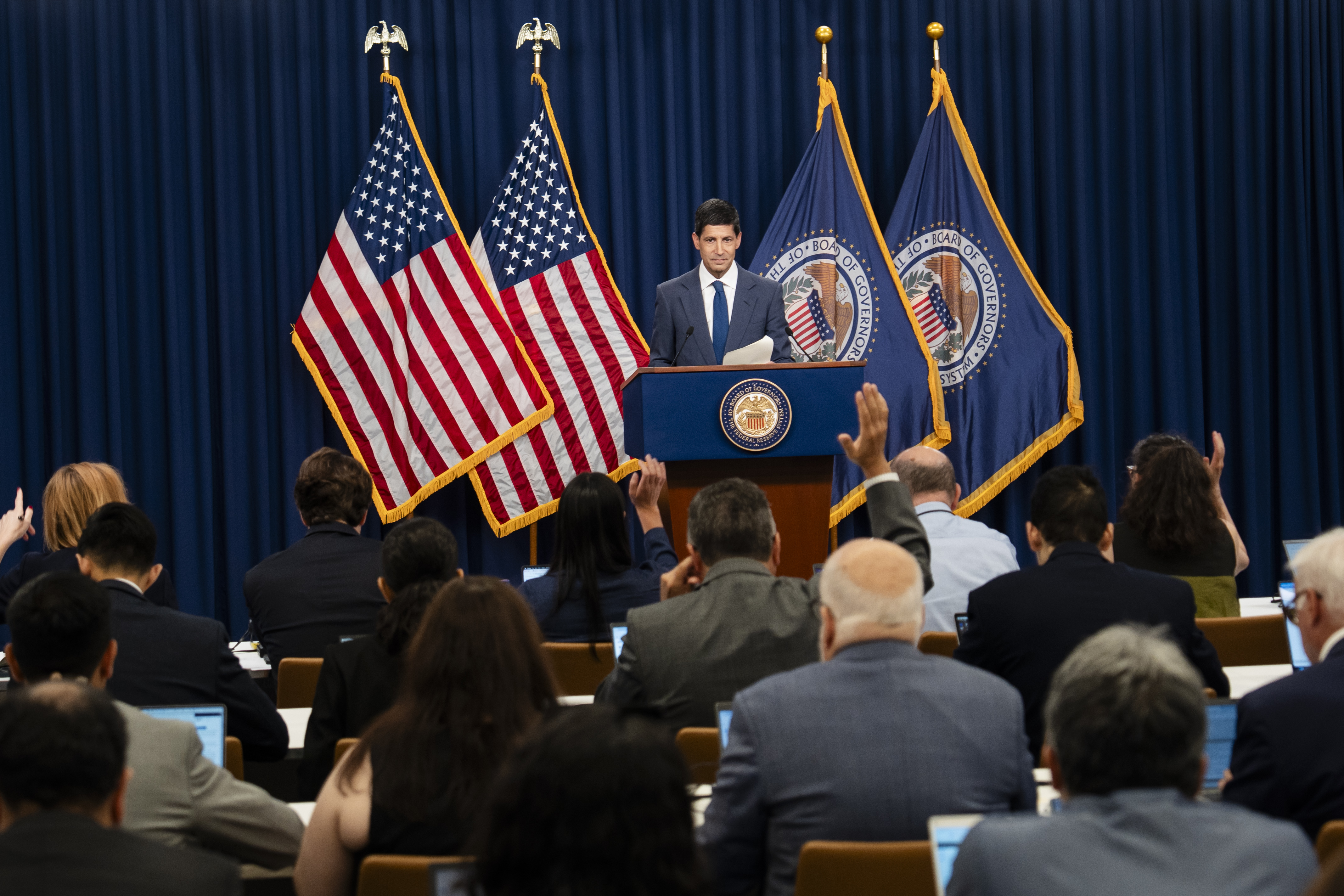 Federal Reserve Chairman Kevin Warsh speaks during a news conference in Washington on July 29, 2026. (Madalina Kilroy/The Epoch Times)
According to the minutes, the chairman indicated that the Fed could hold six scheduled meetings per year, about every two months. The rationale is that it would allow for data to accumulate between meetings and provide officials additional time to consider policy decisions.
“The Chairman asked for input from the Committee on these issues, but no decisions regarding possible changes in the meeting schedule were made, and the Chairman indicated that any change in practice would not affect the schedule over the balance of 2026,” the document reads.
Updates to how the Fed communicates with the public could be made available in December, when the monetary policy task forces release their reports.
The board also reviewed “an intermeeting incident that caused a temporary disruption in transaction settlements.” Officials said the Fed’s approach of keeping bank reserves at “ample” levels helped ensure that money markets continued to function smoothly despite the disruption.
Interest Rate Outlook
Views have shifted in recent weeks as to whether the central bank will raise rates or pause.
“I’m probably one of a few people [who] believe that, but I think Warsh really understands productivity-driven growth, like we had in the ’90s, and it’s disinflationary in his view and in mine as well. And so I don’t think you’re going to see the Fed hiking,” Nancy Tengler, CEO and chief investment officer at Laffer Tengler Investments, said in an emailed note to The Epoch Times.
Traders have now made the Fed taking no action at September’s meeting their base case. Expectations for the October and December meetings are split between a 25 basis point increase and another pause.
Conditions could change before the Sept. 15 to Sept. 16 policy meeting, as another batch of employment and inflation data for August will be published.
Markets should not expect any policy signals coming from the Fed, as Warsh has scaled back forward guidance. As a result, investors will have to focus on other factors, said Jonathan Squires, CEO of trading analytics platform Tapaas.
“Bets on an interest rate hike have decreased over the past week due to softer labor market and inflation data,” Squires told The Epoch Times in an emailed note.
“With Chair Kevin Warsh having stepped back from forward guidance, this release could provide valuable insight. Markets also turn to upcoming economic data and the Fed’s [Jackson Hole, Wyoming,] event later this month.”
The Kansas City Fed will hold its annual international economic symposium in Jackson Hole, Wyoming, from Aug. 27 to Aug. 29.
 Friends Read Free
Copy
Facebook
Tweet
Friends Read Free
Copy
Facebook
Tweet