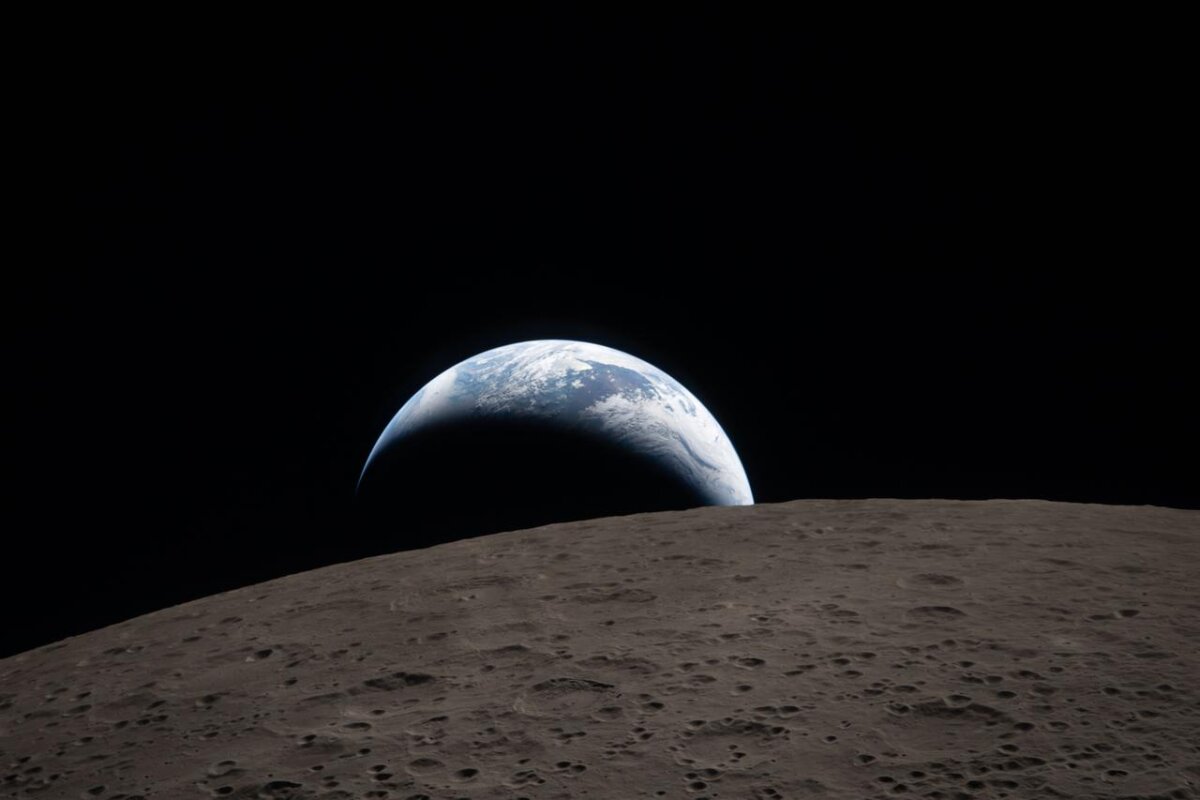

HOUSTON—It is called “Earthset.” A single photograph, along with the date it was taken and the people who took it and shared it with the world, has already been added to the history of human exploration.
On April 6, 2026, four humans finally returned to the moon after more than 50 years.
In doing so, they ventured farther from their home planet than anyone has before, and their eyes were the first to witness otherworldly sights that, up until that point, were viewed only by telescopes and robots.
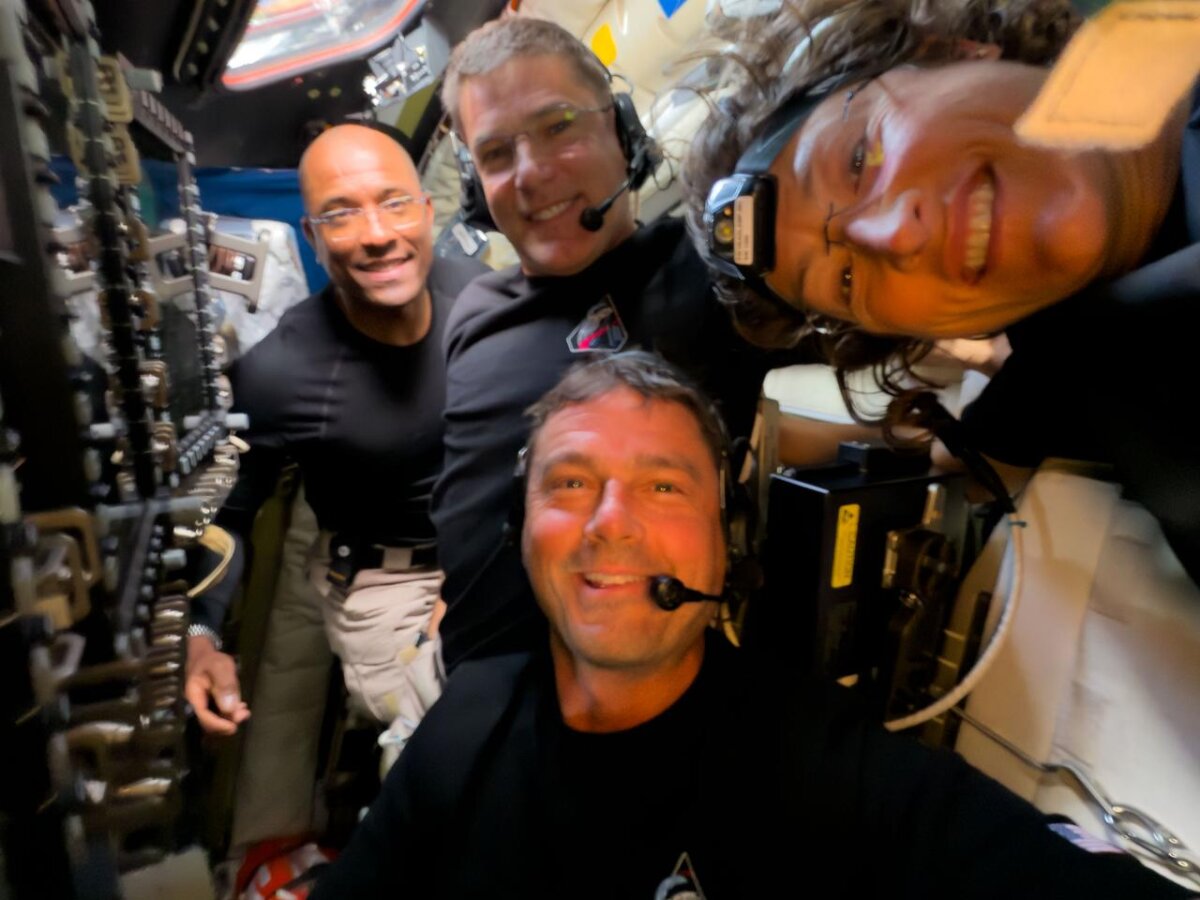
Those humans were the crew of Artemis II: NASA astronauts Reid Wiseman, Victor Glover, and Christina Koch, and Canadian Space Agency astronaut Jeremy Hansen.
Aboard their Orion spacecraft, Integrity, they became the first people since December 1972 to cross into lunar space, at about 12:37 a.m. ET, and remained there until they reentered Earth’s gravitational grasp just after 1:23 p.m. on April 7.
It is also the first time that a crew of more than three people made the journey.
In that time, the crew flew past and around the moon, spending seven hours making lunar science observations of not just the lunar surface, but also Earth, the sun, and other celestial bodies.
The day concluded with a call from President Donald Trump.
Here are the highlights.
New Frontiers, New Perspective
At approximately 1:57 p.m. on April 6, the moon’s gravity pulled Artemis II beyond the farthest point away from Earth any human crew had gone before.
That previous record, 248,655 statute miles, was set by Apollo 13 almost exactly 56 years ago.
“As we surpass the furthest distance humans have ever traveled from planet Earth, we do so in honoring the extraordinary efforts and feats of our predecessors in human space exploration,” Hansen said as the crew broke their first record at the beginning of day six of Artemis II’s 10-day test flight.
“But we most importantly choose this moment to challenge this generation and the next to make sure this record is not long-lived.”
The moon continued to pull Integrity farther away from Earth throughout the day. Artemis II reached its farthest point from Earth—252,756 statute miles—and closest point to the surface of the moon—4,067 statute miles—shortly after 7 p.m. while flying around the back of the moon during a radio blackout.
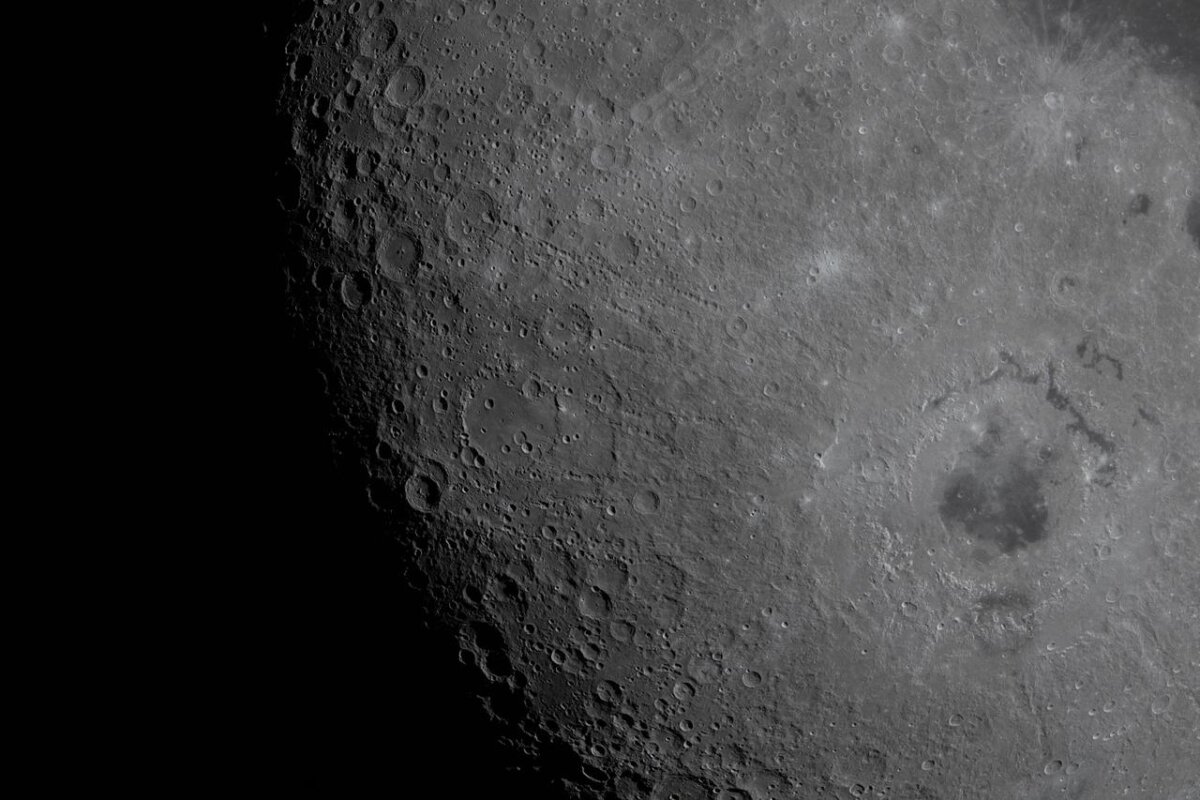
Within that deep space frontier, through the radio blackout, the astronauts conducted six hours of lunar observation.
They worked in pairs: Wiseman with Hansen and Glover with Koch. One pair started at the windows, taking turns taking photos with the Nikon and iPhone cameras onboard, and taking unassisted observations and making annotations.
The other served as a support team and took turns relaying verbal reports of their observations back to NASA’s lunar science team at Johnson Space Center in Houston.
Features observed on the near and far sides included the Copernicus, Glushko, Ohm, Grimaldi, and Aristarchus craters.
They also spent a significant amount of time studying the terminator line: the boundary marked on the surface between daylight and nighttime.
Before and during the flyby, the astronauts became the first humans to lay unaided eyes on parts of the moon, including the full Orientale basin and the Hertzsprung basin.
They also watched meteors hit the moon, noted how bright Earth appeared, and noted how that “Earthshine” changed the appearance of the moon at different parts of their flyby.
Verbal descriptions of the different colors, textures, topography, brightness, and albedo, which refers to the amount of sunlight that is reflected off a surface, were transmitted directly to a science officer in mission control and recorded on personal devices that were sent to Earth with pictures and other data gathered.
Messages to Family, People of Earth
The crew also proposed names for two craters they observed.
The first was a spot on the far side that they proposed be named Integrity after their spaceship, and the second was a spot on the near side that they said should be named Carroll after Wiseman’s wife, who passed away from cancer in 2020.
“There’s a feature in a really neat place on the moon, and it is on the near-side/far-side boundary,” Hansen said. “In fact, it’s just on the nearside of that boundary, so at certain times of the moon’s transit around the Earth, we will be able to see this from Earth.”
Family remained top of mind for the crew throughout the day as they were eventually pulled around the moon and lost communication with mission control.
Flight controllers gave each crew member a moment to send down a message to family members sitting in the mission control visitor gallery.
Smiles and heart-shaped hand gestures were broadcast across NASA’s livestream.
As the crew completed its pass around the moon and turned for home, they sent a message to the human family around the world.
“We will explore. We will build ships. We will visit again,” Koch said. “We will construct science outposts. We will drive rovers. We will do radio astronomy. We will found companies. We will bolster industry. We will inspire.
“But ultimately, we will always choose Earth. We will always choose each other.”
The Solar Eclipse
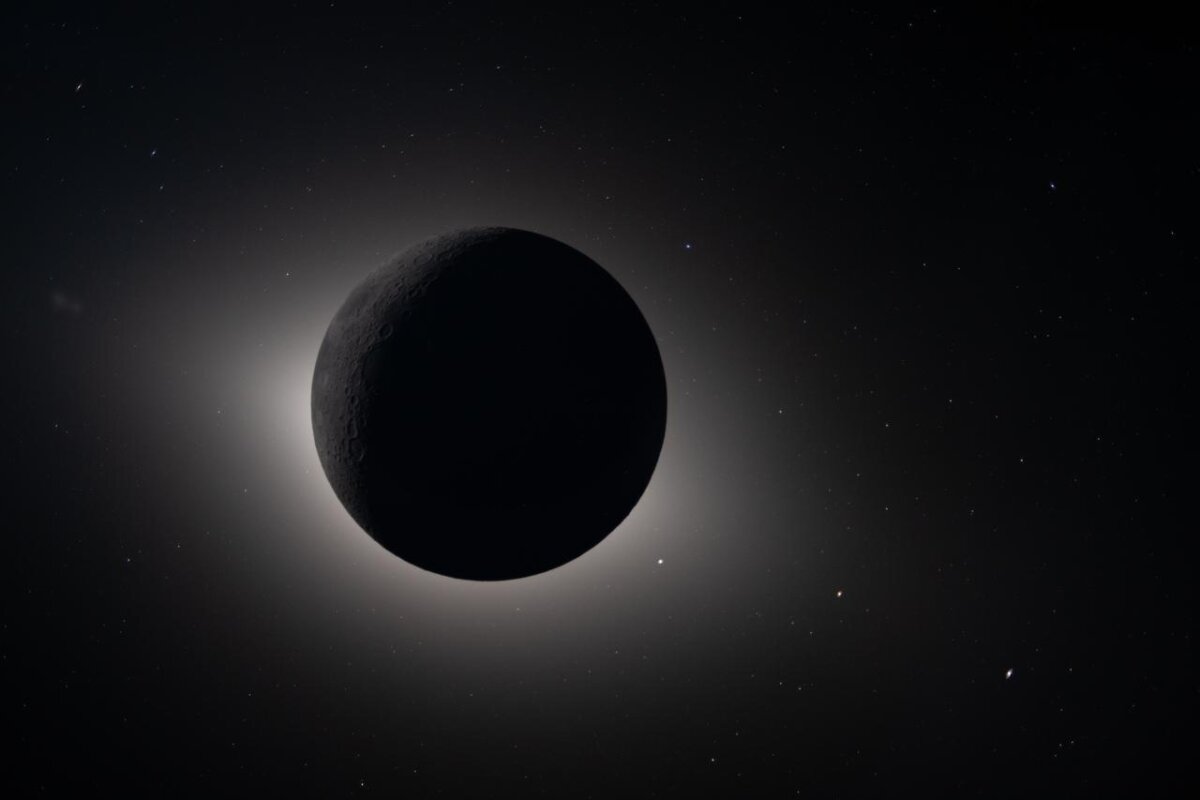
Shortly after Artemis II came around the moon and reacquired signal with mission control, the crew was the first ever to witness a full solar eclipse.
Over the course of nearly an hour, the moon passed directly in front of the sun.
This allowed the crew to record footage of a lunar sunset and sunrise, and study the sun’s corona. The darkness also offered the crew the opportunity to locate three planets—Mars, Venus, and Saturn—and observe how Earthshine continues to affect their views.
The science officer praised the crew throughout the day for their real-time scientific observations, but when it came time to photograph the eclipse, the crew said that at some points, their verbal and photographic skills could not do it justice.
‘You Really Inspired the Entire World’
Lunar flyby and solar eclipse observations finished at about 9:30 p.m.
The crew was given some personal time and then took a call from Trump, who said he wanted to be the first to congratulate them on their historic mission.
The crew expressed their appreciation for his leadership and support, as well as that of NASA Administrator Jared Isaacman, and accepted his invitation to visit the Oval Office when they got back home.
“Today you made history and made all of America really proud,” Trump said on the call mediated by Isaacman from Johnson Space Center. “We have a lot of things to be proud of lately, but there is nothing like what you’re doing.”
“Humans have really never seen anything quite like what you’re doing in a manned spacecraft,” the president said. “It’s really special.”
 Friends Read Free
Copy
Facebook
Tweet
Friends Read Free
Copy
Facebook
Tweet