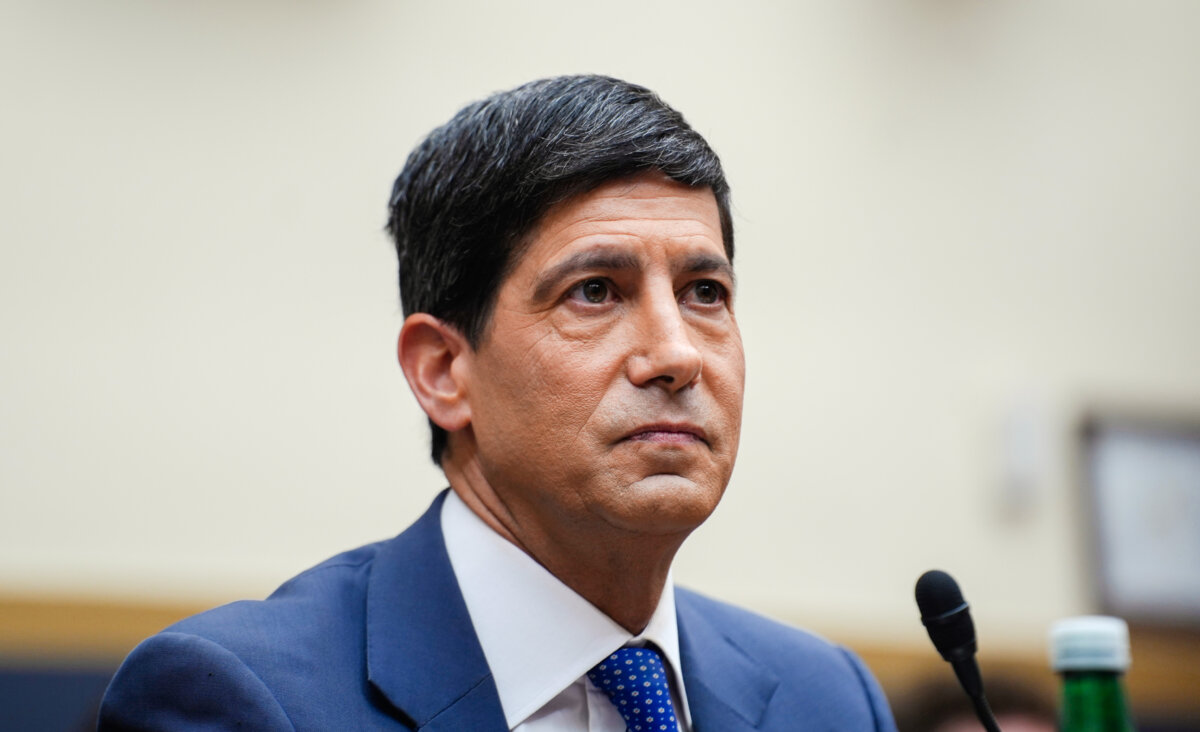

Federal Reserve Chairman Kevin Warsh delivered his first semi-annual monetary policy report to Congress on July 14, speaking to lawmakers for three hours on a range of issues.
Warsh, in his opening remarks to the House Financial Services Committee, reaffirmed his commitment to employing a “regime change” in the conduct of monetary policy.
He also vowed that the inflation surge over the past five years “will be a thing of the past.” Those comments came as the June consumer price index report was released, showing cooling monthly and 12-month inflation rates amid stabilizing energy markets.
Here are five key takeaways from Warsh’s appearance on Capitol Hill.
Abolishing the Inflation ‘Tax’
Warsh continued his tough talk on inflation on day one of his visit to Congress.
“The 63 months of inflation above target has been an unfair burden and has been a tax on the American people and businesses. We plan on getting rid of that tax,” he said.
“That means we need a regime change in policy, and we need new consideration of practices, some of which have been working, some of which haven’t.”
The Fed has been consistently above its 2 percent inflation target for more than five years, and this has been part of the central bank’s problem, Warsh noted.
Since the start of the war in Iran, consumer inflation has been accelerating to its highest level since 2023. Last month’s data suggest inflation could be stabilizing, with a larger-than-expected 0.4 percent decline from May to June.
While the numbers published shortly before his testimony were positive, Warsh said he would refrain from “cherry-picking” the data.
“I’m not going to show up here and say mission accomplished, and what I’d say is there’s plenty to do, and I would feel more confident if we had better data to inform our decision-making,” Warsh said.
No Bailouts for Anyone
Under Warsh’s leadership, the Fed is not going to be in the bailout business.
During the 2008 financial crisis, the Fed and the Treasury Department deployed a $700 billion bailout package to prevent the U.S. economy from sliding into a full-blown economic collapse. At the onset of the COVID-19 pandemic, the central bank also employed emergency measures, including zero percent interest rates and balance sheet expansion. The Fed also offered emergency liquidity to financial institutions during the regional banking fiasco in 2023.
In an exchange with Rep. Brad Sherman (D-Calif.) regarding the cryptocurrency market, Warsh said the Fed would “do everything we can to mitigate risks in the crypto market.” The new central bank chief added that he does not want “to be in a position where we’re not bailing out anybody.”
“We do not want to be in the bailout business wholesale,” Warsh said.
Through a series of reforms, Warsh also wants to ensure that the Fed does not craft monetary policy that creates an environment of booms and busts.
Forward Guidance Again
How the Fed communicates with the public has been in the spotlight since Warsh’s arrival.
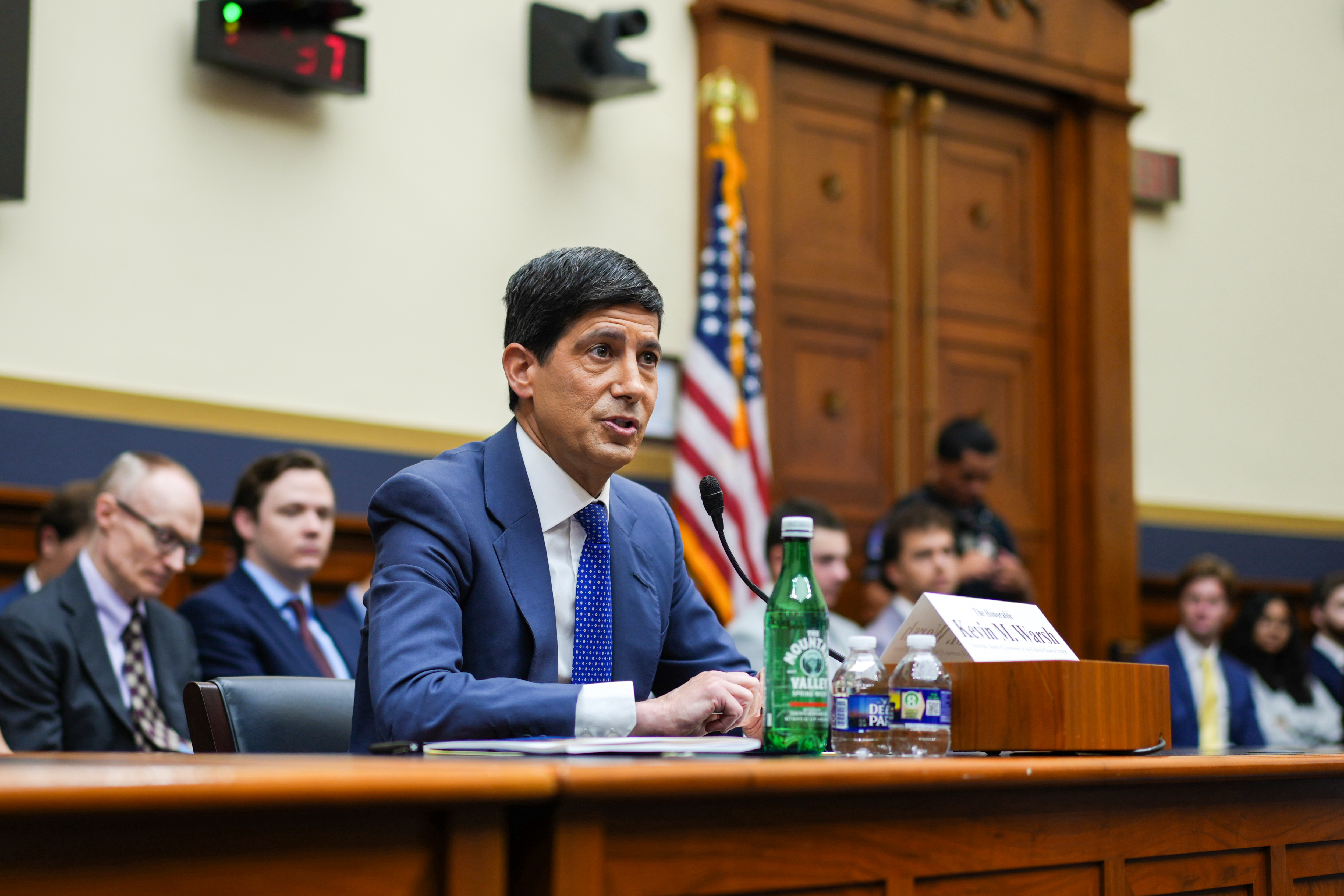 He again expressed his opposition to forward guidance, something that the central bank is veering away from under new management.
Warsh said that the objective is to get monetary policy right, and by refraining from commenting all the time, the Fed can get “a better way of calling balls and strikes.”
“If we were to share with you our every passing thought, I worry, not that there’s anything wrong with us, but we’re human,” Warsh told lawmakers.
“If we were to give you my projection today about what we’ll do when we meet in two weeks, what we’ll do over the course of the year, we then find ourselves sort of taking information that’s consistent with our priors and rejecting information that’s inconsistent.”
Communications and forward guidance are tools the Fed began adopting in the early 2000s.
Proponents say forward guidance can be useful in pushing financial markets toward a desired climate before Fed policy filters through the economy. Critics, including Warsh, say this endeavor has backfired because markets are waiting for the Fed, not the other way around.
Unsurprisingly, Warsh did not hint at the next policy action when the Fed convenes its two-day Federal Open Market Committee meeting later this month.
Balance Sheets and Interest Rates
Warsh conveyed to the House committee that interest rates remain the Fed’s main policy tool. Still, any changes to the balance sheet would go through a thorough review process.
As with forward guidance, the chairman has expressed the need to reform the balance sheet, which currently stands at $6.7 trillion, down from the post-pandemic peak of almost $9 trillion.
“If there were a change in balance sheet policy, we would preview it, explain it, debate it, and no changes in balance sheet policy would happen without good advance notice to the likes of this committee and broadly financial markets,” he said.
Ultimately, according to Warsh, the Fed should only use the balance sheet during a crisis.
“I’m going to say interest rates don’t favor one class of people versus another. They don’t favor those that have financial assets more than folks that are living off their bi-monthly paychecks,” he said.
“So I like interest rates as the dominant way to make monetary policy, and I prefer, all things being equal, to use balance sheets when the crises are real.”
Fed Independence
Scores of Democratic lawmakers pressed Warsh on Fed independence, questioning if he will push back on possible interference by President Donald Trump.
Warsh reiterated the necessity of the Fed being free of politics, pledging to follow the “law and the data.”
“We’re interested in what’s happening in the war. We’re interested in what’s happening in military conflicts around,” Warsh told Rep. Gregory Meeks (D-N.Y.). “We have to take that all in, but then we have to shut the door and make our very best decision.”
In a separate exchange with Rep. Mike Flood (R-Neb.), Warsh committed to keeping the Federal Reserve independent, arguing that it is critical to the conduct of monetary policy.
“Fed independence is essential to the proper conduct of monetary policy, and I expect and will ensure that monetary policy is independent over the four years of my term,” he said.
“And like you, I think it provides extraordinary benefits in everything we do and strengthens the role of the United States and the U.S. dollar and the global economy.”
Kevin Stocklin contributed to this report.
 Friends Read Free
Copy
Facebook
Tweet
Friends Read Free
Copy
Facebook
Tweet