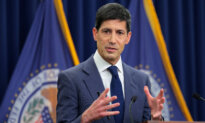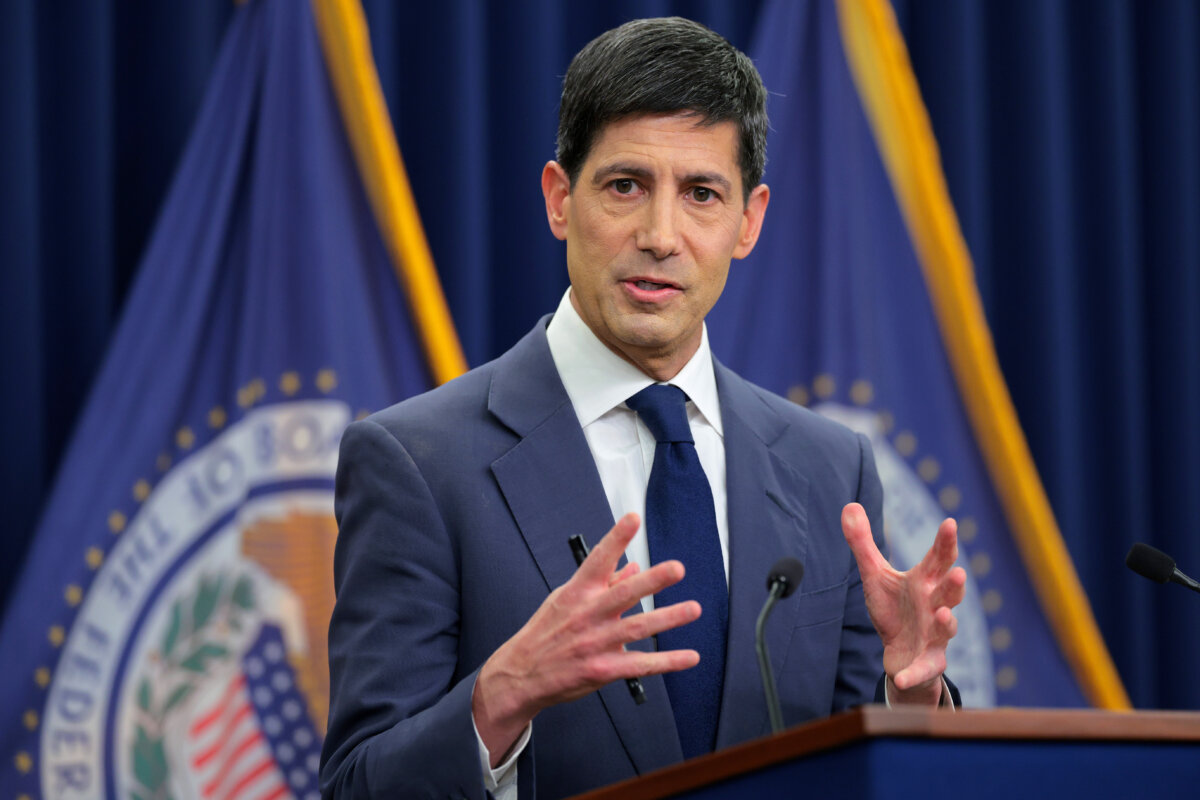

Federal Reserve Chairman Kevin Warsh hosted his first policy meeting as head of the U.S. central bank, leaving interest rates unchanged on June 17.
Warsh also held his first press conference, telling the media that a series of reforms to how the Fed communicates with the public are coming soon.
Financial markets panicked when Warsh concluded his remarks, while President Donald Trump said he is “guided” by what his replacement for Jerome Powell wants. Market watchers believe that change is coming to the 113-year-old institution.
Here are the key takeaways from Warsh’s first Federal Open Market Committee meeting.
Shorter Statement
The committee publishes statements at the end of its two-day policy meeting. These feature a brief summary of economic conditions, the rate action, biased language (tightening or easing), the balance sheet, and voting members’ decisions. They are typically about 400 words.
This time, the statement was drastically shorter, totaling 130 words. It communicated the vote count, the decision, and a short summary of the economy.
Warsh acknowledged the alteration during his introductory remarks at the press conference.
“It’s a bit shorter, a bit simpler, and it dispenses with some older language,” Warsh said. “That statement just gives you the facts, as best we can judge it.”
The post-meeting statement also eliminated forward guidance as Warsh and his colleagues agreed that it is “not well suited for the current policy conjuncture.”
It had been expected that the Fed would make changes to various communications tools, including forward guidance, the summary of economic projections, and the dot plot.
Eighteen of the 19 members provided forecasts for policy and the economy, but Warsh was the notable absentee.
“I did not submit a dot for me,” Warsh said. “It’s not helpful in the conduct of policy.”
Interest Rate Decision
Under new management, the Fed left the benchmark federal funds rate—a key policy rate that influences borrowing costs for businesses and consumers—unchanged in the current target range of between 3.5 percent and 3.75 percent.
Investors had widely anticipated this decision, particularly as the war in Iran rocked global energy markets and sent headline inflation in the United States higher.
“The Kevin Warsh era at the Fed began on a hawkish note,” Natalia Lojevsky, managing director at CIFC Asset Management, said in a note emailed to The Epoch Times.
Looking ahead, nine members project at least one rate hike this year—and markets agree.
According to CME FedWatch data, traders are pricing in a 60 percent chance of a quarter-point rate increase as early as October. The 2-year Treasury yield, which tracks central bank policy expectations, popped almost 15 basis points to nearly 4.2 percent.
The market’s response should not have been a response, Lojevsky said.
“For those paying attention to the long end of the curve, today shouldn’t have been a surprise,” she said. “Yields have been signaling that the rate cut trade was dead long before the Fed formally abandoned its easing bias.”
Monetary Task Forces
Over the last couple of years, Warsh has advocated for a “regime change” in policy and personnel practices. Based on his latest announcement, the chairman appears committed to carrying out that objective.
The central bank chief unveiled the creation of five monetary task forces, designed to address the Fed’s communications, balance sheet, use of and reliance on data sources, employment and productivity, and inflation frameworks.
“Each task force will serve an objective shared by everyone in the system, shared by everyone around that table that I sat with over the last couple of days, a Federal Reserve that is clear-eyed about its mission, fit for purpose, and focused on the future,” he said.
Warsh noted that more information will be shared in the coming days and that the work should conclude by the year’s end.
One of his aims on the path to confirmation was to restore the Fed’s credibility and the public’s confidence in the institution. This starts by ensuring that the central bank returns to its 2 percent inflation target after a half-decade of missing it.
“The commitment to deliver is strong, unanimous, and unambiguous, and that’s, I think, an important message we’ve missed for five years, and we’re going to fix that,” Warsh said.
Trump and Bessent
Warsh declined to comment on whether he had met with the president since his swearing-in ceremony last month.
However, he did confirm that he had met Treasury Secretary Scott Bessent for breakfast three times so far.
Warsh reaffirmed his commitment to monetary independence but noted that the Federal Reserve should also be interested in developments in fiscal policy.
“The way I think about it is this central bank needs to have a wide lens, but a narrow agreement,” he said. “We need to be quite interested in what’s happening in the world.
“It doesn’t mean it’s our responsibility, but I think we’re going to keep a wide lens, and my meetings with Secretary Bessent to this point have helped widen that aperture, so we’re aware of things that could affect our day job, even if it isn’t.”
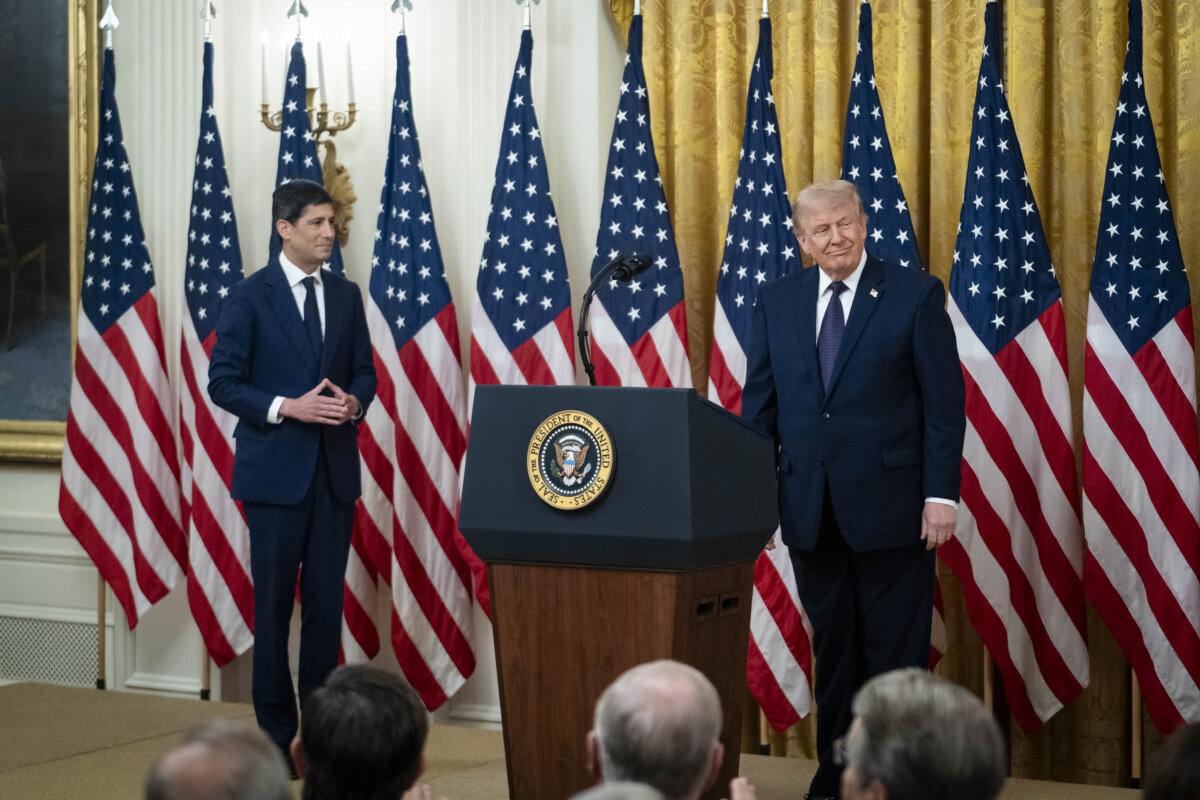
Speaking to reporters during the G7 summit, Trump said the Fed’s June decision was “alright,” noting that it is “hard to believe” that rate hikes may be on the table.
“It just keeps the country down, and it’s so, it’s so, unusual,” the president said. “But we have a very good guy over there right now, so I’m guided by what he wants.”
How to Read the Fed
U.S. stocks plummeted after Warsh’s first policy meeting.
The broad-market S&P 500 suffered its worst “Fed Day” under a new chairman in more than 30 years.
In February 1994, then-Chairman Alan Greenspan announced a surprise interest rate hike, the first since 1989.
Three decades later, while Warsh and his colleagues did not pull the trigger on a rate increase, the central bank signaled tighter policy ahead.
As a result, the S&P 500 fell by 91.25 points, or 1.21 percent, to 7,420.10.
The tech-heavy Nasdaq Composite Index also erased 354 points, or 1.35 percent, to close at 26,021. The blue-chip Dow Jones Industrial Average fell by 507 points, or 0.98 percent, to 51,492.
Warsh’s changes could force markets to adapt to a new era, Lojevsky noted.
“The new communications regime, fewer dots, less forward guidance, and a return to Greenspan-era opacity, is going to force market participants to reprice both rates and how they read the Fed entirely,” she said.
Emel Akan contributed to this report.
 Friends Read Free
Copy
Facebook
Tweet
Friends Read Free
Copy
Facebook
Tweet