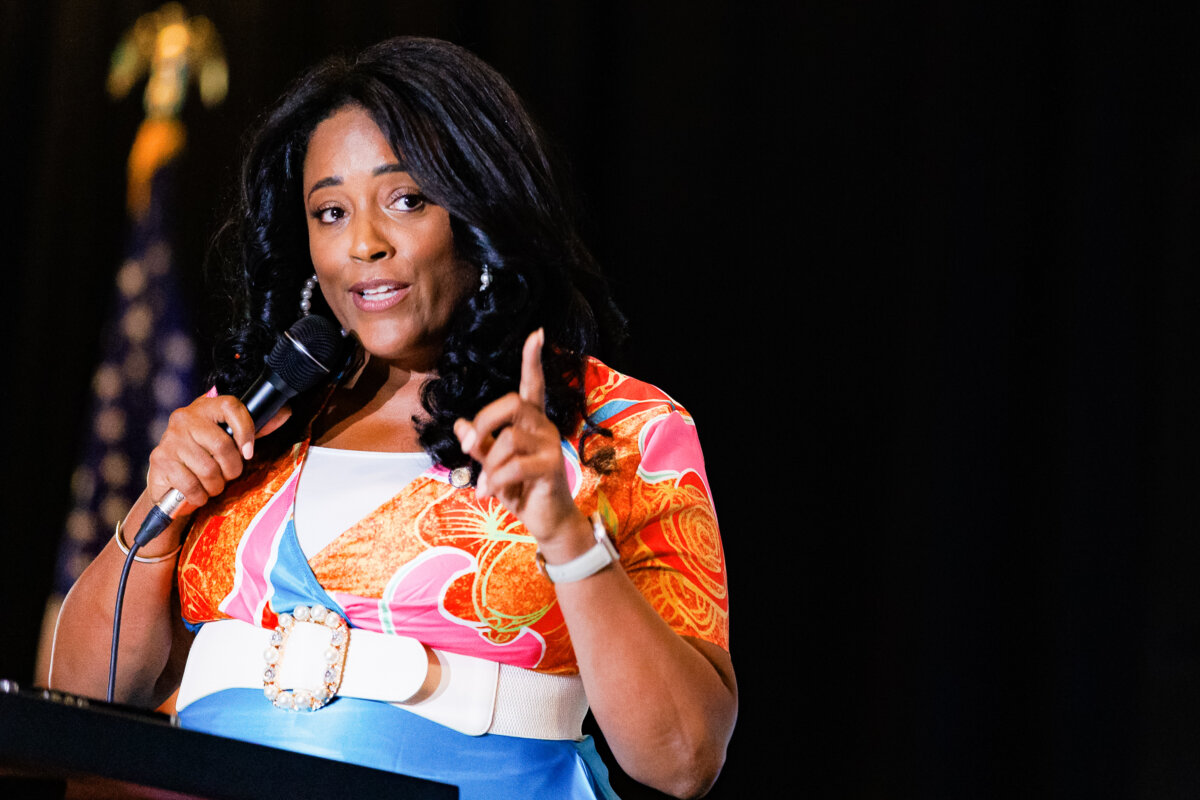

Tanya Gould was 18 when a pimp lured her into commercial sex trafficking through a romantic relationship.
He was older, handsome, and showered her with gifts and attention.
“Things at home I couldn’t make sense of as a child … I honestly was just looking for love, that’s my story. A promise of love, a promise of feeling seen and belonged, validation,” Gould told the Tim Tebow Foundation in January.
A broken home and prior sexual abuse had tarnished Gould’s self worth.“I had a ton of vulnerabilities,” Gould said.
She said when the pimp told her ‘I’m sorry that happened to you,’ she took it as care and empathy.
“No one had ever said to me before,” Gould said. The reality was, it ended up being “the very opposite of love.”
After she became emotionally dependent on the man, the facade dropped and she found herself selling sex, living in fear, and spiraling into despair. She had dropped out of school and was broken in body and mind.

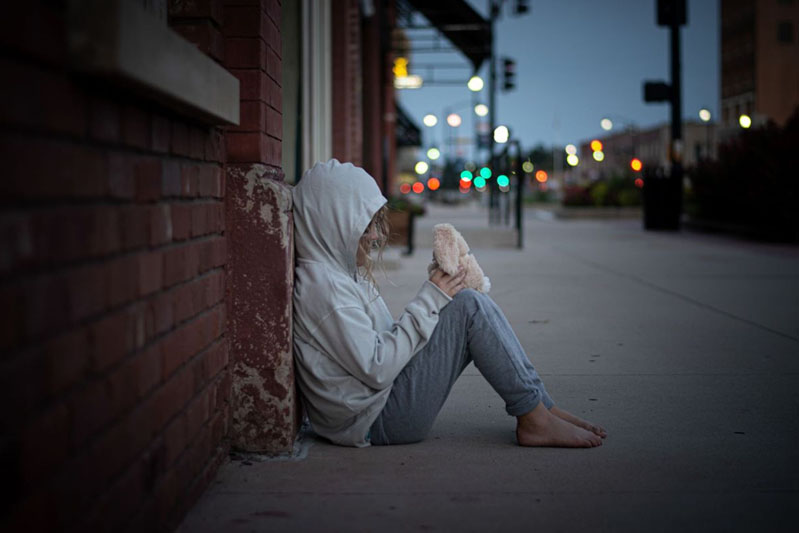
Gould eventually reached rock bottom. One night, she was held up at knife point by a man who demanded she hand over her money—the money she was expected to turn over to her pimp or face severe consequences. At that moment, the thought of leaving her young son motherless and in her trafficker’s control, was too much and it led her to seek help.
Although she made a break with the street, the experience led her to a dark place. “Every day I was spending time thinking about how I could take my life,” Gould said. But she didn’t want her children to live with the knowledge that she had committed suicide.
She also knew that her children would likely learn about her past one day, and she didn’t want to add to that sorrow.
Ultimately the path to healing from that bleak place impelled Gould’s efforts to help those like herself.
But first she had a long journey coming to terms with being a survivor of sex trafficking.
She didn’t know she had been trafficked and never saw herself as a victim. When she first confided the secret of her past to a friend, she felt guilty, like she was a criminal.
“In my story, I said I was prostituted, or I was a prostitute,” Gould told The Epoch Times.
“I saw myself as a criminal, and I had shame with all of that.”
Driving Change
It wasn’t until she heard another survivor describe the experience of being the victim of human trafficking that she realized the guilt was a pain she didn’t have to carry any longer. It was the first time Gould attended a panel discussion about human trafficking, and she felt something change inside her as the survivor told her story.
That moment, and speaking to organizers after the event, marked the beginning of her advocacy for trafficking survivors.
There is no single profile for a trafficking victim. “Traffickers are willing to exploit anyone who can earn them a profit regardless of age, sex, socioeconomic background, nationality, or immigration status,” the Department of Homeland Security says.
However, high-risk targets include children or youth involved in the foster care and juvenile justice systems, those who have experienced childhood abuse or neglect, those living in poverty, unaccompanied immigrant children, and survivors of intimate partner or domestic violence.
More than 27 million people worldwide have been exploited by traffickers, the Department of Homeland Security says. Twenty-three percent of victims are sex trafficked and 77 percent are trafficked for labor, the department states. Almost 80 percent of all individuals sex trafficked are women and girls.⏎
Gould has become a catalyst for change, helping other survivors through nonprofits that offer retreats to those in recovery.
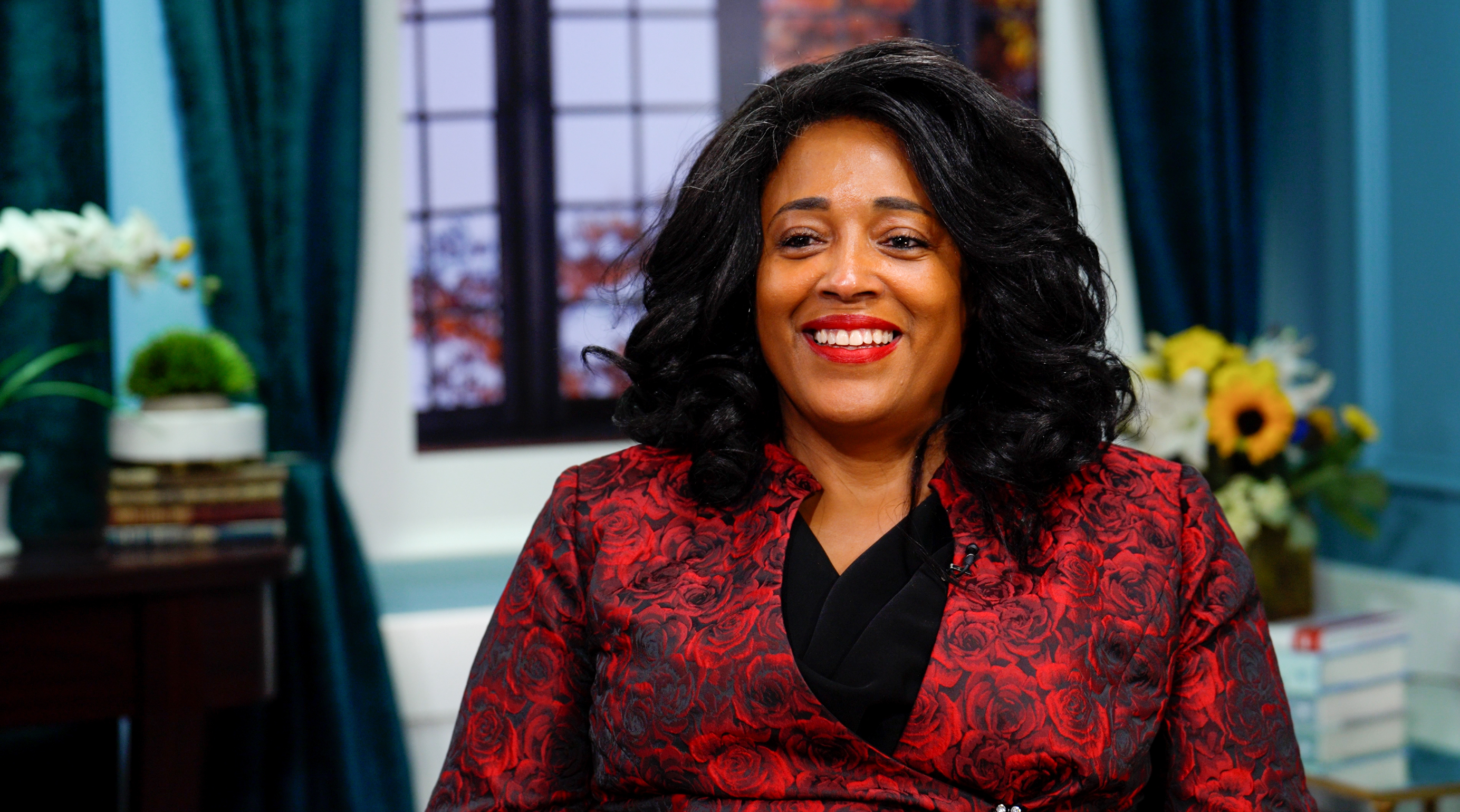
She is currently the Director of Anti-Human Trafficking for the Virginia Attorney General’s office and has worked with several anti-human trafficking organizations. She has served on the Advisory Council on Human Trafficking, where she focused on survivor voices. She’s often invited as a keynote speaker at anti-human trafficking conferences, both nationally and internationally.
Her experiences in recovery from being trafficked led Gould to look to legislative change to make a difference. “I want to show, as a survivor of human trafficking, I can contribute to my society in a healthy way,” she said.
Listening to survivor stories and helping lawmakers hear those stories so they can inform policy means “putting their voice in the story of America in a legislative way,” she said, adding that she is honored to be part of that process.
In her eyes, legislation “tells us where we were and how far we’ve come.”
Gould said she has had “meaningful and deep conversations” about human trafficking with representatives from the Department of Transportation, the Department of Labor, and other government agencies. And she has offered training to those in government who are tasked with putting an end to the practice.
One of her proudest achievements is ensuring that human trafficking survivors who serve on the Advisory Council on Human Trafficking are compensated for their work.
“Seeing the fruit of my labor has been a joy, because I never expected that,” she said.
Victims Not Criminals
Gould has also worked with children in detention centers, which she said “really kept the fire moving for me, because there’s a huge gap and lack of services for kids who come from different types of communities who are very vulnerable to being trafficked.”
Whether human trafficking is for labor or sex, “our systems aren’t used to this type of crime,” she said.
Adding to the complexity of the issue, Gould said, is the fact that the survivors used to be seen as criminals, not victims. She has worked to educate law enforcement on that important difference.
She has helped survivors plug into services and support, but more importantly, she says, she has been able to give “direction and guidance when it comes to their worth and their value, their integrity, their dignity—the things that have been taken from them.”
That’s important because human trafficking victims “don’t think about their dignity,” she said. “They’re just thinking about surviving.”
Gould is particularly proud of having helped survivors “come to terms with our self-worth and what it means to have value and to not accept what happened to us as the final story.”
Burnout is also a problem for survivor leaders, whose sense of urgency is compelled by their own experience.
“We work and work and work because we don’t want human trafficking to happen to one other person,” Gould said. “We breathe, eat, and sleep this.”
To that end, she works to provide support and rest for survivors who have become advocates.
Joy and Sorrow
Gould wants other survivors to know that they, too, can let go of the same type of pain and guilt that drove her to the brink of suicide.
She laid down that burden the same day she was contemplating doing something irreversible, she said.
“I decided to have this talk with God, because I couldn’t go another day with what I was feeling,” she said, telling about the moment her life changed. “It was too much for me to carry … And I said to Him, I was very clear, ‘Listen, you need to come up with a way that I can take my life or it needs to change today.’”
After that conversation, she went to a place of peace for her—her local library. She was walking the aisles of the library when she caught sight of the book “The Prophet” by Kahlil Gibran. When she opened the book, she found a passage that asked the reader to speak “about sorrow.”
Gibran’s essay, “On Joy and Sorrow,” describes joy and sorrow as inseparable parts of life, where joy carves out the space for more joy.
“I can tell you about sorrow,” Gould said, recalling the day she pushed two children in a stroller into a library looking for hope. “It basically says the same cup that was dug for sorrow is the same cup that could hold joy,” Gould told The Epoch Times. That idea made all the difference to her, she said.

Empathy and Advocacy
Part of that joy has been seeing her efforts on behalf of human trafficking survivors bear fruit, Gould said.
When asked what others can do, Gould said one of the first steps is to seek out survivors’ stories to try to better understand the problem: “You can work within yourself, and that’s important.”
“Look up survivors of human trafficking stories … listen to them, so you can have compassion and empathy in ways that you didn’t have it before … Go watch some survivor stories, you know, and let that really, hopefully, change your mind and your heart about the potential of survivors and their place in our community, in our society.
She saw herself as a criminal, and carried the weight of shame, she said. “But what about you? What about the people you know?”
She asks people to look at their own biases, and ask themselves how they might be indirectly participating in human trafficking, including buying into things like pornography and other types of entertainment. “These are all machines that keep this going, ideologies and thoughts about buying and selling of people in this way.”
“Deal with those issues,” she advises. “Get training for yourself. Get training for your family at home.”
She encourages safeguards for children who have access to the internet: “Make sure you’re protecting your kids,” she said. Sex traffickers increasingly use social media and other online platforms to recruit, advertise, and exploit victims, according to Homeland Security.
Gould encourages would-be advocates to participate in community events and town halls. Although legislative efforts are important, she cautioned against waiting for the government to act.
She believes that anyone who wants to make a difference will be led to the right action: “I believe that your heart will open up, or God will show you what your next [step] is,” she said. “But start inside.”
“When you look away and say you don’t want to look or think about human trafficking, you’re doing that to the victims,” Gould said.
Gould still takes her cue from the library book she picked up on that dark day, looking for moments of joy. Even if rainy days are sad, they help her appreciate the blue of the sky, she said.
“The extremes are important. I appreciate knowing—really well—sorrow, because now I get to experience joy, and I love that for myself.”
This article is part of the “Heroes Wanted” campaign, honoring the brave men and women who fight to end human trafficking. The Epoch Times and sister media NTD Television are proud partners of Kaleido.charity and the 5th Annual International Summit Against Human Trafficking, in Washington, DC, July 21–23, 2026.
 Friends Read Free
Copy
Facebook
Tweet
Friends Read Free
Copy
Facebook
Tweet