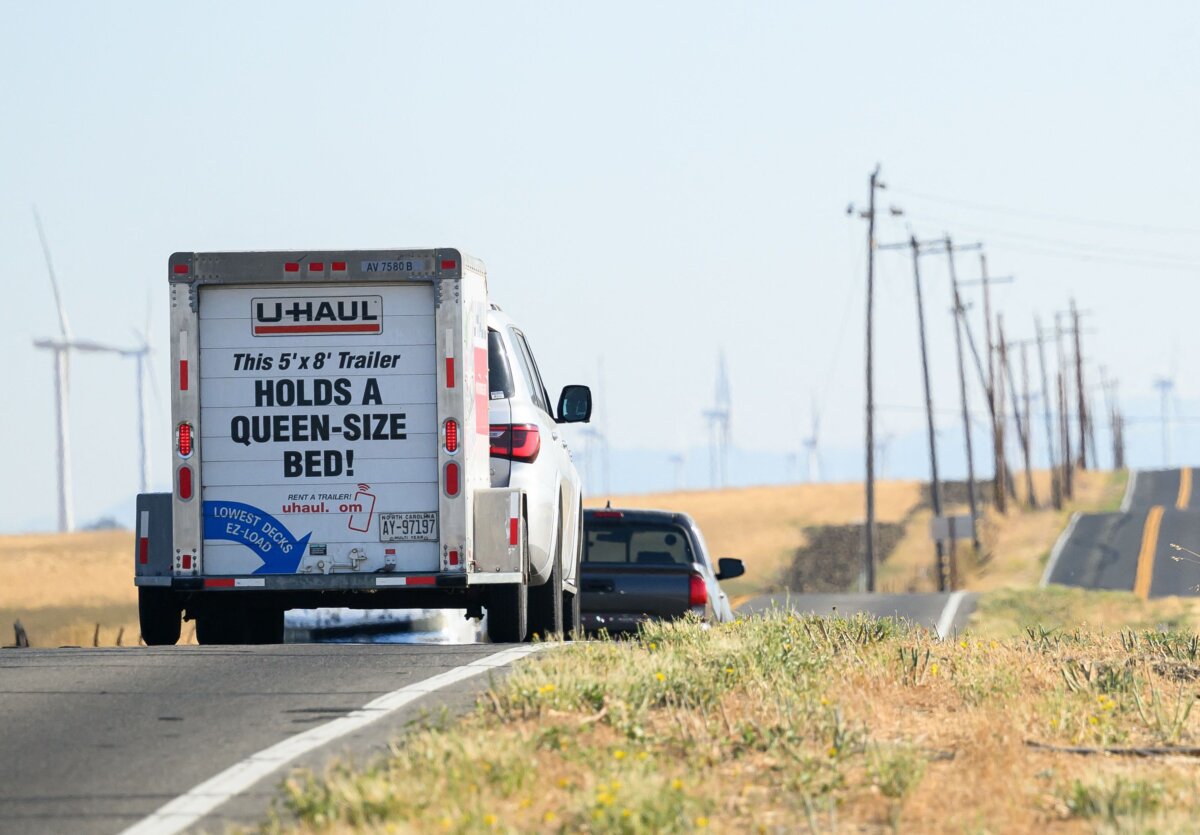

Generation Z, including those aged 18 to 29, for the first time has become the most interstate mobile generation, according to a March 25 analysis from StorageCafe. More than 2.2 million of America’s youngest adults moved to a different state in 2024, surpassing millennials, who had dominated this category for years.
Just over 2 million of the 30-to-45-year-old group moved to a different state in 2024, while 870,00 of Generation X (ages 45 to 60) and more than 758,000 Baby Boomers (ages 61 to 80) made interstate moves.
The report attributes the “state hopping” to early career moves and lifestyle exploration.
“With fewer family obligations and lower homeownership rates, Gen Zers often have greater flexibility to relocate for job opportunities, more affordable cities or simply a change of scenery,” the report indicates.
“The normalization of remote and hybrid work has also expanded their geographic options right at the start of their careers.”
South Carolina; Missouri; Washington, D.C.; Tennessee; and Arizona were the top five destinations that Gen Z flocked to South Carolina gained the most with nearly 23,000 new young adults.
“South Carolina and Missouri offer lower housing costs and growing regional job markets, giving young adults room to establish themselves financially,” the report states.
“At the same time, D.C. continues to attract Gen Z movers drawn to policy, media, and professional service careers that benefit from proximity and networking.”
New York was the only Northeast state to make it to Gen Z’s top 10 list of relocation spots. Other states earning that distinction include Washington, Texas, Virginia, and North Dakota.
The report shows that without an influx of Gen Z movers, net migration would have been negative in Missouri, D.C., Virginia, and Rhode Island. In D.C. alone, Gen Z accounted for nearly 14,000 new residents. In 39 of 51 states, Gen Z was the largest generation among inbound state movers.
At the opposite end, California sat at the bottom of the list for Gen Z preferences. New Jersey, Illinois, Minnesota, and Massachusetts also ranked among the five least popular destinations.
In its Gen Z Housing Hotspots March 2026 report, RentCafe named Birmingham, Alabama, as the top metro area for renters, increasing by 13 times over the past five years. Additional youth-friendly rental metros include Raleigh, North Carolina, and Nashville, Tennessee, both of which have seen significant increases in popularity over the past five years.
Their report indicates Birmingham’s lower cost of living is a driving force for Gen Z renters, in addition to the metro’s diverse entertainment and leisure options. Raleigh has continued to attract younger renters due to its growing job opportunities, especially in the tech industries.
Both reports gave the nation’s capital high marks for moving and renting.
“Some of these renters are graduates of D.C.’s higher education institutions, whereas others have relocated to take advantage of jobs across the government, policy, tech, consulting and nonprofit sectors,” RentCafe reported.
While among the priciest rental metros in the country, New York City also ranked high in both reports. RentCafe noted that the Big Apple has the most Gen Z renter households in the nation, at close to 280,000.
For millennials, StorageCafe ranked the top migration destinations in Texas, Maryland, and North Carolina, and for Gen X, Florida, Texas, and South Carolina. Texas and the Carolinas offer long-term housing opportunities, and Maryland, while a bit more expensive, offers access to stable, high-paying employment with federal or professional services sectors.
According to the report, the average interstate mover was 33 years old, compared to a national median age of 44. During 2024, those moving to a different state reported annual incomes of about $60,000—slightly below the national average of $62,000.
“Younger adults are typically earlier in their earning trajectories, which explains the modest income gap,” the report states. “Yet they are also more likely to relocate to unlock higher future earnings, whether by accessing stronger job markets, specialized industries or faster-growing metros.”
StorageCafe data also indicates interstate movers tend to be more highly educated than the general population, with about 60 percent holding a bachelor’s degree or higher. That compares to just 39 percent nationwide. Additionally, nearly 19 percent of long-distance movers work remotely from home.
An analysis of migration overall, however, found that interstate migration dropped to its lowest level in a decade in 2024, with 7.15 million Americans moving across state lines. That number is more than 1 million fewer than in 2022, representing a 13 percent decline.
While Texas and Florida continue to gain the lion’s share of new residents, they are doing so at about half the pace of 2023. The Midwest, meanwhile, is gaining momentum.
Overall, Texas ranked first in net migration for the second year in a row.
In 2024, the Lone Star State welcomed 76,000 new residents—down by about 50 percent from the prior year. Florida added 68,000 new residents in 2024, South Carolina, 54,000, and Arizona, 51,000. Nevada, North Carolina, and Georgia all added more than 40,000 new residents.
California, New York, and Illinois remain the top three feeder states for outbound residents.
In addition to more affordable living options and job opportunities, strengthening family ties has been another major reason many Americans chose to relocate across state lines. Retirement remains another steady driver of interstate moves.
The RentCafe report shows an additional 3.7 million Gen Z renters over the past five years, and Gen Z homeownership stood at just 17 percent nationwide.
Ogden, Utah, had the largest share of Gen Z buyers at 41 percent, while Birmingham and Jackson, Mississippi, each had Gen Z homeownership shares of 30 percent.
 Friends Read Free
Copy
Facebook
Tweet
Friends Read Free
Copy
Facebook
Tweet