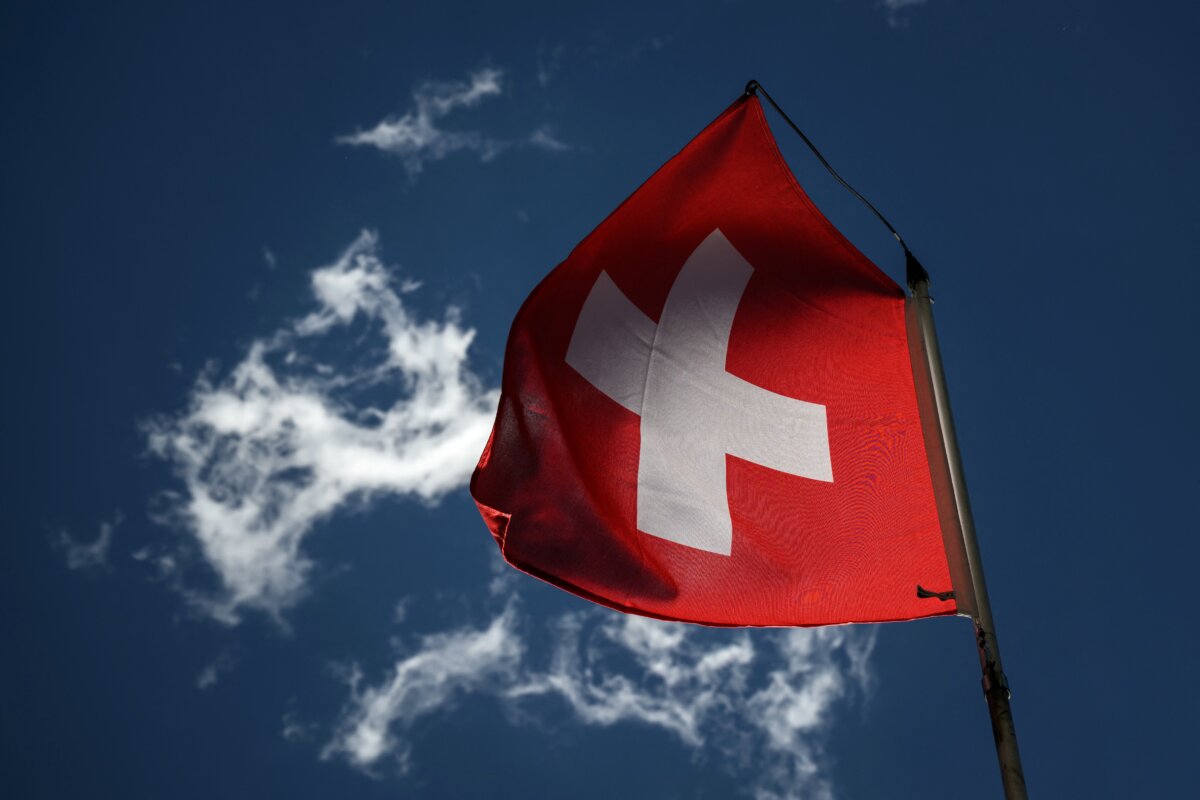

Representatives for the United States and Iran are scheduled to sign their new Middle East peace framework at an in-person event near Lucerne, Switzerland, on June 19, the Swiss Foreign Ministry announced on June 16.
The ministry said the signing event will take place at the Bürgenstock resort.
President Donald Trump initially announced the peace deal with Tehran was finalized on June 14.
Iran’s Supreme National Security Council has since announced that the two sides have finalized a memorandum of understanding to end the months-long armed standoff, state-owned news agency Press TV reported.
The full details of the deal have yet to be released, but Trump’s primary focus has been on constraining Iran’s nuclear program to prevent it from obtaining a nuclear weapon.
“The only thing that really matters to me is Iran will never have a nuclear weapon, and it says it loud and clear,” Trump told reporters on June 16.
Another immediate impact of the deal was the reopening of the Strait of Hormuz for international shipping. Iranian forces sought to obstruct the waterway after coming under a joint U.S.–Israeli attack on Feb. 28, and U.S. forces began blockading Iranian ports along the waterway on April 13.
“I hereby fully authorize the toll free opening of the Strait of Hormuz, and, simultaneously herewith, authorize the immediate removal of the United States Naval blockade,” Trump said in a June 14 Truth Social post.
Other components of the deal, such as economic relief for Tehran, appear to be conditioned on their compliance with other terms of the agreement.
“I think when people see this deal, we hope to release the text this week, they’re going to realize that this is going to make the whole region safer,” Vice President JD Vance said in a June 15 interview with CNBC.
In another June 15 interview with CBS, Vance said Iran stands to gain up to $300 billion in funding for reconstruction after sustaining heavy wartime damage, but that funding will depend on its compliance with the broader peace framework.
One potential lingering flashpoint for Iran is the Israeli military campaign in Lebanon against Hezbollah, an internationally designated terrorist organization aligned with Iran’s Shia Muslim leadership.
Israeli Prime Minister Benjamin Netanyahu said on June 15 that Israeli forces would continue to man security zones they established within Lebanon, Syria, and Gaza “for as long as it is required to defend our country.”
Iranian Foreign Minister Abbas Araghchi said on June 16 that continued Israeli military operations in Lebanon would violate the new memorandum of understanding between Washington and Tehran.
“Without the withdrawal of Israeli forces from territories they occupied during this war, the war will have not been fully brought to an end,” Araghchi said.
Tom Gantert, Jacki Thrapp, Joseph Lord, and Reuters contributed to this report.
This is a developing story and will be updated with additional details.
 Friends Read Free
Copy
Facebook
Tweet
Friends Read Free
Copy
Facebook
Tweet