
Officials in Tehran said Tuesday that any agreement between the United States and Iran aimed at ending the war requires Israel to withdraw its forces from southern Lebanon, while U.S. President Donald Trump publicly criticized Israel’s handling of its campaign against Hezbollah as too bloody.
Iranian Foreign Minister Abbas Araghchi said on June 16 that continued Israeli military operations in Lebanon or the ongoing presence of Israeli troops in Lebanese territory seized during the conflict would violate a U.S.–Iran framework for ending the war.
The framework, a memorandum of understanding negotiated between the two sides with Pakistan’s mediation, is expected to be formally signed on Friday in Geneva, Switzerland. Iran’s demands for Israeli withdrawal from Lebanon—opposed by Israeli leaders—is a potentially significant point of contention ahead of the deal’s planned signing.
“The end of the war in Lebanon is an inseparable part of the complete end of the war,” Araghchi said during a meeting with foreign diplomats in Tehran, according to remarks carried by Iranian state-run Press TV.
“Without the withdrawal of Israeli forces from territories they occupied during this war, the war will have not been fully brought to an end.”
Araghchi’s comments highlight unresolved questions surrounding the still-unpublished memorandum of understanding. While U.S. and Iranian officials have described the preliminary agreement as a framework to halt hostilities and begin negotiations on Iran’s nuclear program and sanctions relief, the exact terms remain unclear.
Israeli officials have repeatedly rejected any suggestion that their forces will leave southern Lebanon as part of the arrangement.
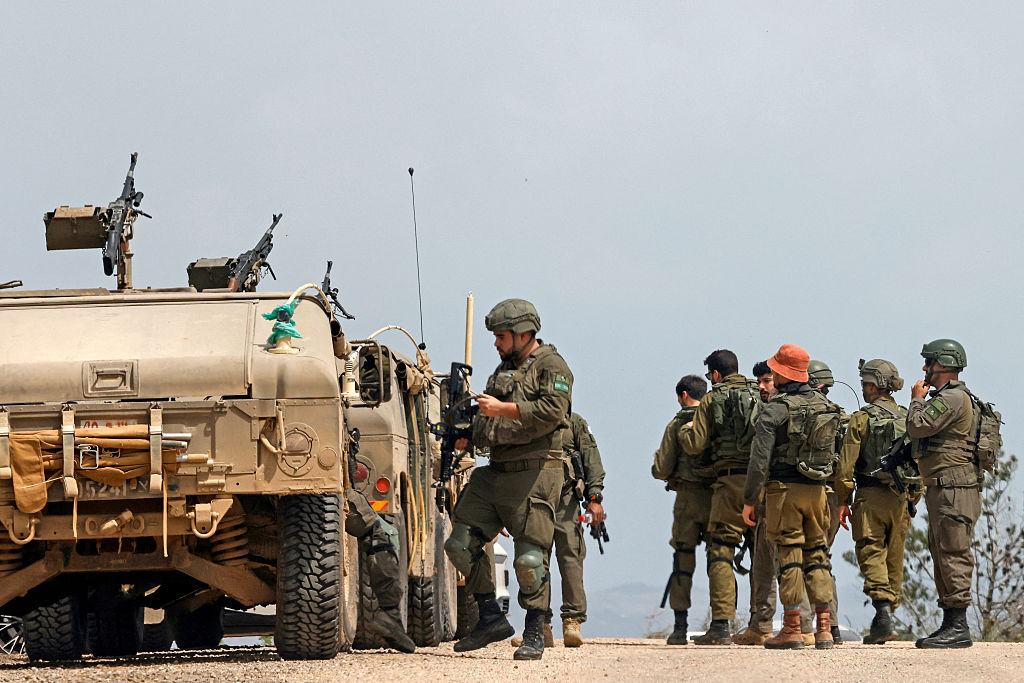
Defense Minister Israel Katz said on June 15 that the Israel Defense Forces (IDF) would remain in security zones in Lebanon, Syria, and Gaza “without any time limit.”
“We oppose an IDF withdrawal from Lebanon, despite all the existing pressures and those that will still come,” Katz said.
Israeli Prime Minister Benjamin Netanyahu similarly vowed that Israeli forces would remain in what he described as “deep security zones” established near Israel’s borders.
“We will remain in the security zones for as long as it is required to defend our country,” Netanyahu said during a televised address on June 15.
“Because after October seventh, I established a simple principle: Israel will not allow terror organizations to encamp on our borders; to tunnel into our territory; to prepare for a massacre close to our citizens.”
Lebanon Emerges as Sticking Point
Araghchi’s remarks appeared to go further than previous public descriptions of the agreement by U.S. officials.
According to the Iranian foreign minister, Tehran views the memorandum as an agreement between “the United States and Israel on one side, and Iran and Hezbollah on the other.”
He said any future Israeli attacks on Lebanon or continued presence of Israeli forces in the country after the agreement takes effect would be considered by Tehran as violations of the accord.
Pakistani Prime Minister Shehbaz Sharif, who helped mediate negotiations, previously said the agreement called for the termination of military operations “on all fronts, including in Lebanon.”
However, U.S. officials have indicated that while Lebanon was covered by the ceasefire framework, they have said nothing about Israeli withdrawal from Lebanese territory being a condition of the deal, and insist that the arrangement gives Israel the right to defend itself.
Trump Pressures Israel
Trump on Tuesday expressed criticism of Israel’s campaign against Hezbollah.
Speaking to reporters during the G7 summit in France, Trump said he was “not happy” with how Israel had handled the conflict in Lebanon.
“They should have been able to do the job faster. It just goes on forever, and when that happens, it throws a negative light on the big deal, and that’s the deal with Iran,” Trump said.
The president also criticized Israeli airstrikes in populated areas, suggesting that Israel’s tactics in hunting Hezbollah terrorists have caused excessive collateral damage.
“You don’t have to knock down an apartment house every time you’re looking for somebody, because there are a lot of people in those apartment houses and they’re not all Hezbollah, that I can tell you,” Trump said.
Trump also suggested that Syria could potentially play a role in containing Hezbollah.
“I suggested to Israel to let Syria take care of Hezbollah,” he said. “Because, to be honest with you, I think they’d do a better job.”
Earlier, Trump criticized Israel for attacking targets in Beirut, saying they could have complicated the emerging U.S.–Iran memorandum of understanding.
At the same time, the U.S. president urged Iran not to respond to the strikes, urging all sides to “stand down” and give peace a chance.
 Friends Read Free
Copy
Facebook
Tweet
Friends Read Free
Copy
Facebook
Tweet