
Iran’s World Cup team coach has described his team as the “most oppressed” in the World Cup and said they had been ordered to leave the United States and return to their training base in Mexico only a few hours after their first game in the tournament on June 15.
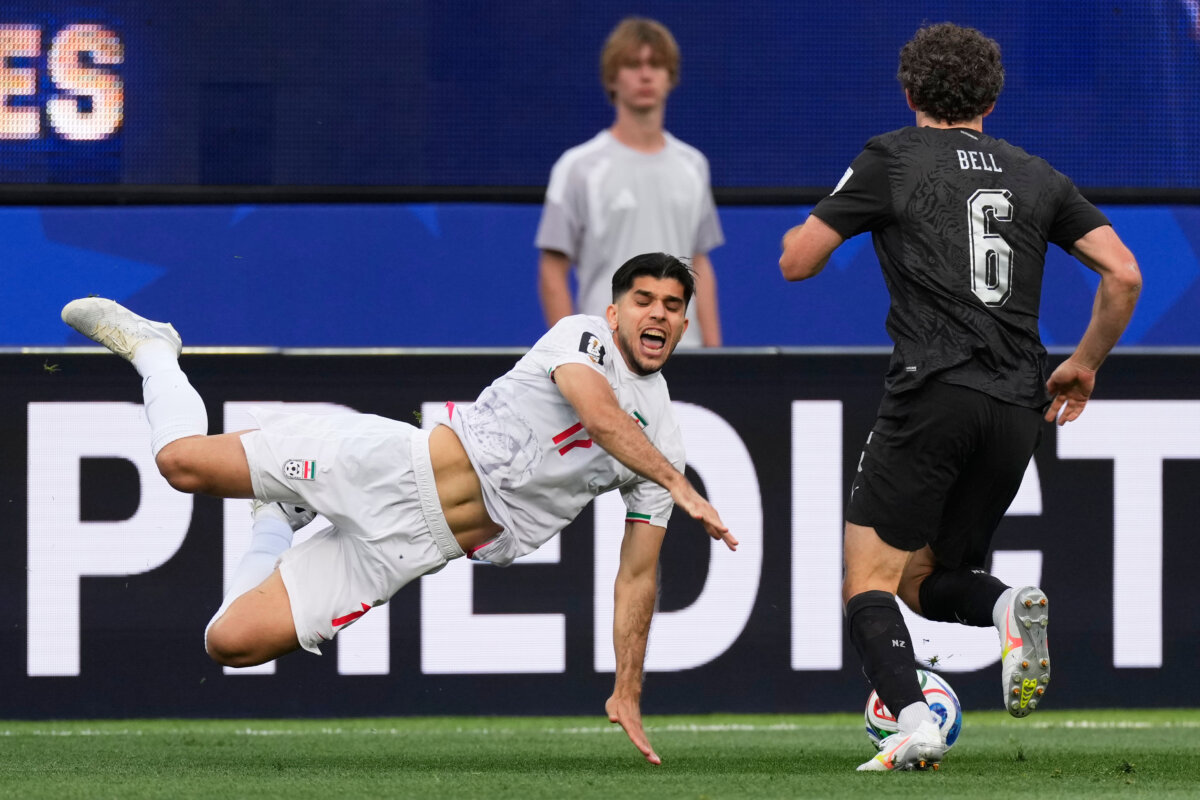
Iran drew 2–2 with New Zealand in Inglewood, Calif., and their coach, Amir Ghalenoei, said they had been told to fly back to Mexico rather than stay the night in Los Angeles.
“They didn’t even give us time to recover,” Ghalenoei said, speaking through an interpreter. “After the game today, they said to us, ‘You have to leave immediately.’”
He said it was important for his players to have time to rest and recover and that they were “troubled” by being told to return to Mexico immediately.
The Iranians had originally planned to base themselves in Arizona, but when President Donald Trump launched Operation Epic Fury on Feb. 28, that plan became unviable, and last month, Mexican President Claudia Sheinbaum announced Iran would be based just over the border in Tijuana.
“The United States doesn’t want the Iranian national team to stay overnight in the United States,” Sheinbaum told reporters on May 25.
The Iranian ambassador to Mexico, Abolfazl Pasandideh, was originally quoted in media reports as saying that Iran’s team had been notified that it would have to enter and leave the United States on the same day as its matches.
But on June 9, the Department of Homeland Security (DHS) said that was “untrue.”
“Thanks to the generosity of President Trump, the Iranian team will be able to arrive the day before their matches,” a DHS spokesman said.
Ghalenoei said he did not know why they had been told to return to Mexico.
‘It’s Very Strange,’ Says Coach
“I think it’s very strange,” Ghalenoei said.
“It seems like others are doing the planning for us. The decision-making for us is being made elsewhere. We were supposed to come two nights before the game, and we were supposed to stay tonight to recover and return tomorrow at lunchtime. We have no idea why.
“I think our team is perhaps the most oppressed in the World Cup.”
An hour after the match, Iran’s team captain, Mehdi Taremi, said: “We have to leave Los Angeles right now, and it’s not good for us.
“I think FIFA have to help us more than this,” Taremi said. “Everything is like a disaster, actually, for us.”
The Iranian team arrived in Los Angeles on June 14, a day ahead of their first group game with New Zealand, and were met with protesters against the Iranian regime.
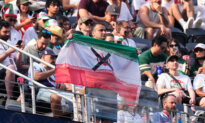
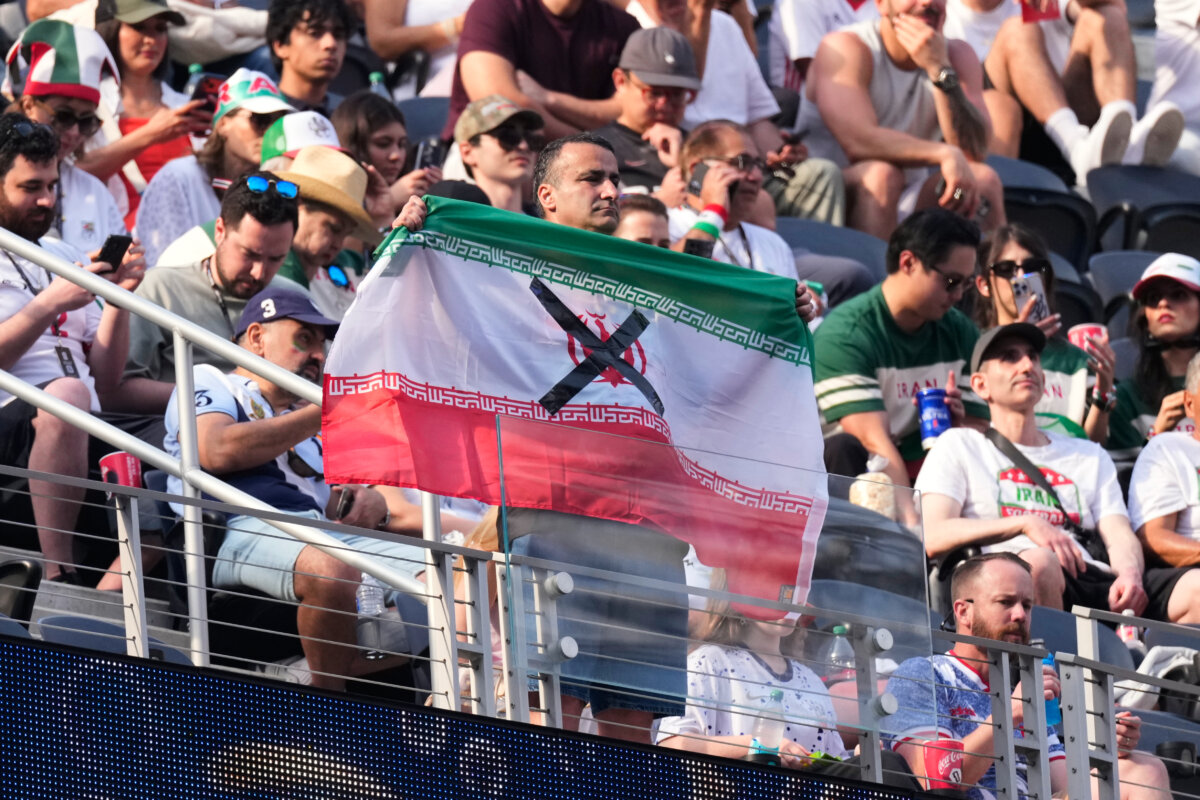
Several hundred Iranian Americans protested against the Iranian regime outside the stadium, and some fans inside turned their backs on the pitch during the Iranian national anthem.
Dozens of flags with the original lion and sun standard, which featured on the pre-1979 Iranian flag, were displayed in the crowd despite an official FIFA ban on political protests during matches. A Los Angeles County judge upheld the ban as lawful on June 15.
But the majority of the crowd appeared to support Iran.
Iranian Captain Hails ‘Incredible Atmosphere’
“It was an incredible atmosphere in the game, all 90 minutes,” Taremi said. “It was like at home for us.”
The World Cup is organized into 12 four-team groups, with each team playing each other once. The top two from each group go through to the knockout stage, along with the eight third-placed teams with the best records.
The other two teams in Iran’s group, Belgium and Egypt, played earlier on June 15, in Seattle, with that game ending in a 1–1 draw.
Iran will play Belgium at 3 p.m. ET on June 21 in Los Angeles, followed by a final group game against Egypt in Seattle on June 26.
The Epoch Times reached out to FIFA and the U.S. State Department for comment, but did not receive a response by publication time.
The Associated Press contributed to this report.
 Friends Read Free
Copy
Facebook
Tweet
Friends Read Free
Copy
Facebook
Tweet