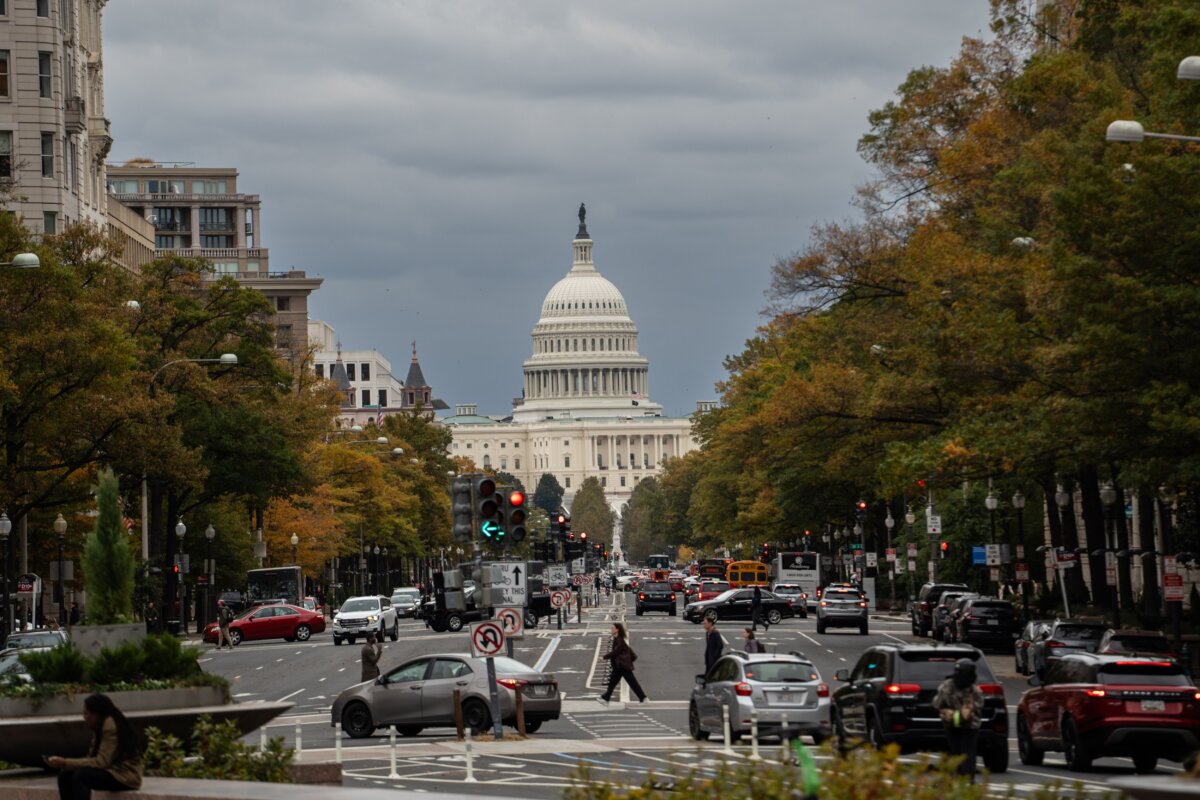


WASHINGTON—The Senate has failed to advance a stopgap funding measure for a 13th time, extending a government shutdown amid growing concern about pay for federal employees and benefits for low-income Americans.
The Oct. 28 vote of 54–45 fell short of the 60 votes needed to end debate and bring the measure to an up-or-down vote under Senate rules.
Republicans proposed the simple extension of current federal funding on Sept. 19 as a way to keep the government open while 2026 spending bills worked their way through the legislative process.
The measure passed the House with bipartisan support but has been rejected by Senate leaders who say they will not reopen the government until Republicans come to terms on their health care spending proposals.
Meanwhile, many federal employees missed their first full paycheck on Oct. 24.
About 700,000 federal workers have been furloughed without pay.
Others holding essential roles, including federal law enforcement and air traffic controllers, are working without pay.
The Association of Federal Government Employees on Oct. 27 called on the Senate to pass a “clean” continuing resolution and reopen the government.
“Both political parties have made their point, and still there is no clear end in sight,” Everett Kelley, the union’s national president, said in a statement.
“It’s time to pass a clean continuing resolution and end this shutdown today.”
That’s not what the union members meant, Sen. Tim Kaine (D-Va.) told reporters on Oct. 27, insisting they would not want to reopen the government without assurances from President Donald Trump that there will be no further layoffs.
“I know these folks very well, and they would not forgive us for doing a deal that would allow them to be fired next week,” Kaine said. “What they mean is they want to deal so they can go back to work.”
The shutdown, which began Oct. 1, is now the second-longest in U.S. history.
Adding to the political pressure on both parties, 1.1 million service members are likely to miss a paycheck on Oct. 31.
The troops were paid on Oct. 15 after the Trump administration authorized the use of funds earmarked for military research and development to pay them.
Also, funding for the Supplemental Nutrition Assistance Program will run out at the end of October.
Democrats have blamed Republicans for the shutdown, saying that the GOP has refused to negotiate over Democratic health care proposals, particularly their demand to make permanent the enhanced health care premium subsidies that were authorized as a temporary measure during COVID-19.
“Democrats and Republicans—who are in control—need to come to the table and figure out how we’re going to open the government and address the health care cliff that is coming up,” Sen. Catherine Cortez Masto (D-Nev.) told reporters on Oct. 27.
House Speaker Mike Johnson (R-La.), who adjourned the House on Sept. 19 after it passed the GOP-sponsored stopgap funding resolution, has said Senate Democrats are the only ones who can end the shutdown.
“You’ve got to have 60 votes in the Senate. We only have 53 Republicans, so we must have Democrats to do it,” Johnson said at an Oct. 28 press conference.
“We don’t control the Senate without 60 votes, so you have to have them.”
Sen. Andy Kim (D-N.J.) said no progress on negotiating an agreement is possible until the House returns.
“We’ve had a number of conversations and dialog on the Senate side, but everything always ends with this question of [whether that’s] something that can pass the House,” Kim told The Epoch Times on Oct. 27.
“We need them here to actually have bipartisan and bicameral negotiations.”
Some Republicans have called for a temporary extension of the enhanced health care subsidies, but party leaders say those negotiations should take place during regular funding negotiations, not under the threat of an ongoing government shutdown.
 Friends Read Free
Copy
Facebook
Tweet
Friends Read Free
Copy
Facebook
Tweet