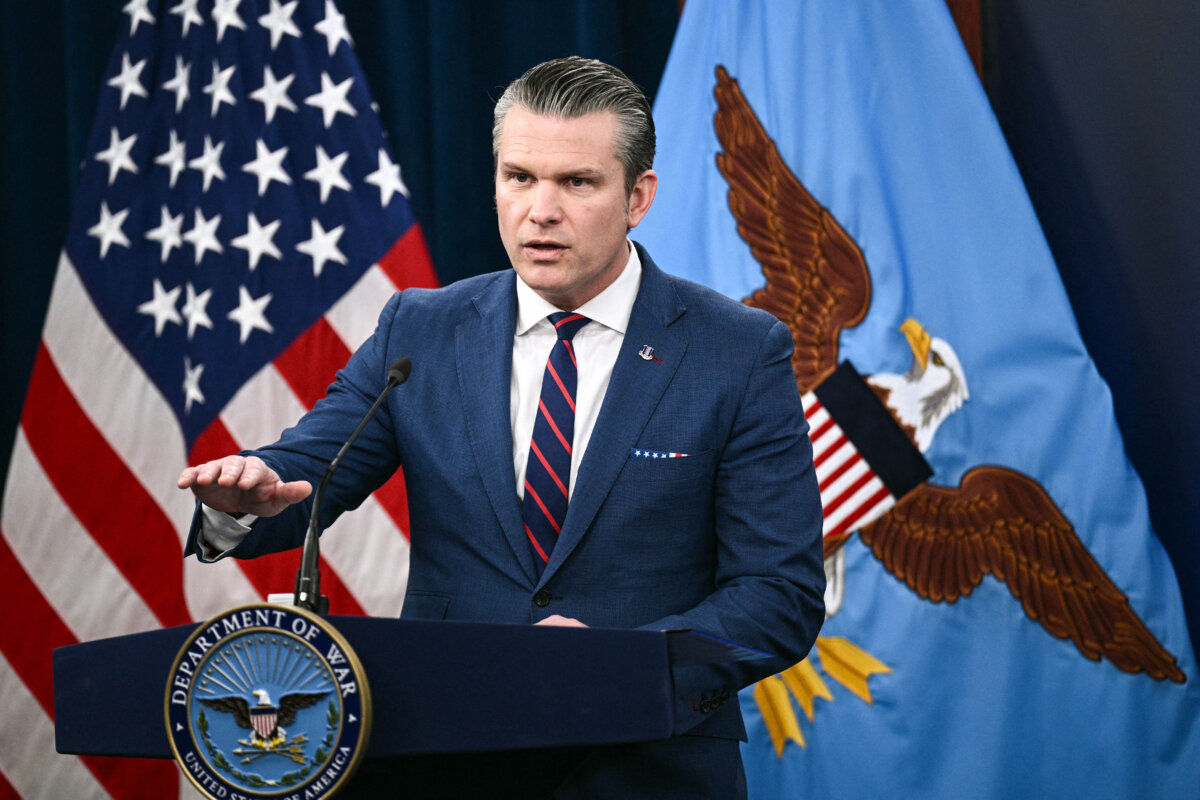

Department of War Secretary Pete Hegseth said that the U.S. military will launch its “most intense day” of strikes against Iran on Tuesday, coming hours after President Donald Trump indicated an end to the more than one-week-long conflict.
“The most fighters, the most bombers, the most strikes. Intelligence [is] more refined and better than ever. So that’s on one hand,” the Pentagon chief said in a news conference on Tuesday morning. “On the other hand, the last 24 hours have seen Iran fire the lowest number of missiles they’ve been capable of firing yet.”
Hegseth then emphasized that “this is not 2003,” making a reference to the U.S. invasion of Iraq, where tens of thousands of American soldiers were deployed to the Middle Eastern neighbor of Iran.
“Our generation of soldier will not let that happen again, and nor will this president, who very clearly ran against those kinds of never-ending, nebulously scoped missions,” he added, referring to the administrations of Presidents George W. Bush and Barack Obama. “Those days are dead.”
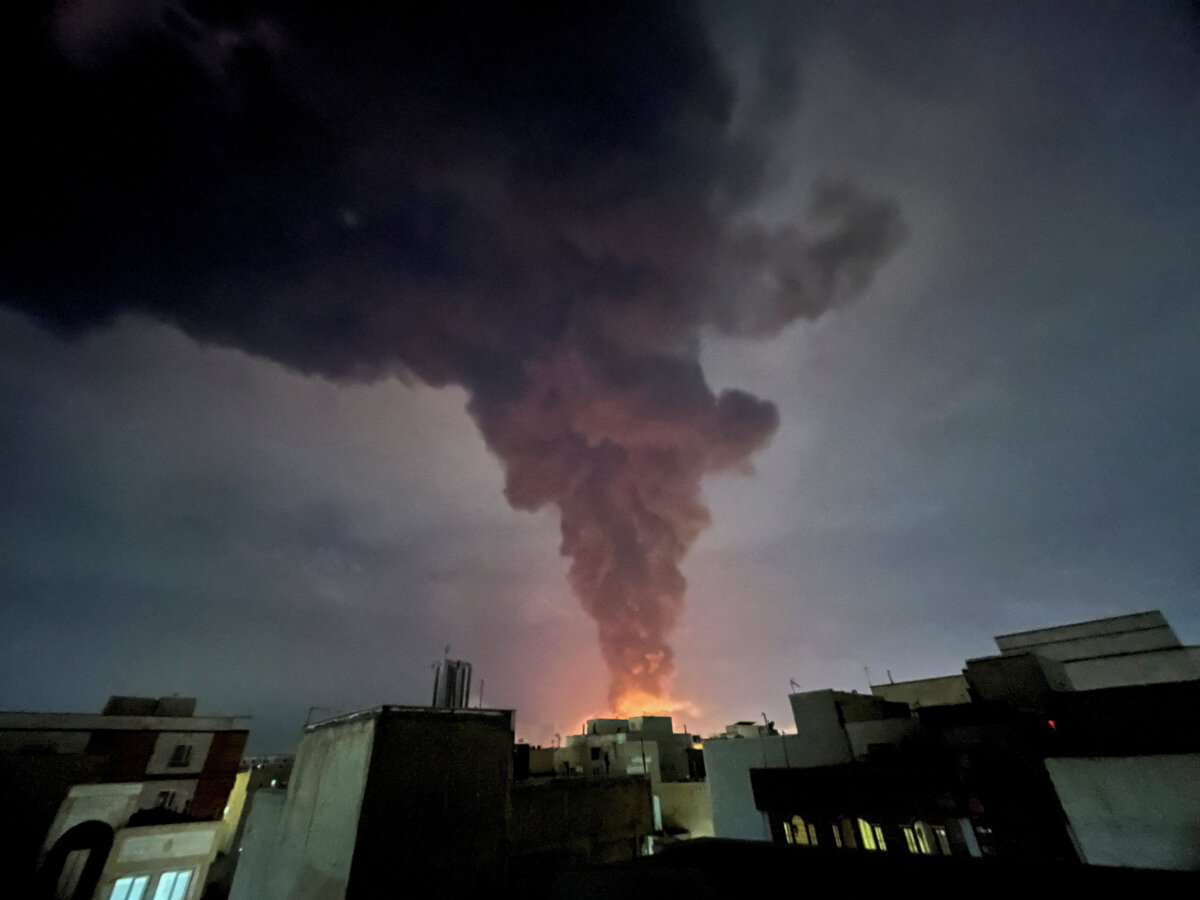
Iran launched new attacks on Israel and Gulf countries on Tuesday, keeping up some pressure on the Middle East. Missile alarms sounded in Dubai, and authorities in Bahrain said an Iranian attack killed one person and wounded eight others. Saudi Arabia said it destroyed two drones over its oil-rich eastern region, and Kuwait’s National Guard said it shot down six drones.
Trump said a day earlier that the U.S. military campaign, which started on Feb. 28, is “very complete” as he spoke with a CBS reporter. That prompted oil prices to drop after rising significantly since the start of the conflict.
He later wrote in a post on Truth Social that the U.S. military would dramatically increase its attacks if Iran tried to close the Strait of Hormuz, a narrow, strategic waterway used to transport millions of barrels of oil per day to the open ocean. Iran has been targeting energy infrastructure and traffic through the strait, which is a vital waterway for traded oil.
“If Iran does anything that stops the flow of Oil within the Strait of Hormuz, they will be hit by the United States of America TWENTY TIMES HARDER than they have been hit thus far,” the president warned late on Monday evening in his social media post.
Gas prices have increased for U.S. motorists in the aftermath of the joint U.S.–Israel operation. According to data provided by the American Automobile Association, gas prices rose by around 6 cents from Monday to Tuesday, with a gallon of regular gasoline costing $3.539. It stood at around $3.109 per gallon seven days ago and $2.921 a month ago.
In the Tuesday news conference, Joint Chiefs of Staff Chair Dan Caine said the U.S. military is considering options to ensure the Strait of Hormuz is open for tanker traffic, but has not yet been asked to escort tankers through the passage. Caine also said that military leaders are looking at “a range of options” and would present them to Trump if asked.
The Associated Press contributed to this report.
 Friends Read Free
Copy
Facebook
Tweet
Friends Read Free
Copy
Facebook
Tweet