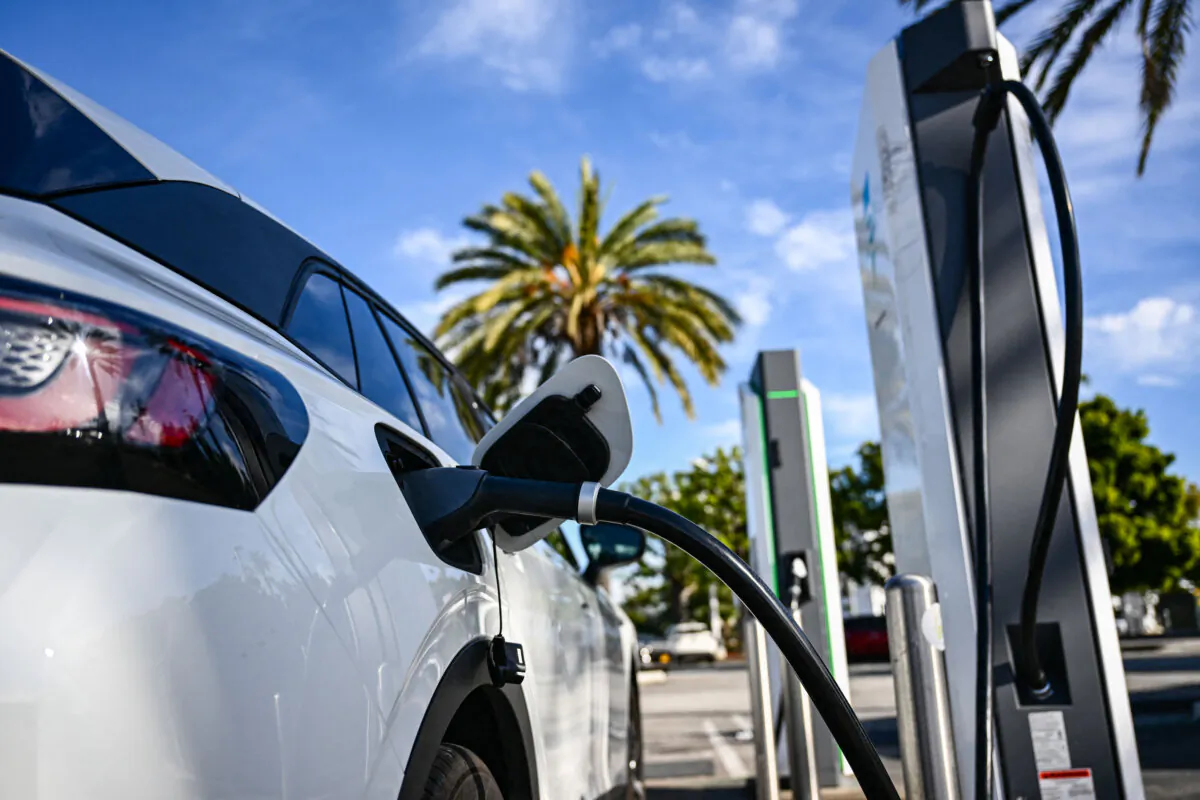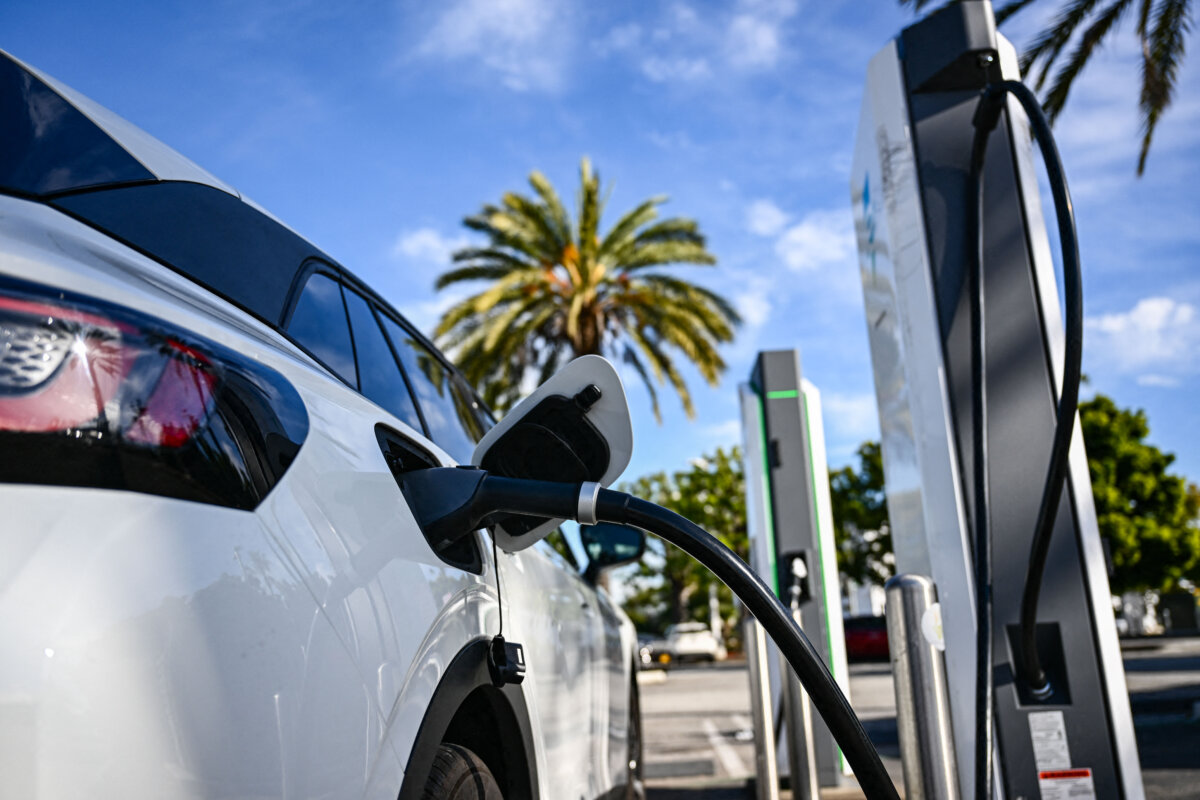

The House version of a bipartisan highway bill would require electric vehicle owners to pay as much as $150 a year to help cover the cost of maintaining the nation’s roads.
The provision was unveiled on May 17 as Reps. Sam Graves (R-Mo.) and Rick Larsen (D-Wash.), the top lawmakers on the House Transportation and Infrastructure Committee, announced a deal on the BUILD America 250 Act, a five-year investment package for roads, bridges, rail, and other infrastructure.
Under the proposal, beginning in October 2026, EV owners would have to pay a new annual fee of $135 when they register their vehicles. The fee could rise by $5 each year until it reaches a cap of $150.
Owners of plug-in hybrid vehicles would also pay a $35 annual fee starting in October, with the amount rising to as much as $50 by the end of the legislation’s authorization period in 2031.
Revenue from the fees would go to the Department of Transportation’s Highway Trust Fund, which is funded mostly by federal taxes of 18.4 cents per gallon on gasoline and 24.4 cents per gallon on diesel. EV drivers have generally avoided contributing to the fund through fuel taxes because EVs do not use gasoline or diesel.
To ensure compliance, the bill would authorize the Federal Highway Administration to withhold from a state’s federal highway funding an amount equal to 125 percent of the fees owed if the state fails to collect them.
The measure “ensures that electric vehicle owners begin paying their fair share for the use of our roads,” Graves, who chairs the House Transportation and Infrastructure Committee, said in a statement.
Larsen, the top Democrat on the committee, said the agreement reflects a “commitment to bipartisan lawmaking” and the need to find compromise.
It is not clear whether Senate Democrats would also support the proposed EV fee.
The fees drew opposition from environmental advocates. Albert Gore III, executive director of the Zero Emission Transportation Association, called the measure a “punitive tax” that would make it more expensive for drivers to switch to EVs when fuel prices hit record highs.
“The proposed fee would charge an unfair premium on EV drivers, at a time when all Americans are looking for ways to save money,” said Gore, son of former Vice President-turned climate change advocate Al Gore.
The Highway Trust Fund, which finances the federal government’s surface transportation programs, is facing a growing shortfall. The Congressional Budget Office projects that by 2027, the gap between trust fund revenues and spending will reach $40 billion each year, resulting in an overall deficit of more than $100 billion by 2030.
The federal fuel tax rates that support the fund, however, have remained unchanged since 1993. At the same time, Congress has continued to authorize higher transportation spending, while internal combustion vehicles have become more fuel-efficient and a growing number of drivers have shifted to EVs and hybrids, reducing the amount of money collected.
Earlier this month, President Donald Trump said he wanted to suspend the federal gas tax as the average price of gasoline hovered around $4.50 a gallon after the war with Iran disrupted global oil markets.
“It’s a small percentage, but it’s, you know, it’s still money,” Trump told reporters on May 11.
In 2022, when the full-scale war between Russia and Ukraine reduced global oil supplies and pushed gasoline prices to their previous peak, President Joe Biden also suggested suspending the gasoline tax. That proposal, which would need congressional approval, never materialized.
 Friends Read Free
Copy
Facebook
Tweet
Friends Read Free
Copy
Facebook
Tweet