
LAKE HAVASU CITY, Ariz.—London Bridge wasn’t falling down. It was sinking, inch by inch, into the River Thames.
Heavy traffic drove it deeper into the muddy riverbed—about an inch every eight years. By the mid-20th century, one side already sat lower than the other, a slow tilt marking the end of its working life.
London’s historic span was nearing retirement. Half a world away, American businessman and inventor Robert McCulloch saw something else entirely.
In 1968, he bought the failing span and set in motion a plan that would bridge two continents and reshape a desert city.
Stone by stone, the bridge came apart. Each block was numbered, cataloged, and sent on a long journey across the Atlantic.
It moved by ship through the Panama Canal, on to California, then overland into the Arizona desert.
At Lake Havasu City, crews rebuilt it over a manmade channel, restoring it stone by stone into an unlikely new setting.
What once carried horse carts, pedestrians, and automobiles over the Thames became the centerpiece of a planned desert community.
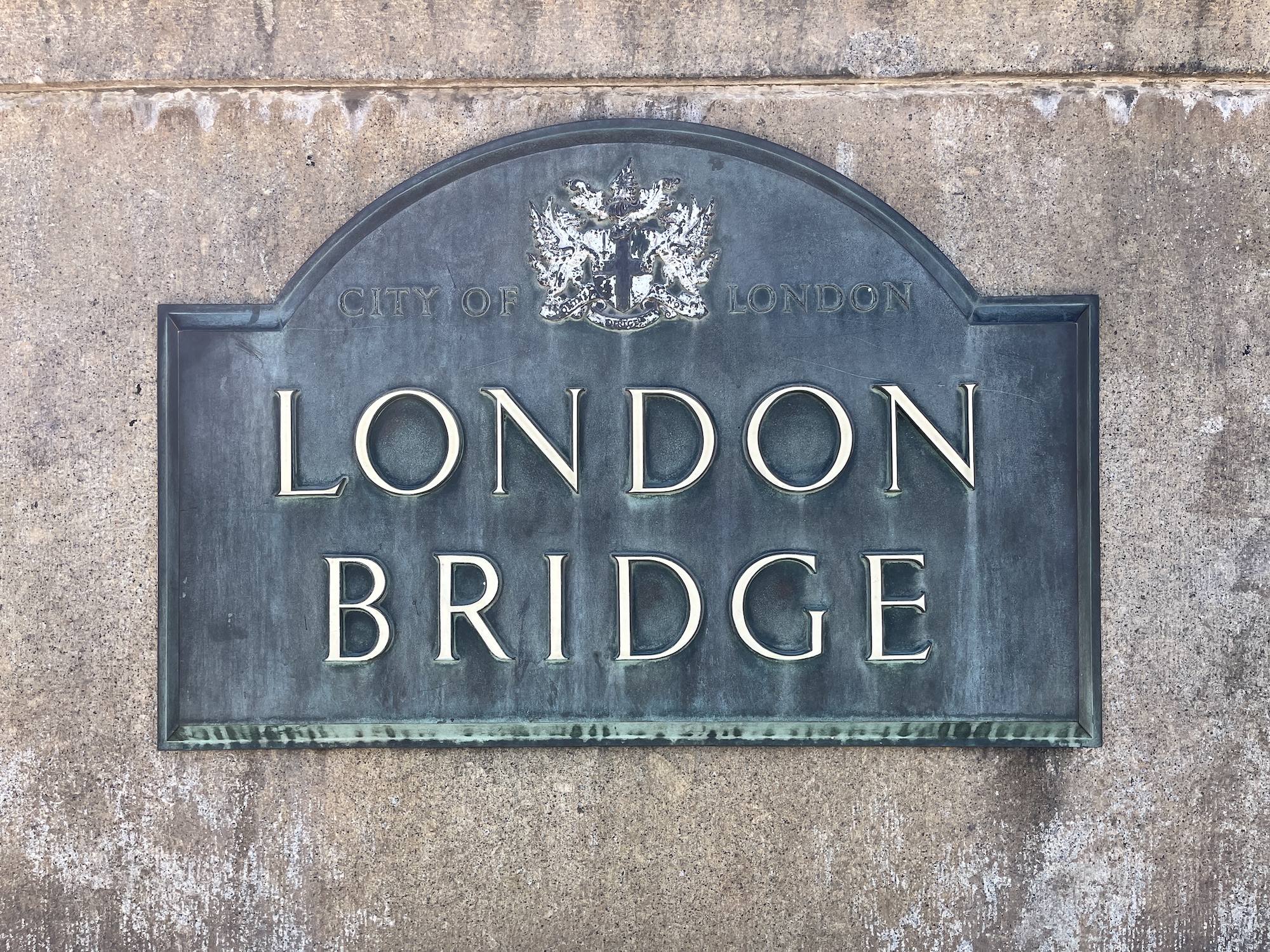 The original plaque for the London Bridge, built in 1831, now marks the bridge’s new location in Lake Havasu City, Ariz., on June 5, 2026. (Allan Stein/The Epoch Times)
London Bridge no longer belonged to London alone. It had taken root in the Mojave Desert.
Desert Revival
The relocation transformed Lake Havasu City into a destination. Visitors began arriving in steady streams—about a million a year—drawn by a centuries-old bridge in the middle of the desert.
Today, it ranks among Arizona’s top attractions, second only to the Grand Canyon.
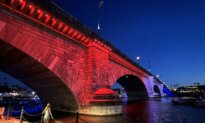
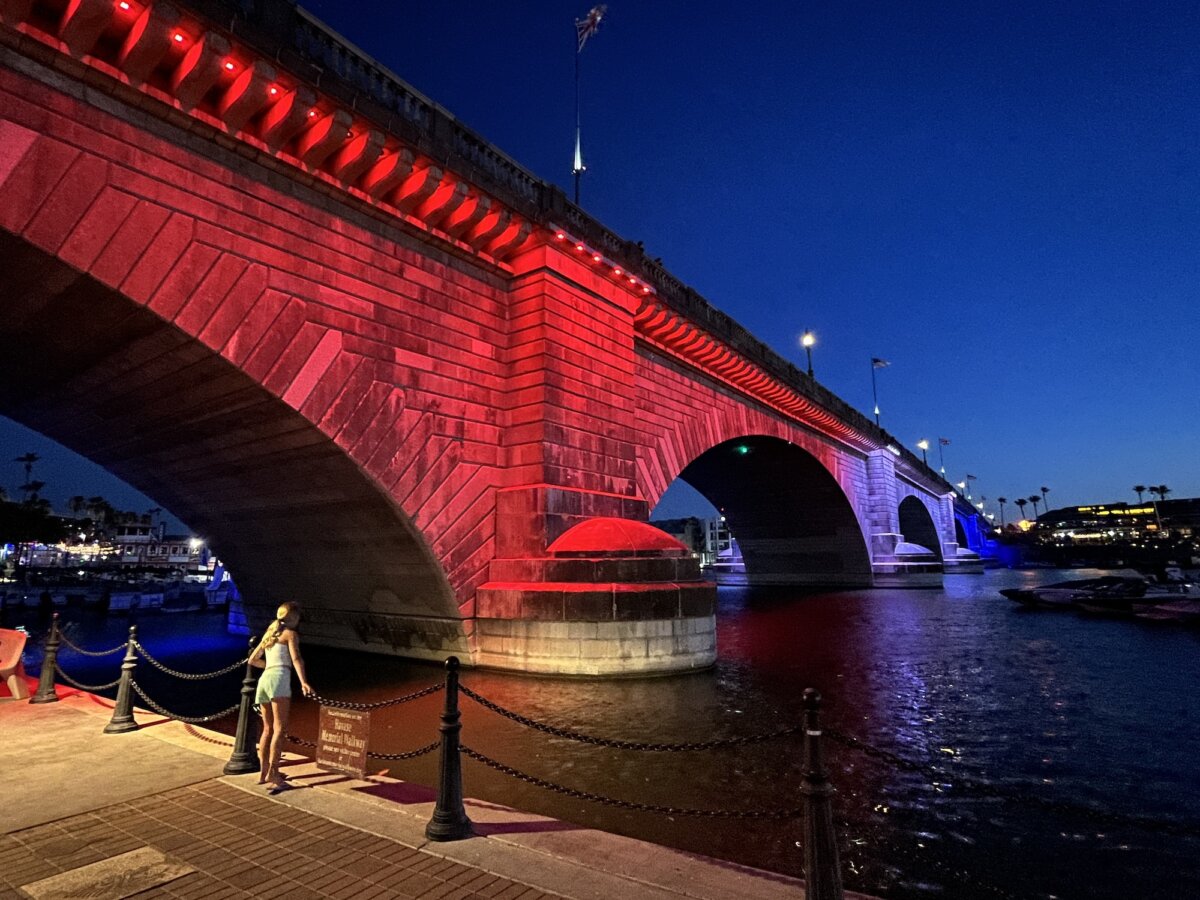
As the nation’s 250th anniversary approaches, city officials plan to light the bridge in red, white, and blue and host community events, culminating in the Fourth of July “Fire on the Water” fireworks at London Bridge Beach.
“It’s really the heart of our community. It’s what sets us apart. It stands for the idea that anything is possible,” Lake Havasu City Mayor Cal Sheehy told The Epoch Times.
The city, now home to 58,926 residents, has grown around the historic span, which still carries traces of two world wars.
“It’s an antique,” said Astrid Blom, visitor center manager. “It’s incredible that it’s in the desert. Think of all the people who crossed it—dignitaries, everyday people. It’s amazing.”
The bridge has become more than a landmark. It anchors the city’s identity.
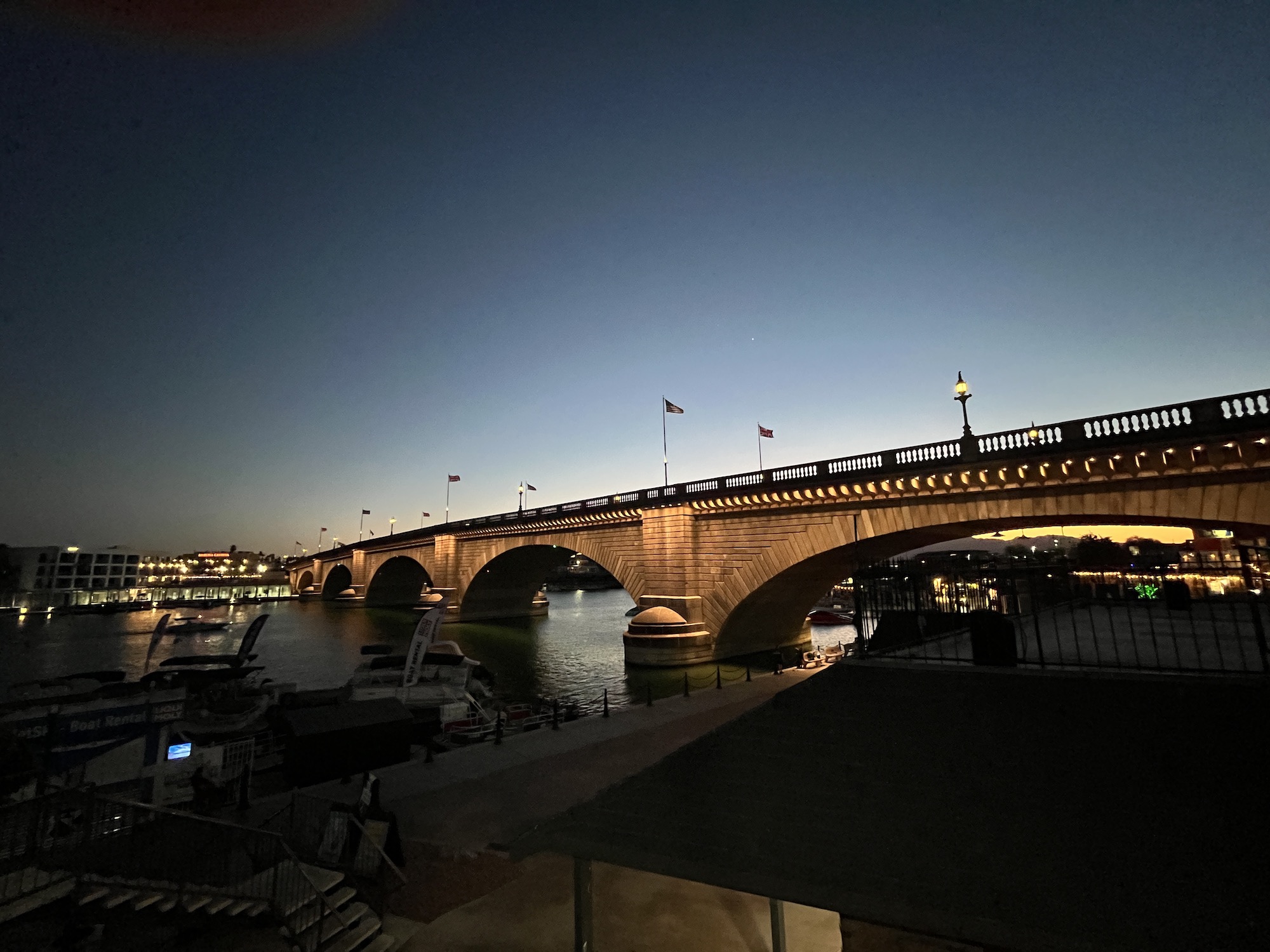 The London Bridge at night in Lake Havasu City, Ariz., on June, 5, 2026. (Allan Stein/The Epoch Times)
“It symbolizes the vision and entrepreneurial spirit that helped establish Lake Havasu City. It’s a historic landmark and popular meeting place for both residents and visitors. It’s a source of pride for our community and connects us to history,” according to the city in an email to The Epoch Times.
More than half a century later, that influence still defines the city’s trajectory.
“It put our city on the map, literally. It turned a small desert town into a year-round tourism destination.”
That transformation spilled outward, shaping hospitality, retail, dining, and recreation along the Bridgewater Channel and surrounding district.
In the Arizona desert, the bridge faces heat more than history. Summer temperatures above 110 degrees present the greatest challenge for maintenance crews.
Still, the structure holds up well. It undergoes a full inspection every three years, with water intrusion remaining the primary concern.
The interior sealing system is expected to be replaced again in about 12 years.
Engineers say the bridge’s hybrid design—historic granite over a steel frame—has helped it adapt to its unexpected environment.
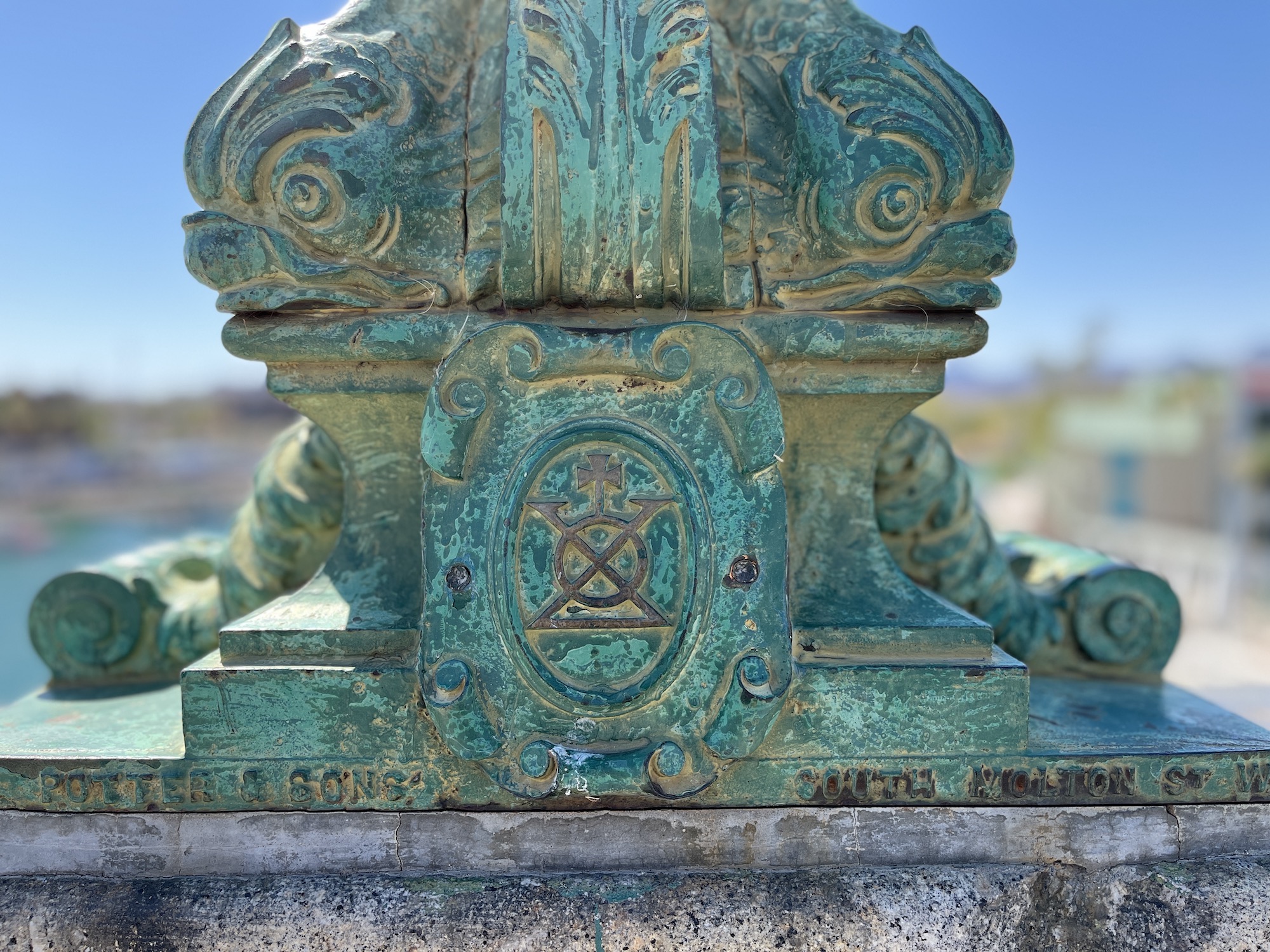 An original ornamental piece of the London Bridge, which now stands in Lake Havasu City, Ariz., on June 5, 2026. (Allan Stein/The Epoch Times)
“It’s surprising to note that it’s a modern bridge … it has all the modern features of engineering under the base of the bridge,” Sheehy said.
“It’s the heart of our city, and it stands as a legacy for Lake Havasu City.”
A Tale of Two Cities
For nearly 2,000 years, bridges have carried travelers across the River Thames.
Old London Bridge, built between 1176 and 1209 by architect and priest Peter of Colechurch, replaced earlier Roman-era wooden crossings. Despite a fragile foundation and constant repairs, it endured for more than six centuries.
It carried merchants, pilgrims, and royalty. It also projected power.
From 1305 to 1660, the heads of executed traitors lined its southern gate, mounted on pikes as a warning to those entering the city.
By the late 18th century, the structure had worn out. A replacement opened in 1831, designed by Scottish engineer John Rennie.
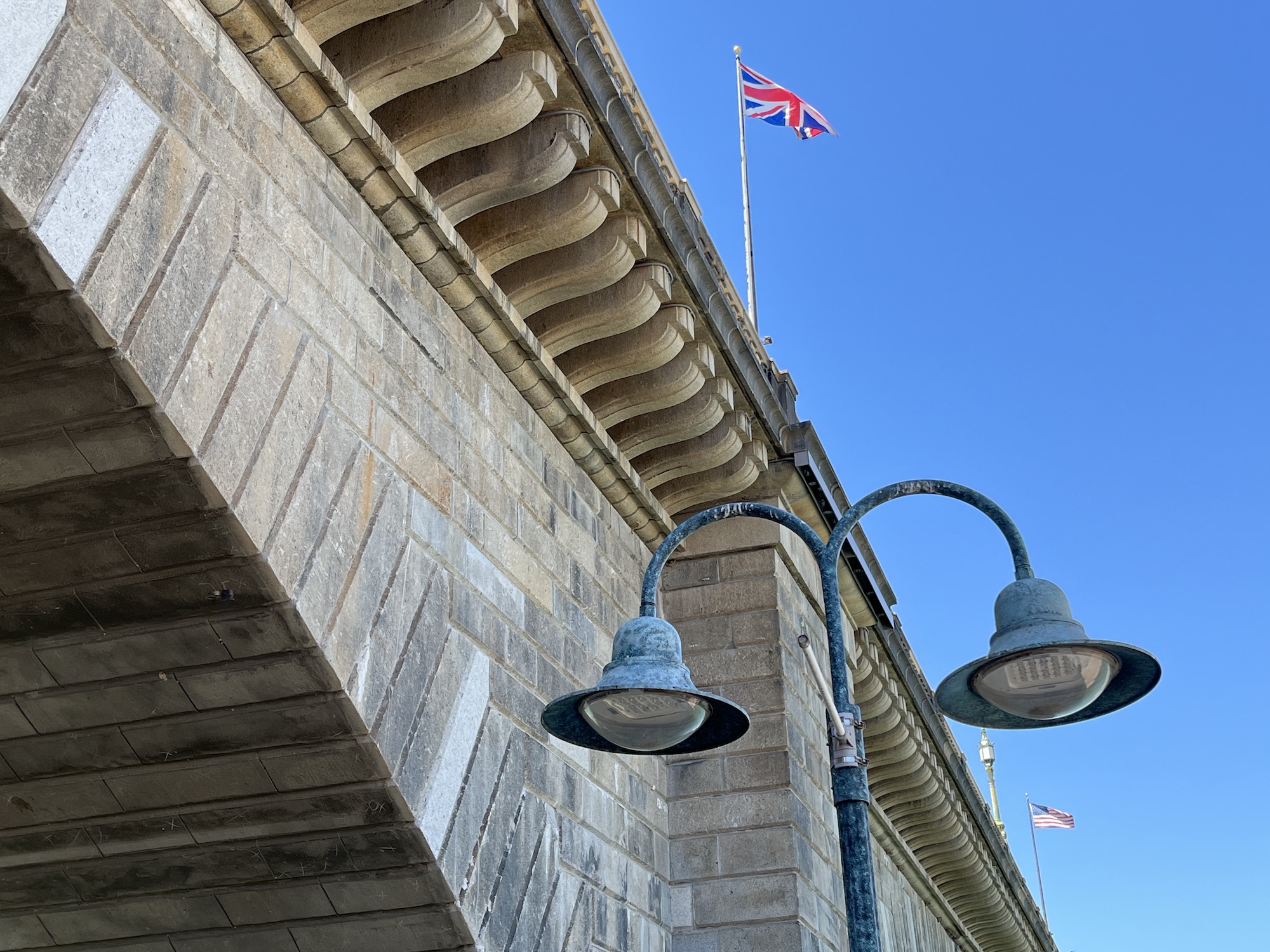 Original bridge construction still adorns the London Bridge in Lake Havasu City, Ariz., on June 5, 2026. (Allan Stein/The Epoch Times)
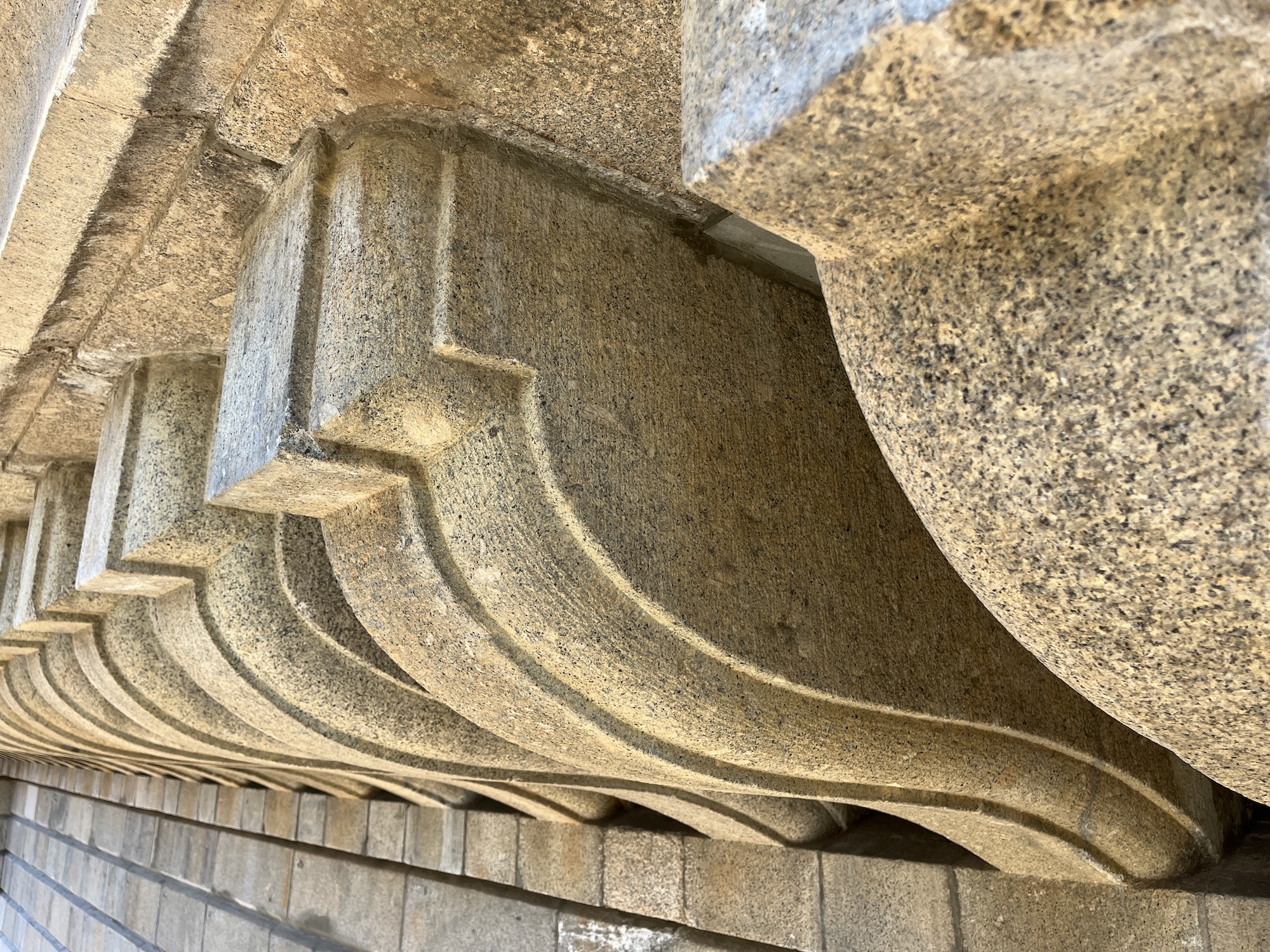 An underside view of original stonework at the London Bridge in Lake Havasu City, Ariz., on June 5, 2026. (Allan Stein/The Epoch Times)
But time and traffic took their toll. By 1924, one side had sunk several inches lower than the other.
A Bridge Becomes a Vision
Across the Atlantic, McCulloch was assembling a different future.
He had purchased 26 square miles along Lake Havasu in the early 1960s, intent on building a city. To shape it, he enlisted Cornelius Vanderbilt “C.V.” Wood, the planner behind Disneyland’s development.
Then London’s problem became his opportunity.
By 1967, officials were looking to sell the aging bridge. Many saw a costly relic. McCulloch saw a centerpiece.
On April 18, 1968, he secured the bridge for $2.4 million—more than $17 million today.
Even its decorative elements carried history. The Victorian lampposts lining the bridge were cast from cannons seized after the Battle of Waterloo in 1815.
Those lampposts still stand today, tying the Arizona desert back to Britain’s military past.
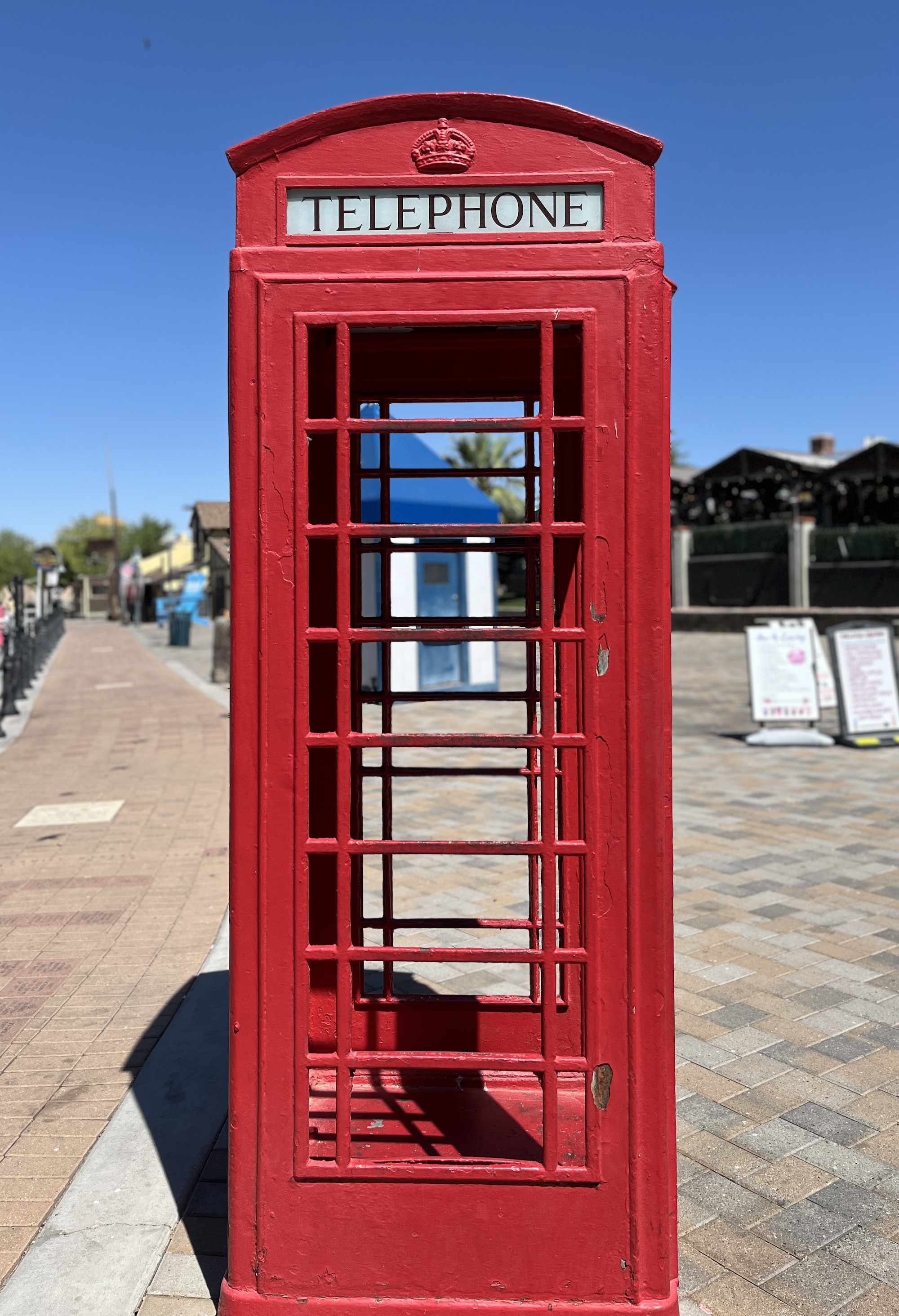 An authentic London city call box stands near the London Bridge in Lake Havasu City, Ariz., on June 5, 2026. (Allan Stein/The Epoch Times)
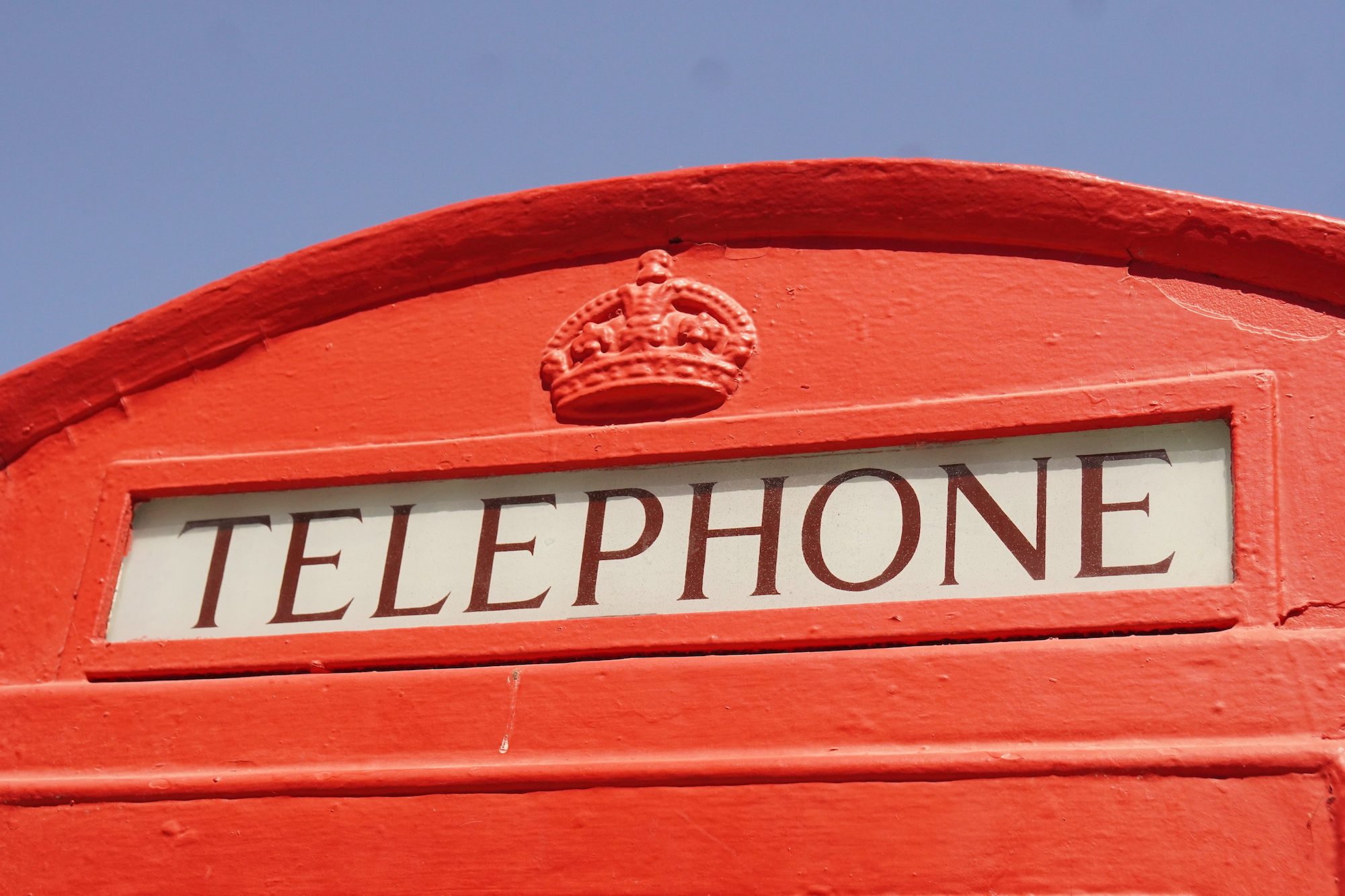 A close-up view of the call box on June 5, 2026. (Allan Stein/The Epoch Times)
Dismantling the bridge was painstaking work. It was taken apart granite block by granite block—10,276 pieces in all—and shipped more than 5,000 miles.
The reconstruction cost another $7 million.
Engineers rebuilt it over the Bridgewater Channel using a steel frame faced with the original granite, reducing its weight from 130,000 tons to 30,000 tons while preserving its strength.
On Oct. 10, 1971, Lake Havasu City rededicated London Bridge.
‘Ginormous Puzzle’
Visitors remain amazed by its origins.
“Why would somebody buy a bridge and bring it over all the way here? And why would London sell a bridge? They didn’t understand that,” Blom said.
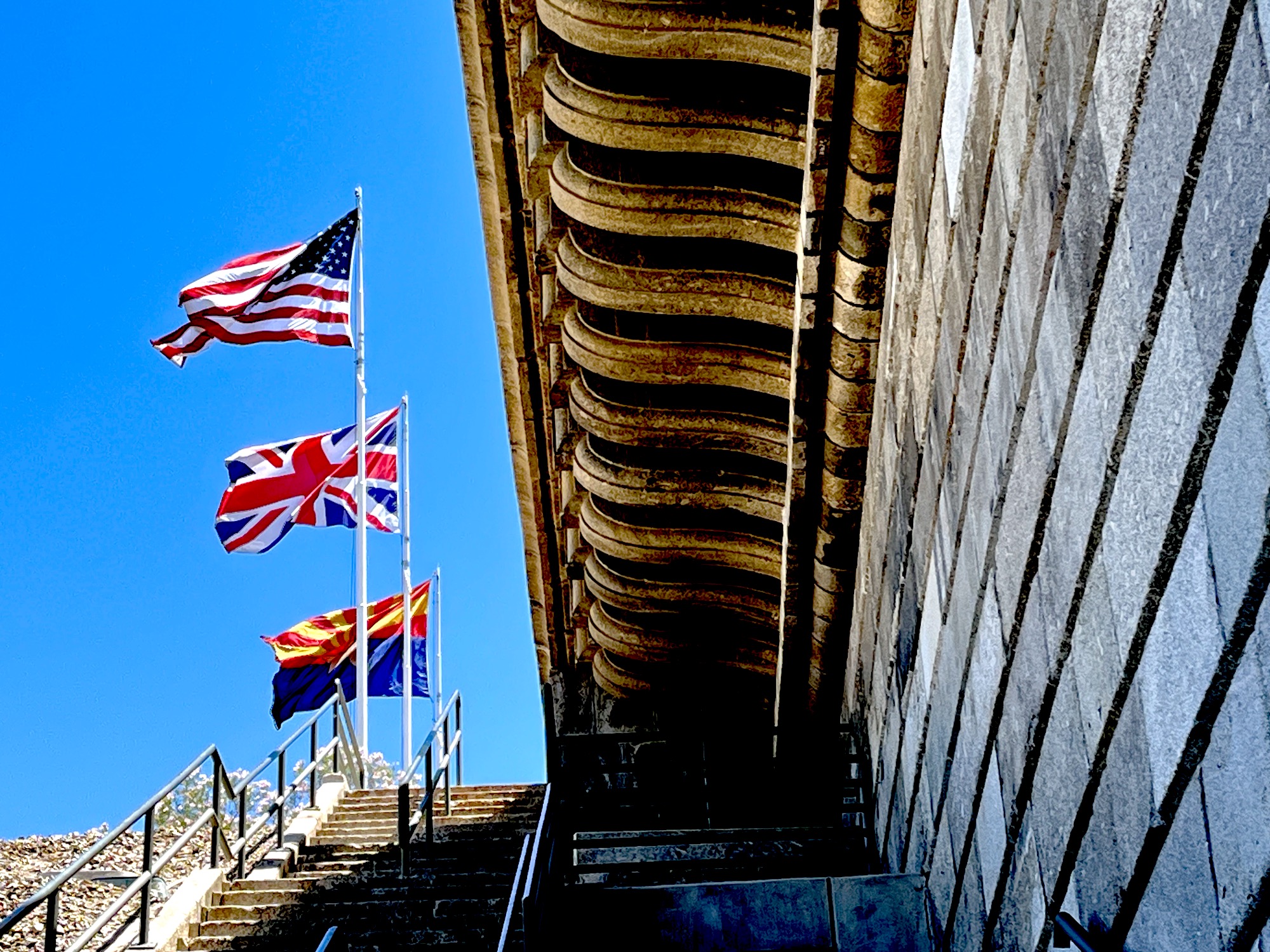 The flags of the United States, England, and Arizona stand above the London Bridge in Lake Havasu City, Ariz., on June 5, 2026. (Allan Stein/The Epoch Times)
“Like a ginormous puzzle, you can see all the bricks are numbered.”
Each year, roughly 100,000 people visit the center to learn its story.
“It’s very important to our tourism economy because it brings a lot of people. They’re interested in the bridge in the middle of the desert,” Blom said.
Even in extreme heat, interest stays strong.
“It was made here to be earthquake-proof. The bridge is hollow on the inside,” Blom said.
Tourism held steady even during the pandemic, she said, as visitors continued to arrive from neighboring states.
“Because they knew we were open, a lot of Californians, [people] from Nevada, they all came here to enjoy—to escape their own restrictions.”
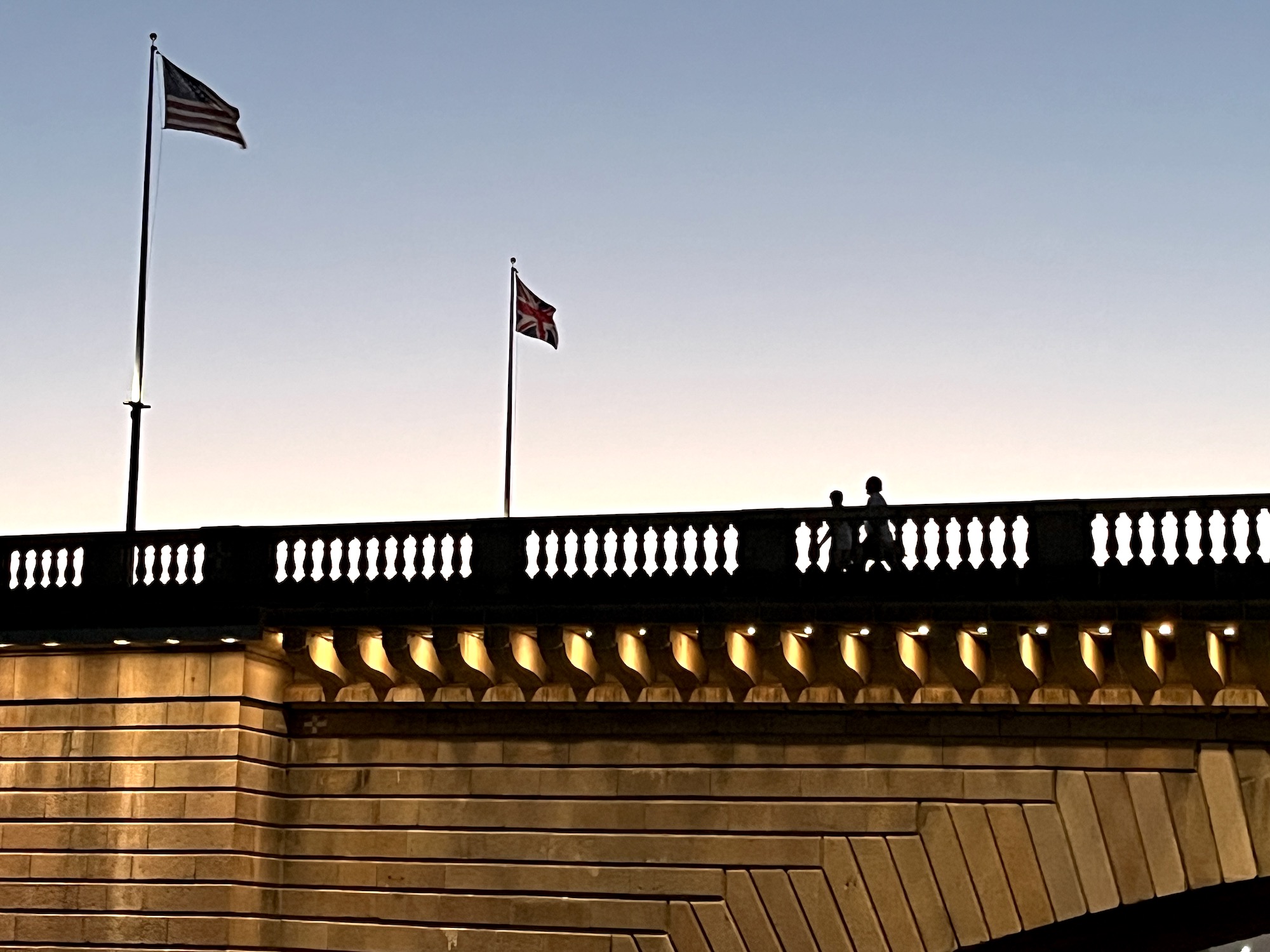 A twilight crossing of visitors over the London Bridge in Lake Havasu City, Ariz., on June 5, 2026. (Allan Stein/The Epoch Times)
The bridge’s mythology has grown alongside its fame, including persistent but unfounded stories tying it to Jack the Ripper.
“People say Jack the Ripper went through the bridge, which of course is not true,” Blom said.
“The Archbishop of Canterbury was decapitated [there] as well,” she added.
Its long Victorian-era history has also inspired ghost stories.
“It’s not something I believe in,” Blom said, “but if you believe it, of course, you’ll find something, probably.”
Pop culture followed. The bridge has appeared in “Ghost Adventures” and the 1987 film “Million Dollar Mystery.”
Legacy in Stone
In Lake Havasu City, the bridge is more than spectacle—it is infrastructure, identity, and origin story.
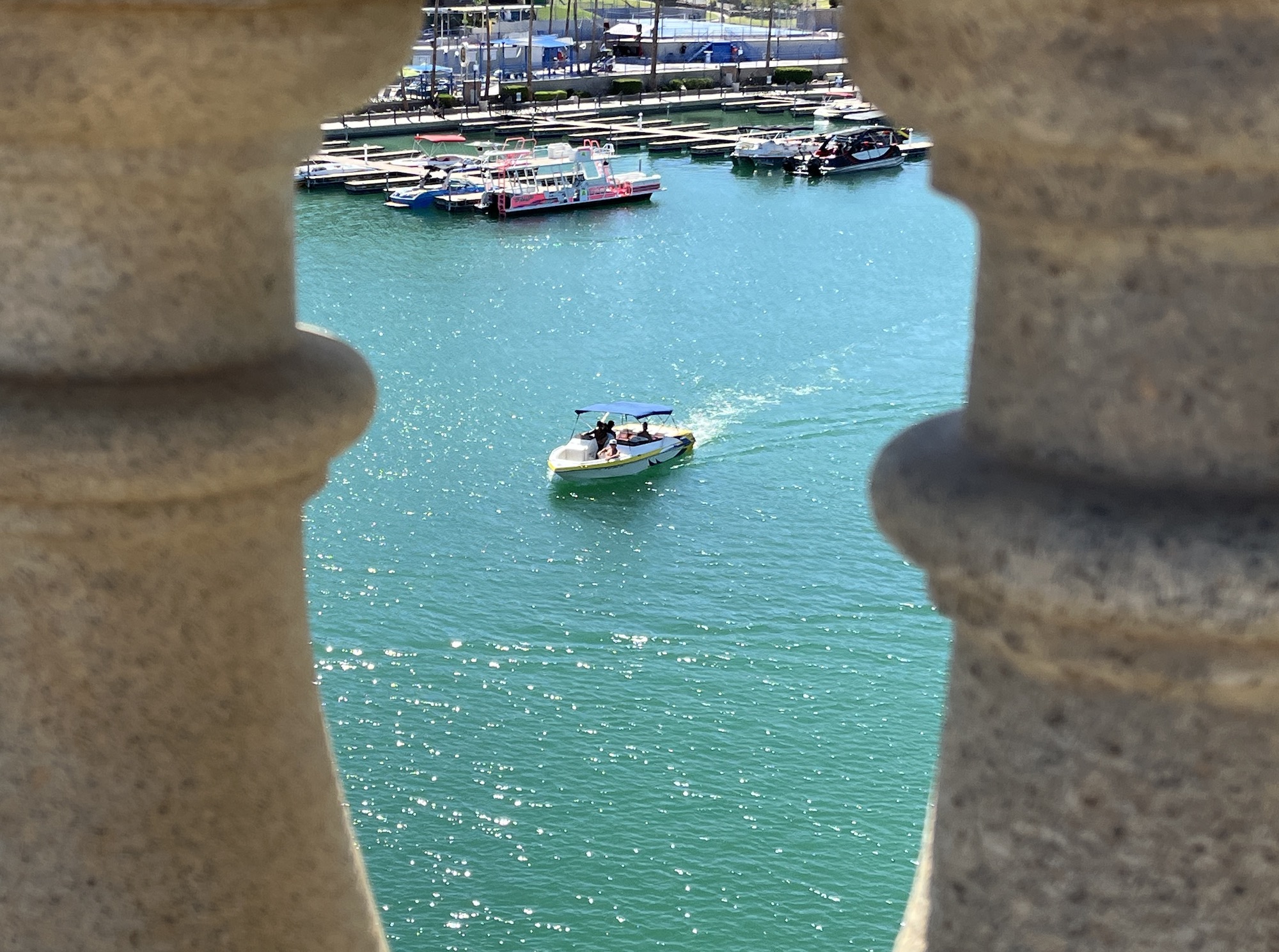 A motorboat slowly makes its way across Lake Havasu as seen through the London Bridge on June 5, 2026. (Allan Stein/The Epoch Times)
“It also is a functioning bridge that we use on an everyday basis. It stands mighty and is quite the sight to see,” Sheehy said.
If McCulloch were alive today, “he’d be quite impressed with what his legacy has built.”
“It’s that ingenuity and that pioneering spirit of getting things done. That’s how our residents have built the city to be the vibrant community that it is today,” Sheehy said.
 Friends Read Free
Copy
Facebook
Tweet
Friends Read Free
Copy
Facebook
Tweet