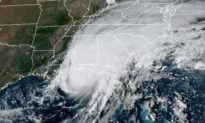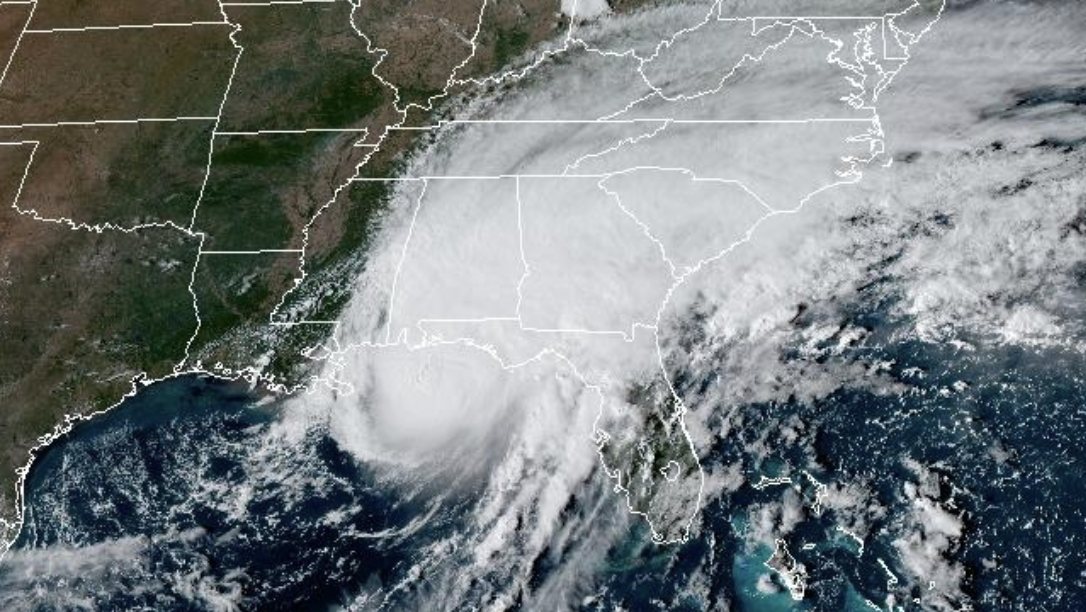

Hurricane Isaias will make landfall on Florida’s Panhandle around midnight on Oct. 9, and the state’s emergency resources are pre-staged and ready to respond.
As of 5 p.m. ET on Oct. 9, the National Hurricane Center tagged Isaias 90 miles south of Pensacola, Florida, but tropical storm-force winds (39mph or greater) already extend more than 200 miles out from its eye.
It remains a Category 3 hurricane with maximum sustained winds of 115 mph, moving north at 17 mph, and projected to make landfall near Pensacola.
Conditions are deteriorating quickly within the storm surge and hurricane warning areas, the National Hurricane Center said. “Residents should be seeking safe shelter.”
Originally projected to make landfall around Alabama’s Mobile Bay area, its track has continued to push east, with landfall anticipated somewhere within Santa Rosa and Okaloosa Counties. This target area includes the cities of Navarre, Fort Walton Beach, and Destin.
Maximum storm surge is still expected to be six to seven feet for the stretch of coastline from the Florida/Alabama state line to Indian Pass, Florida.
Florida Gov. Ron DeSantis warned residents during a 3 p.m. press conference that this storm was expected to land as a Category 3.
He said it would deliver a significant storm surge—especially for the greater Panama City area and all coastal points caught on Isaias’s east side—and inland flooding as torrential rain falls on already saturated ground.
Winds in excess of 115 mph are expected amid tornado threats.
“It is going to be nasty throughout the early morning hours of Saturday and even into, I think, Saturday afternoon,” he said.
“So for the next 24 to 36 hours, you know you’re going to see some nasty weather one way or another if you’re in this part of the state.”
Hurricane warnings and evacuation orders have been in effect for these communities. School closures, as well as airport and seaport closures, were also announced.
Bridge and parkway tolls were suspended to assist with evacuations, and the Florida Highway Patrol intends to close major roadways, including portions of I-10, once sustained winds reach Tropical Storm strength (39 mph).
Meanwhile, the governor outlined the armada of emergency resources waiting to be deployed once Isaias moves north.
The list includes more than 16,000 linemen and power-restoration personnel, thousands of Florida State Guardsmen and Florida National Guard members, hundreds of personnel from the state’s Department of Transportation and Department of Law Enforcement, and teams from the Fish and Wildlife Conservation Commission.
This manpower comes equipped with hundreds of various rescue vehicles, including high-wheeled vehicles, shallow-water boats and airboats, helicopters, fixed-wing aircraft, ATVs, and unmanned aerial systems.
More than 100 ambulances have been positioned for use if necessary.
DeSantis said the state also has accumulated more than 1,000 generators, millions of ready-to-eat meals, more than a million bottles of water, a million gallons of diesel, half a million gallons of gasoline, and 35,000 gallons of aviation fuel.
However, the governor encouraged Florida residents not to rely solely on that and to have their own emergency supplies on hand.
“Even though we do set up these points of distribution with food and with water, make sure you have your own supplies,” he said.
“It’s good to have fuel. It’s good to have water. It’s good to have non-perishable food. Give yourself 72 hours. Assume power is going to go out. If you use a generator, don’t run the generator inside your house.”
DeSantis was joined in the state’s new Emergency Operations Center in Tallahassee by Jared Perdue, executive director of Florida Division of Emergency Management, Attorney General James Uthmeier, and Florida’s CFO Blaise Ingoglia, who each advised residents on what to do after the storm passes.
Perdue told residents to stay put and allow emergency crews to get in unhindered and avoid all standing water and downed power lines.
Florida Attorney General James Uthemier warned that anybody caught looting would be charged with a first-degree felony and could face up to 30 years behind bars.
Meanwhile, Ingoglia advised residents to have records of their property and said his department will have people to help with insurance claims.
“We have contacted the CEOs and boards of the CEOs of 60 insurance companies and put them on notice that we expect them to be part of an insurance hub; to be boots on the ground as soon as they’re able to … and to make sure that they are there to help people make claims,” he said.
“If you have an insurance claim, we do not want you going through this process by yourself,” he said. “We are here to help.”
 Friends Read Free
Copy
Facebook
Tweet
Friends Read Free
Copy
Facebook
Tweet