
Hurricane season officially came to an end on Nov. 30, and for the first time in 10 years, no hurricane made landfall in the United States.
Although the Atlantic’s annual cyclones still left their mark on a large portion of the East Coast, especially North Carolina, and wreaked havoc across neighboring nations in the Caribbean, this year’s storm count stood in stark contrast to last year’s devastation, which included Hurricanes Beryl, Helene, and Milton.
“For the first time in a decade, not a single hurricane struck the U.S. this season, and that was a much-needed break,” Neil Jacobs, the National Oceanic and Atmospheric Administration’s administrator, said in a statement. “Still, a tropical storm caused damage and casualties in the Carolinas, distant hurricanes created rough ocean waters that caused property damage along the East Coast, and neighboring countries experienced direct hits from hurricanes.”
A total of 13 named storms, organized tropical cyclones with maximum sustained winds of at least 39 mph, formed in the Atlantic Ocean and the Caribbean Sea from June 1 through Nov. 30. Four were tropical storms, which had winds between 39 and 73 mph. Five were hurricanes, which boast winds between 74 mph and 110 mph, and four were major hurricanes with sustained winds of 111 mph or more.
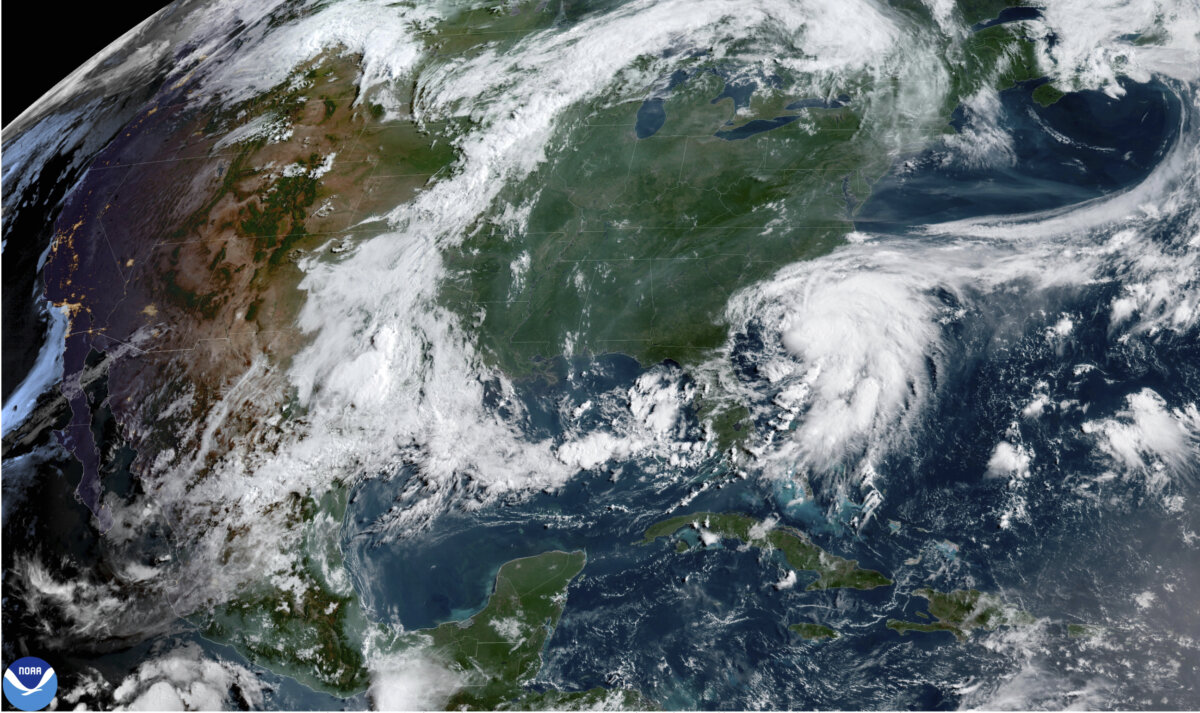
Tropical Storm Chantal was the only one to make landfall in the United States. It arrived in South Carolina on the morning of July 6 and quickly weakened into a tropical depression.
Still, it brought dangerous winds, life-threatening surf and rip currents, and torrential rains to both South and North Carolina.
Stormy weather returned to North Carolina in late August thanks to Hurricane Erin. Although it remained offshore, the Category 5 hurricane triggered a massive surf event from Daytona Beach, Florida, to Halifax, Nova Scotia, as it brought an immense storm surge all across the East Coast. The Outer Banks were the most affected, as flooding caused evacuations and structural damage.
The overall count is one below the seasonal average of 14, and the hurricane count is two below the average of seven, but this year had an above-average amount of major hurricanes, at three.
Hurricane Melissa served as this season’s devastating climax, as it had one of the strongest Atlantic hurricane landfalls on record when it hit western Jamaica on Oct. 28. Crossing in one day and then passing over eastern Cuba and through the southern Bahamas, this storm dealt catastrophic conditions from flooding and landslides to winds as high as 185 mph.
Dozens were reported dead, more than a million were displaced, and as much as 70 percent of the homes in western Jamaica were believed to be uninhabitable. Disaster response teams from both private and public sectors are still hard at work to help the islands recover.
Meanwhile, though, the United States suffered other catastrophic weather events. A no-name storm hit the East Coast on Oct. 11, typhoon remnants displaced 1,500 in western Alaska on Oct. 15, and central Texas was hit with catastrophic flash flooding on July 4 and July 5.
 Friends Read Free
Copy
Facebook
Tweet
Friends Read Free
Copy
Facebook
Tweet