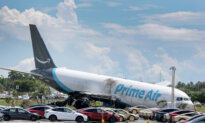

National Transportation Safety Board (NTSB) investigators said on Monday they had recovered the flight data recorder and cockpit voice recorder, commonly referred to as the “black boxes,” from an Amazon Prime Air cargo plane that crashed at Miami Airport on Sunday, killing five people.
Information from the black boxes is expected to be downloaded on Tuesday, NTSB Chairwoman Jennifer Homendy said at a press conference.
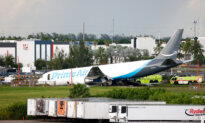
After overrunning the runway by about 1,300 feet, the Boeing 767-33A, operated by Miami-based 21 Air LLC, crashed into an Econoline van carrying seven people from an airline cleaning crew. Miami-based Professional Ocean Service Corporation owned the van.
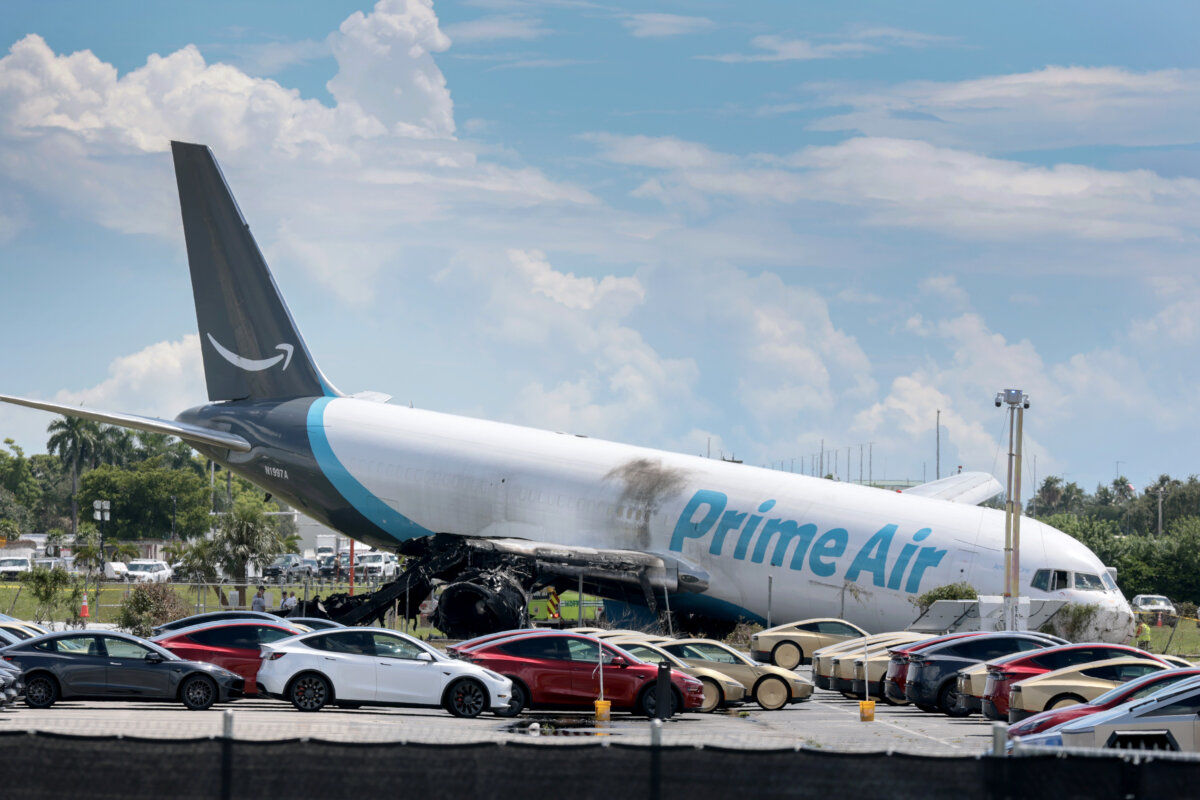
The aircraft then went through a perimeter fence and crashed into a Toyota Corolla Cross SUV, traveling on Northwest 67th Avenue, beyond the perimeter fence. The plane continued onto the grass and impacted another fence line, which separated an area where Tesla robo-taxis were stationed, Homendy said.
Along with the five people killed in the incident, five more were injured, with three of them in a critical condition.
Homendy, leading a team of 32 investigators, said that a probable cause of the accident would not be determined until the end of the investigation.
She said the crash site was in “utter devastation” when asked to describe it.
“There’s debris everywhere, the Econoline van is torn apart … You can see airbags, the surrounding airbags. You can see components from vehicles, both passenger vehicles and the aircraft itself,” Homendy said.
“Certainly, navigation components of navigational aids, some of debris from the airport, and then certainly fencing everywhere. It’s pretty extensive.”
Photos of the crashed plane show the aircraft driven nose-first into the ground with shattered wings and scorch marks on its fuselage.
The Amazon cargo plane was on its third flight of the day, coming from San Juan, Puerto Rico. It had flown from Cincinnati to Miami, and from Miami to San Juan, earlier on Sunday before the crash at 1:53 p.m. ET, Homendy said.
Part of the NTSB investigation will examine the significance of the lack of runway material designed to stop runaway aircraft. Not every U.S. airport has an Engineered Materials Arresting System, or EMAS.
Homendy also asked the public to send in any photos or videos of the scene, saying those images could aid the investigation.
Reuters contributed to this report.
 Friends Read Free
Copy
Facebook
Tweet
Friends Read Free
Copy
Facebook
Tweet