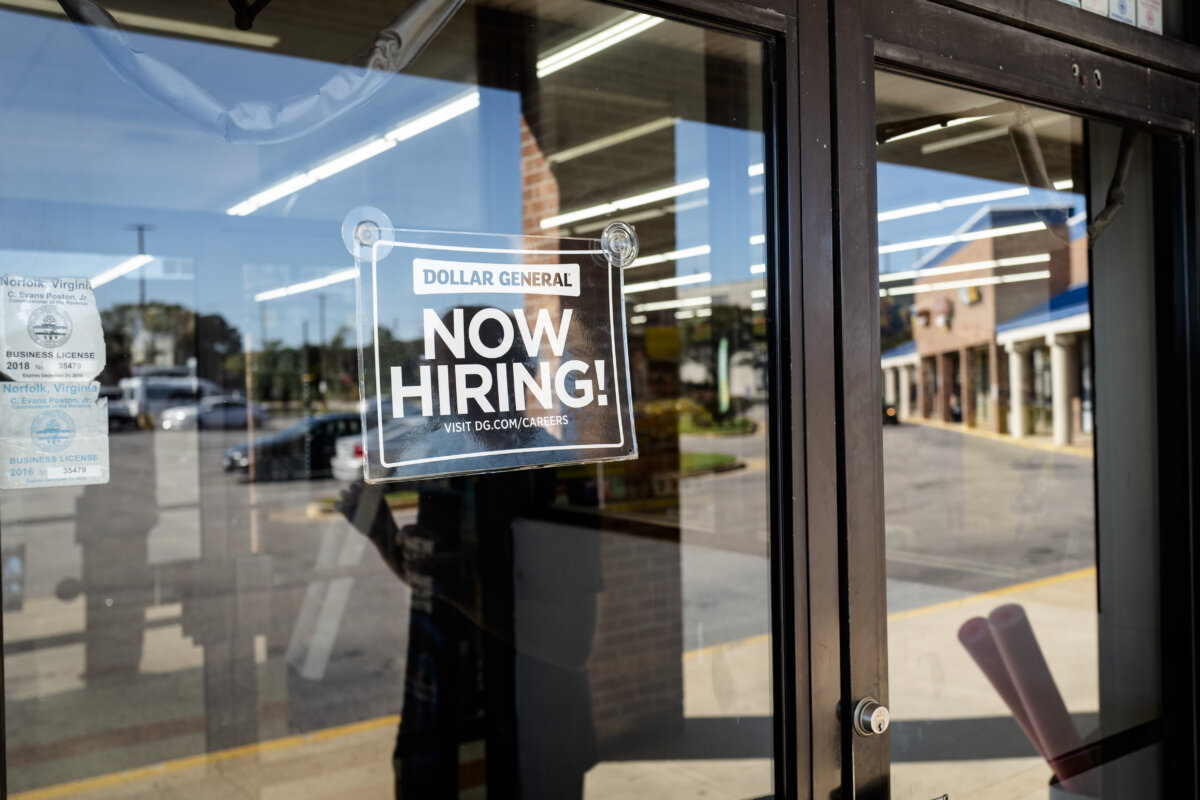

The number of Americans filing for unemployment benefits came in below expectations, while planned job cuts sharply declined in December, new data released on Jan. 8 show.
For the week ending Jan. 3, initial jobless claims rose by 8,000 to 208,000, according to the Department of Labor.
This came in below the market consensus of 210,000.
Claims were little changed from their level a year ago.
The four-week average, which strips week-to-week volatility, fell sharply to 211,750, from a slightly upward adjustment of 219,000.
A jobless claims program for federal government workers registered a sizable decline, falling by 333 to 479, for the week ending Dec. 27.
Recurring claims data remain volatile heading into the new year.
Continuing jobless claims—a metric that monitors the number of out-of-work individuals currently receiving unemployment benefits—climbed to a higher-than-expected 1.91 million, from a downwardly revised 1.858 million.
Economists use this measurement to determine the difficulty unemployed people may have in finding work.
This comes one day before the December jobs report is published, providing a full snapshot of the U.S. labor market’s performance in 2025.
Lower Layoffs to End 2025
U.S. employers finished 2025 announcing the fewest number of planned layoffs after a year of high job-cutting plans, according to new data from global outplacement firm Challenger, Gray and Christmas.
Companies announced 35,553 planned layoffs in December, down by 50 percent from November and 8 percent below the reported figure from the previous year.
This represented the lowest reading since July 2024, when U.S.-based companies announced nearly 26,000 cuts.
“The year closed with the fewest announced layoff plans all year. While December is typically slow, this coupled with higher hiring plans, is a positive sign after a year of high job cutting plans,” Andy Challenger, chief revenue officer at Challenger, Gray and Christmas, said in a statement.
Annual job cuts exceed 1.2 million, a 58 percent increase from 761,358 announced in 2024. Last year’s total was the highest level since 2020, when more than 2.3 million layoffs were reported. Excluding the COVID-19 pandemic, it was the highest since 2008.
Government was the top industry in layoff announcements last year, with 308,167—most were reported in the first quarter. This was up by 703 percent from the 38,375 job cuts in 2024.
Technology was the top private-sector industry in job cuts, rising by 15 percent from 2024 to 133,988.
“Technology has been pivoting to both developing and implementing artificial intelligence much more quickly than any other industry. This coupled with over-hiring over the last decade created a wave of job loss in the industry,” said Challenger.
The warehousing and retail sectors announced 95,317 and 92,989 job cuts, respectively. This reflected developments in the supply chain, tariff uncertainty, shifting consumer behavior, and automation.
Job cuts in the services sector—businesses that offer support services to other companies, including cleaning, outsourcing, and staffing companies—surged by 68 percent to 44,433.
“Generally during times of uncertainty or economic constraints, companies cut vendors and outside services before looking at their own workforces. Given the environment in 2025, it made sense that Service companies lost contracts and workers,” added Challenger.
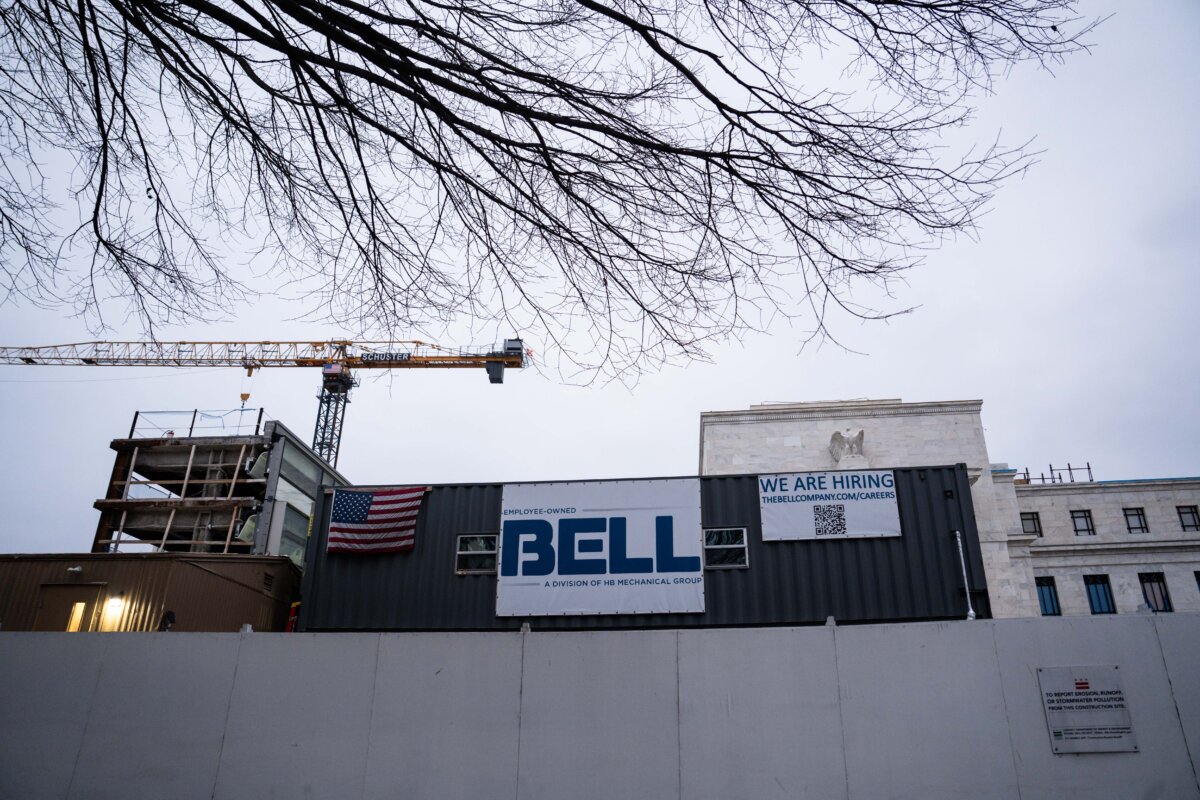
Hiring could be picking up heading into 2026, with employers announcing more than 10,000 hiring plans—the highest total for the month since 2022. This was also up by 16 percent from November and 31 percent from December 2024.
In total, U.S. companies announced 507,647 planned hires, the lowest year-to-date tally since 2010. This was also down by 34 percent from the previous year.
‘Wait-and-See Pattern’
The latest data could support the long-held narrative that the national labor market is in a “low fire, low hire” state.
Bureau of Labor Statistics data released on Jan. 7 found that job vacancies declined by 303,000 to a lower-than-expected 7.146 million in November, the lowest reading since September.
In addition, payroll processor ADP reported that private companies added 41,000 new jobs in December, slightly below the market consensus of 47,000.
But this is expected when there is disruption to the labor market, whether due to immigration policy reforms or economic uncertainty, says Andrew Crapuchettes, CEO and founder of job board RedBalloon.
“Job seekers are going to kind of enter this wait-and-see pattern,” Crapuchettes told The Epoch Times.
While people are generally optimistic about the direction of the economy, they “are still pretty cautious, because it’s been a hard several years, and they haven’t seen a lot of the benefits come yet.”
Economic observers anticipate employment conditions to improve throughout the year, driven by fiscal stimulus and Federal Reserve interest rate cuts.
Job gains may not be as large as in previous years, but the unemployment rate is expected to remain low.
“Hiring should improve in 2026 from its post-tariff hike pace,” Bill Adams, chief economist at Comerica Bank, said in a note emailed to The Epoch Times.
Comerica estimates monthly payroll growth will average 39,000 per month this year and that the unemployment rate will finish 2026 at 4.3 percent.
Crapuchettes is optimistic that employment growth will exceed that, particularly in the late second quarter or early third quarter.
 Friends Read Free
Copy
Facebook
Tweet
Friends Read Free
Copy
Facebook
Tweet