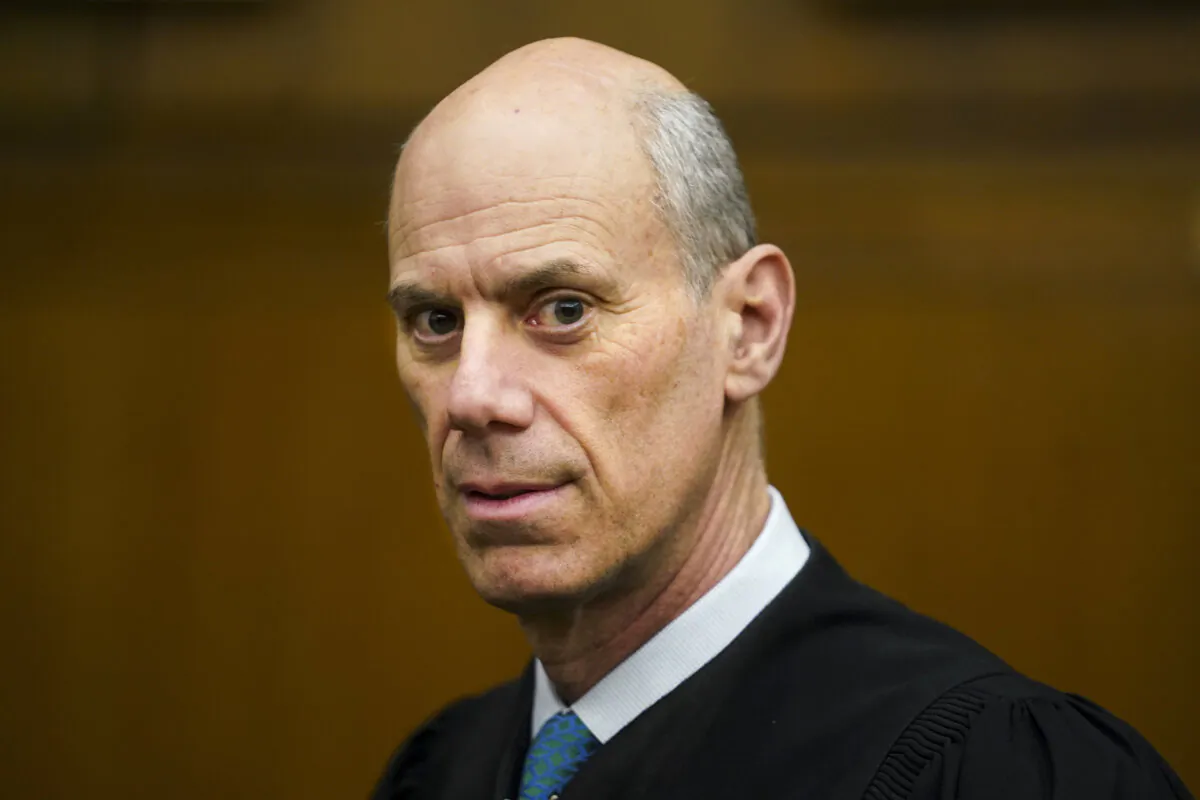

A federal judge in Washington has ordered the Trump administration to facilitate the return of Venezuelans who he said should receive a hearing after their deportation under the Alien Enemies Act.
Judge James Boasberg of the U.S. District Court for the District of Columbia wrote in his Feb. 12 ruling that the government must parole those deportees into U.S. custody if they present themselves at a port of entry and must provide them due process to contest their deportation.
Boasberg said his ruling was intended to mirror a Supreme Court ruling from last year, which upheld an order by Judge Paula Xinis of the U.S. District Court for the District of Maryland that the government “facilitate” the return of Kilmar Abrego Garcia.
The government will also have to pay for the flights and provide a boarding letter to the deportees, but that applies only to those flying in from a third country, not Venezuela.
The return might be short-lived, Boasberg said, because anyone who is flown back or paroled into the country will be detained by U.S. immigration officials and held in custody while their case plays out.
They also face being deported again at the end of the proceedings.
An attorney for the plaintiffs previously told the judge that some of his clients were willing to take that risk.
The ruling is the latest chapter for the deportees, who were sent to El Salvador’s CECOT terrorism confinement center last year. They were subsequently released into Venezuela.
Boasberg ruled in December 2025 that the government needed to give the Venezuelans an opportunity to contest their deportation. When the Justice Department objected to that ruling, the judge ordered a hearing to discuss ways the government could provide due process.
“I never said, and the plaintiffs never said, they were not deportable,” Boasberg remarked at that hearing on Feb. 9.
The question, he told the court, was whether the plaintiffs were deportable under the Alien Enemies Act and whether they had been given due process.
The Justice Department argued, in a court filing ahead of the hearing, that Boasberg lacked jurisdiction over the detainees since they had been turned over to the Salvadoran government and released into Venezuela.
The DOJ also said remote hearings were infeasible because the U.S. government would have no way of combating perjury or testing the identity of witnesses in such proceedings.
The volatile political situation might also complicate matters, the DOJ argued.
Responding to those concerns, Boasberg said in his order that plaintiffs could file supplemental challenges to their deportation—along with proof that they were not Tren de Aragua members—and he would later decide whether to require such hearings and what their logistics would be.
Regarding the jurisdiction question, he said the government can argue against any upcoming plaintiff filings.
An attorney for the plaintiffs said some of his clients had no association with Tren de Aragua and would be able to prove it if given a chance.
He and his team had identified a “handful” of plaintiffs who managed to leave Venezuela and were willing to return to the United States for in-person hearings, although he said he didn’t want to specify in open court where they were living.
Boasberg has ordered him to reveal those locations to the court, but under sealed documents.
 Friends Read Free
Copy
Facebook
Tweet
Friends Read Free
Copy
Facebook
Tweet