
A federal judge dismissed a lawsuit March 31 filed by the U.S. Department of Justice (DOJ) claiming Colorado and Denver’s sanctuary laws interfered with federal enforcement of immigration laws.
“Our nation was founded on a system of ‘duel sovereignty,’ in which ‘citizens would have two political capacities, one state and one federal, each protected from incursion by the other,’” U.S. District Judge Gordon Gallagher wrote.
He found the Constitution has never been interpreted to mean Congress had the ability to require states to govern according to Congress’s instructions.
“If Congress were authorized to dictate the allocation of state resources, the balance of power contemplated by our Constitution would be upended,” Gallagher said. “Federal law permits the federal government to contract with state and local governments to further federal immigration enforcement but does not require such.”
Civil immigration detainers are explicit requests to state or local law enforcement, Gallagher wrote. Also, they are issued by a federal agency rather than a judge, which multiple courts have determined to mean that state and local cooperation is voluntary.
In the lawsuit, the DOJ argued that because the U.S. Constitution vests supreme authority over immigration in the federal government, the state and local laws violate the Supremacy Clause.
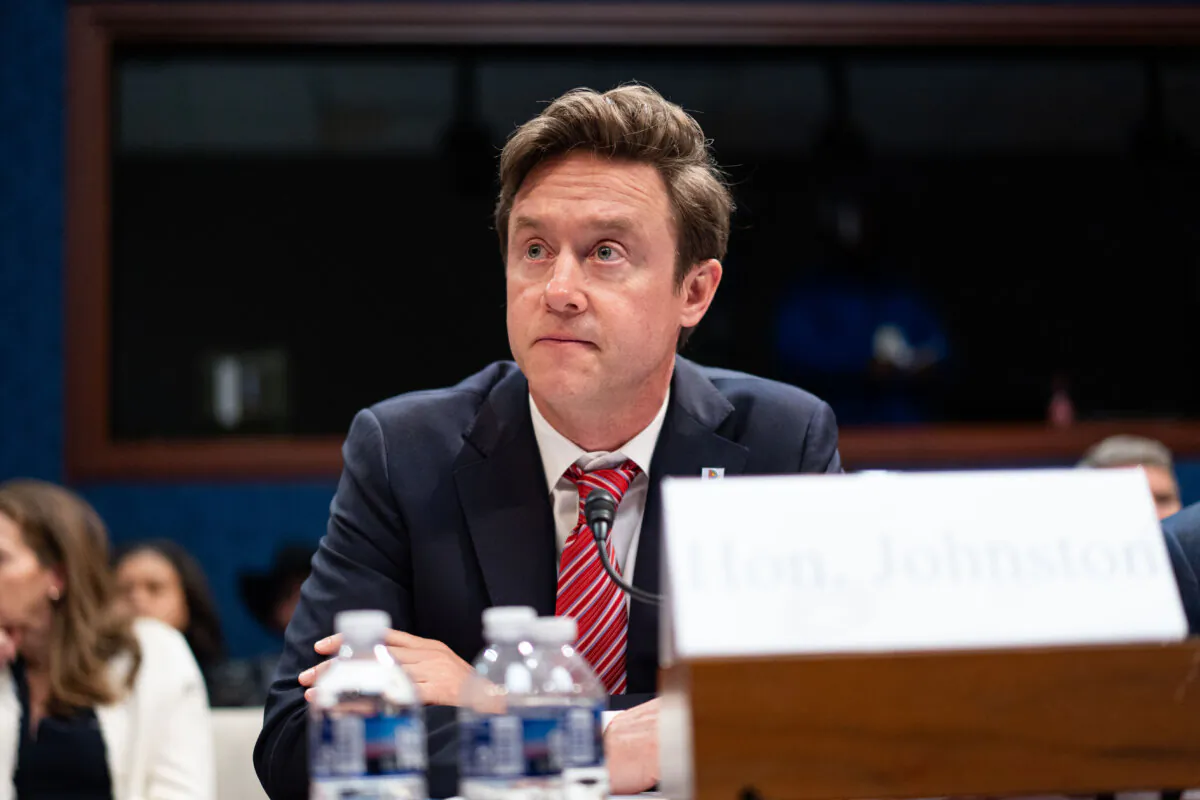
Colorado Gov. Jared Polis, the Colorado General Assembly, Denver’s Attorney General Philip Weiser, Denver Mayor Mike Johnston, and Denver Sheriff Elias Diggins, a past president of the American Jail Association, filed three separate motions to dismiss the claims.
The defendants argued that the state and local laws are not preempted by federal law.
Denver’s mayor celebrated the ruling on Instagram.
“Denver will always stand for safe communities and accountable government,” Johnson wrote. “Today’s ruling makes clear that we cannot be required to use local resources to enforce federal policies.”
Weiser’s office didn’t immediately return a request for comment.

The Justice Department filed similar lawsuits against other sanctuary states or cities last year seeking to remove barriers to immigration enforcement, including in Los Angeles, New York City, and Minnesota. A federal judge dismissed a case in Chicago last year.
“Sanctuary policies impede law enforcement and put American citizens at risk by design,” said Attorney General Pamela Bondi in August 2025. “The Department of Justice will continue bringing litigation against sanctuary jurisdictions back and work closely with the Department of Homeland Security to eradicate these harmful policies around the country.”
President Donald Trump signed an executive order in April 2025 stating that some state and local officials used the sanctuary status laws to “violate, obstruct, and defy the enforcement of federal immigration laws.”
The DOJ filed several lawsuits against sanctuary jurisdictions seeking compliance with federal law. Louisville, Kentucky, was the only jurisdiction to drop its sanctuary status after receiving a warning from the DOJ, according to Bondi.
As of last August, 13 states identified as sanctuary states.
 Friends Read Free
Copy
Facebook
Tweet
Friends Read Free
Copy
Facebook
Tweet