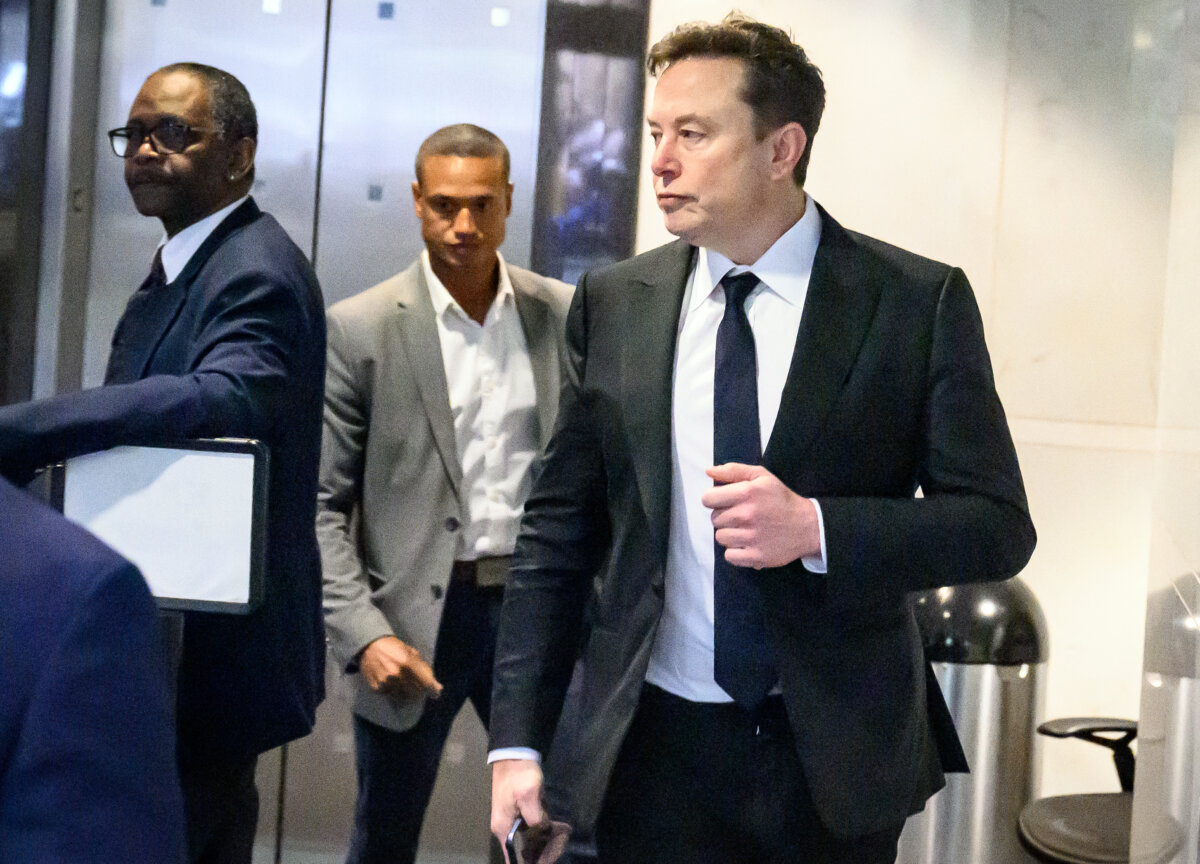
Elon Musk lost his lawsuit against OpenAI on May 18, after a jury ruled the company was not liable for departing from its mission to benefit humanity.
The jury, which deliberated for only two hours, found Musk’s legal challenge fell outside the statute of limitations.
Musk’s suit, filed in 2024, accused OpenAI and its leadership of asking for $38 million for what was intended to be a nonprofit, only to shift to a for-profit model and collect tens of billions in investment funds from Microsoft and others.
Musk’s attorney said he may appeal, but U.S. District Judge Yvonne Gonzalez Rogers said that may prove futile.
“There’s a substantial amount of evidence to support the jury’s finding, which is why I was prepared to dismiss on the spot,” she said.
Musk co-founded OpenAI alongside CEO Sam Altman and others, in 2015. He left its board in 2018, and the company switched to a for-profit business model the following year.
The company is prepping for a public offering that could total up to $1 trillion in valuation. Microsoft has so far invested $100 billion in OpenAI, one of its executives testified.
In April, Microsoft adjusted its agreement with OpenAI and said it would no longer share revenue when its cloud service Azure used OpenAI’s models.
Musk alleged Altman and the company’s president, Greg Brockman, “stole the charity” by shifting OpenAI to a for-profit model.
“Do you want to set legal precedent in the United States that it is ok to loot a charity? If so, you undermine all charitable giving in the United States forever,” Musk said in an April 27 post on X.
“I could have started OpenAI as a for-profit corporation. Instead, I started it, funded it, recruited critical talent and taught them everything I know about how to make a startup successful FOR THE PUBLIC GOOD.”
Musk told the jurors he had intended OpenAI to be a counterbalance to Google’s DeepMind AI project, saying Google cofounder Larry Page was insufficiently concerned about the risks artificial intelligence posed to humanity.
“I was concerned it would be a double-edged sword—it could go to a very good place, solve all of the diseases, make everyone wealthy, but it could also kill everyone,” he told the court on April 28.
“We don’t want to have a ‘Terminator’ outcome. I think we want to be in a Gene Roddenberry movie like ‘Star Trek,’ not so much a James Cameron movie.”
He also said he wasn’t opposed to OpenAI generating revenue through a small for-profit subsidiary to fund the charitable trust, “so long as the tail didn’t wag the dog.” The company created that trust, OpenAI LP, in March 2019.
But Musk said that the company gutted its nonprofit, transferring most resources to a corporation that is no longer transparent or beholden to the public good.
During the trial, Altman countered that he had never promised to keep OpenAI a nonprofit forever, and that Musk filed the lawsuit because he couldn’t have complete control of the company. In a court filing, the company said Musk knew it intended to adopt a for-profit model as early as 2018.
“He didn’t bring a lawsuit then, he only brought it when he was a competitor, years later,” attorneys for OpenAI told the court on April 28.
Attorneys for OpenAI also argued that Musk is no longer a “member, director, or officer of OpenAI,” and therefore had no right to sue for mismanagement of charitable donations under California law.
Since leaving OpenAI, Musk has started his own AI project, xAI, which is a direct competitor with OpenAI and other players in the field.
Both companies were included in the Pentagon’s upcoming partnership program, along with Microsoft, NVIDIA, and others.
The Musk suit wasn’t OpenAI’s first time in court. A class-action lawsuit, filed in 2023, accused the company of “unrestricted harvesting of [user] data” to train its AI models.
Following a mass shooting at Florida State University in April 2025, the state’s attorney general, James Uthmeier, opened a criminal investigation into OpenAI. He alleged suspected shooter Phoenix Ikner used the company’s ChatGPT model to plan the attack that left two dead and five others injured.
“If ChatGPT were a person, it would be facing charges for murder,” Uthmeier said.
A spokeswoman for the company said the AI tool was not responsible for the shooting.
“In this case, ChatGPT provided factual responses to questions with information that could be found broadly across public sources on the internet, and it did not encourage or promote illegal or harmful activity,” OpenAI spokeswoman Kate Waters told The Epoch Times in an email.
Beige Luciano-Adams, Jill McLaughlin, and Troy Myers contributed to this report.
 Friends Read Free
Copy
Facebook
Tweet
Friends Read Free
Copy
Facebook
Tweet