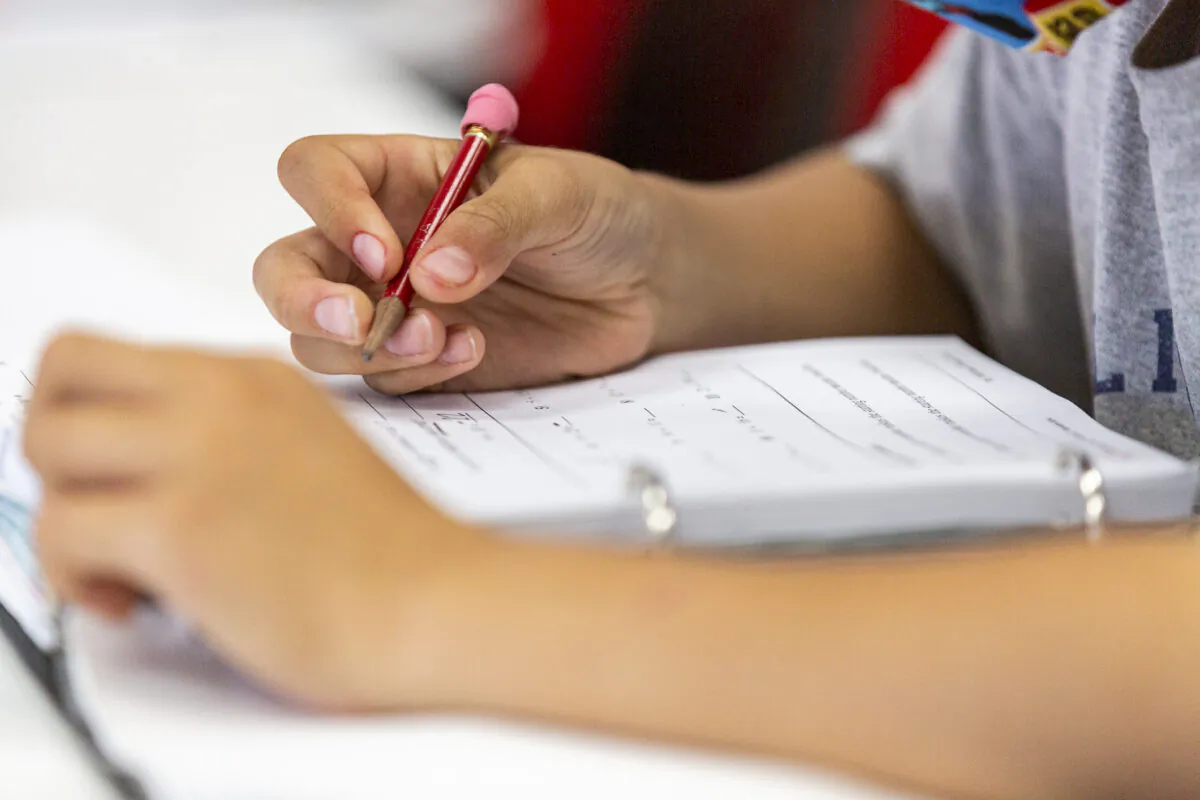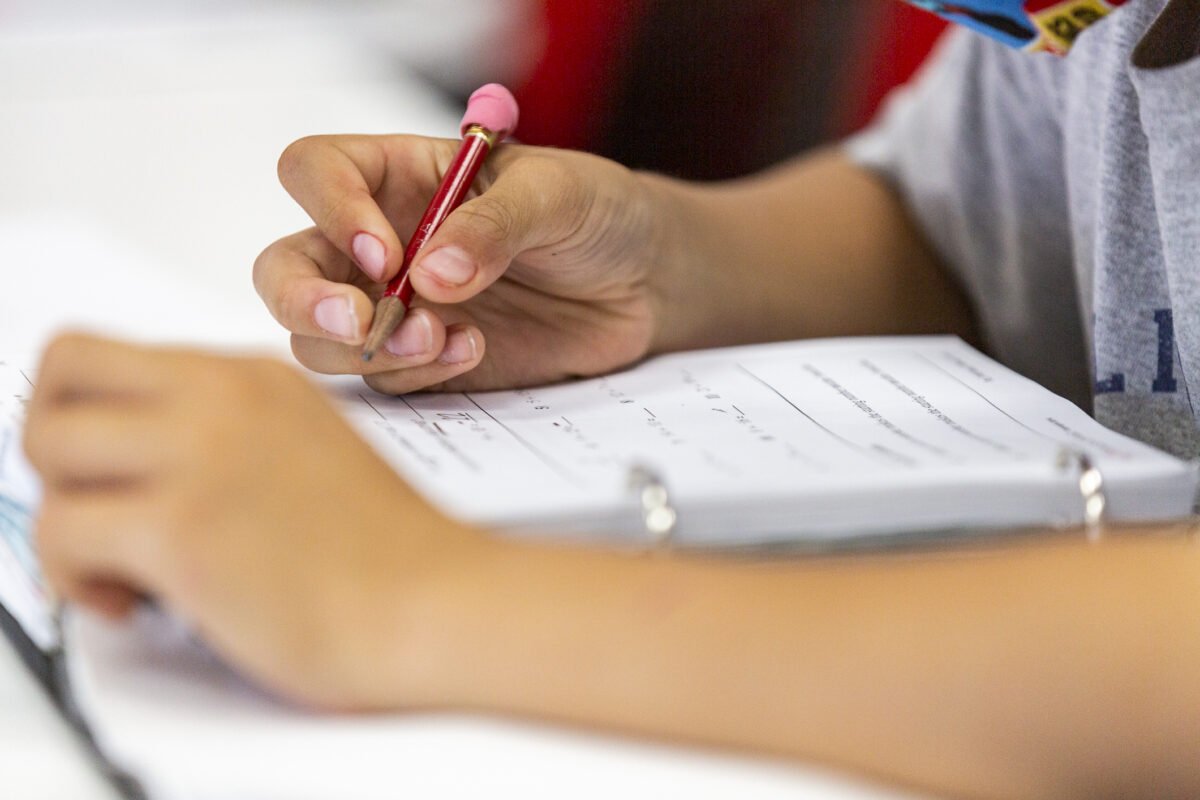

Only one-third of American K–12 schools have returned to pre-COVID-19 pandemic achievement levels in math or reading, an education analysis group said this week.
Those findings came as part of a study released on Feb. 24 by NWEA, previously known as Northwest Evaluation Association, that analyzed scores from more than 5 million students across 9,326 schools. Comparing scores from 2019 and 2024, the organization said only one in seven schools recovered in both math and reading.
NWEA said schools serving high-poverty neighborhoods made the largest gains in scores over the past five years but are still behind pre-COVID-19 pandemic levels. Overall, the report states, schools in rural areas had the highest rates of recovery compared with their suburban and urban counterparts.
“Our findings show there was not a single path to recovery,” Emily Morton, NWEA lead research scientist, said in a Feb. 24 statement.
“While some schools recovered by avoiding initial declines, others rebounded with remarkable growth. These ‘rebounder schools’ offer critical lessons and investments that can help students regain lost ground and continue moving forward.”
NWEA’s report does not identify specific school districts, provide score comparisons, or show examples of what certain school districts did to improve academic performance.
NWEA urged schools that are seeing improvements in math and reading scores to publicize their learning recovery efforts and share the knowledge so that more classrooms can get back on track. The organization also implored education leaders to identify schools that are the furthest behind and dedicate more resources to helping them catch up.
The latest “Report Card” released by the National Assessment of Educational Progress in 2025 indicates that most U.S. high school seniors can earn a diploma even if they are not at grade level in reading or math. It also states that 69 percent of eighth graders last year were below proficiency levels in science.
That federal office, which is under the Department of Education, also reported that 69 percent of fourth graders and 70 percent of eighth graders were not proficient in reading. In math, 61 percent of fourth graders and 72 percent of eighth graders were not proficient.
School districts will have a few months to learn from one another what is working and what is not working ahead of the next federal Report Card.
Standardized tests for 600,000 students in every state will take place before March 20. This year’s assessments include math and reading for grades four and eight and a U.S. history and civics exam for grade eight.
Starting this year, students will be able to take the tests on school-issued devices instead of devices provided by the National Assessment of Educational Progress, officials from that office announced last month, and the test questions will align “more closely to what students learn in math and reading now.”
The reading tests for the first time will also measure comprehension of texts on science and social studies, not just literature.
The 2026 reading and math results will be released in early 2027. The U.S. history and civics results will follow, with a summer 2027 release date expected.
 Friends Read Free
Copy
Facebook
Tweet
Friends Read Free
Copy
Facebook
Tweet