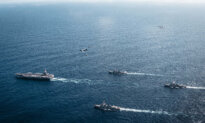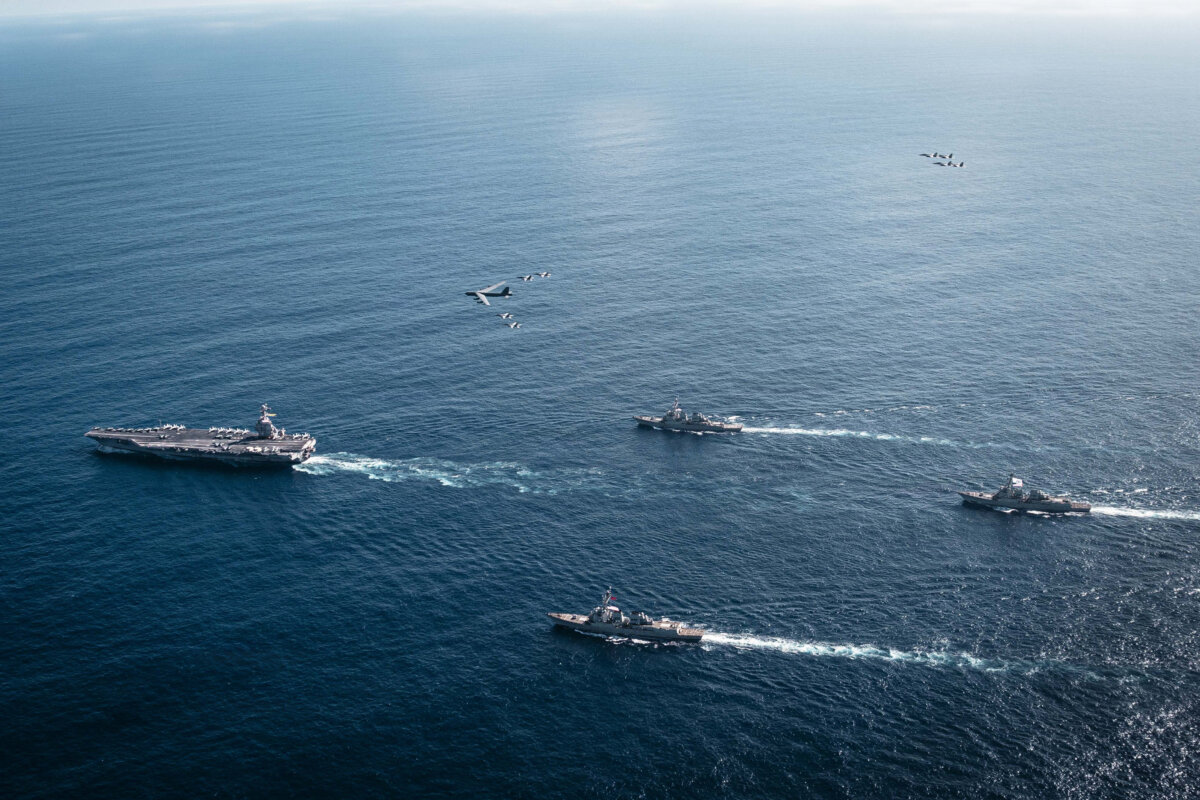

The world’s biggest aircraft carrier and largest warship ever built entered the Caribbean Sea on Nov. 16.
U.S. Secretary of War Pete Hegseth deployed the USS Gerald R. Ford to the region as an effort to carry out the Trump administration’s plan to disrupt illicit drug trafficking and dismantle criminal networks that “exploit our shared borders and maritime domains,” according to a Navy statement.
The carrier’s arrival is considered to be an escalating pressure tactic against Venezuelan President Nicolás Maduro, who the United States does not recognize as the legitimate Venezuelan leader based on evidence that he stole last year’s election.
U.S. forces have carried out numerous strikes on suspected drug boats since September but have not attacked Venezuela directly.
U.S. President Donald Trump revealed on Nov. 14 that he has essentially reached a decision on whether he’ll take action against Venezuela.
“I mean, I can’t tell you what it would be, but I sort of made up my mind,” Trump told reporters aboard Air Force One on Friday. “We’ll see what happens. I mean, I can’t tell you what it is but we’ve made a lot of progress on Venezuela in terms of stopping drugs from pouring in.”
SOUTHCOM Commander Adm. Alvin Holsey applauded the USS Gerald R. Ford’s arrival near Latin America on Sunday.
“Through unwavering commitment and the precise use of our forces, we stand ready to combat the transnational threats that seek to destabilize our region,” Holsey said.
“The USS Gerald R. Ford Carrier Strike Group’s deployment represents a critical step in reinforcing our resolve to protect the security of the Western Hemisphere and the safety of the American Homeland.”
The aircraft carrier, holding over 4,000 sailors and dozens of tactical aircraft on the vessel, will join forces with the Joint Task Force Southern Spear, which is already in the Caribbean working to stop transnational criminal organizations and narco-terrorism.
The USS Gerald R. Ford will be one of 12 ships that jointly hold about 12,000 personnel now in the region.
“OPERATION SOUTHERN SPEAR = Destroy Narco-Terrorists killing Americans,” Sec. Hegseth wrote in an X post on Nov. 14.
The carrier, named after 38th President of the United States Gerald R. Ford Jr., can both launch and recover aircraft on its flight deck.
The Virginia-built ship is 1,092 feet long and can travel at 34 miles per hour.
Since June 2024, it has conducted strike group operations in the Atlantic Ocean, sailed above the Arctic Circle, participated in NATO’s Neptune Strike 25-2 and 25-3 enhanced vigilance activities, and visited ports in Croatia, France, Germany, Norway, and Spain.
“Our nation’s leaders have called upon the Gerald R. Ford Carrier Strike Group as the most capable, adaptable, and lethal platform in the world to be where it matters, when it matters,” commander of Carrier Strike Group 12 Rear Adm. Paul Lanzilotta said.
“Our force will augment existing capabilities to protect our nation’s security and prosperity against narco-terrorism in the Western Hemisphere.”
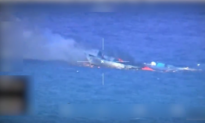
The U.S. has launched at least 20 strikes on small boats accused of transporting drugs in the Caribbean and eastern Pacific Ocean. At least 79 people have died in the attacks.
The most recent operation took place on Nov. 10.
The Trump administration has stated that it is not opposed to going beyond sea strikes to “stop the drugs coming in by land.”
 Friends Read Free
Copy
Facebook
Tweet
Friends Read Free
Copy
Facebook
Tweet