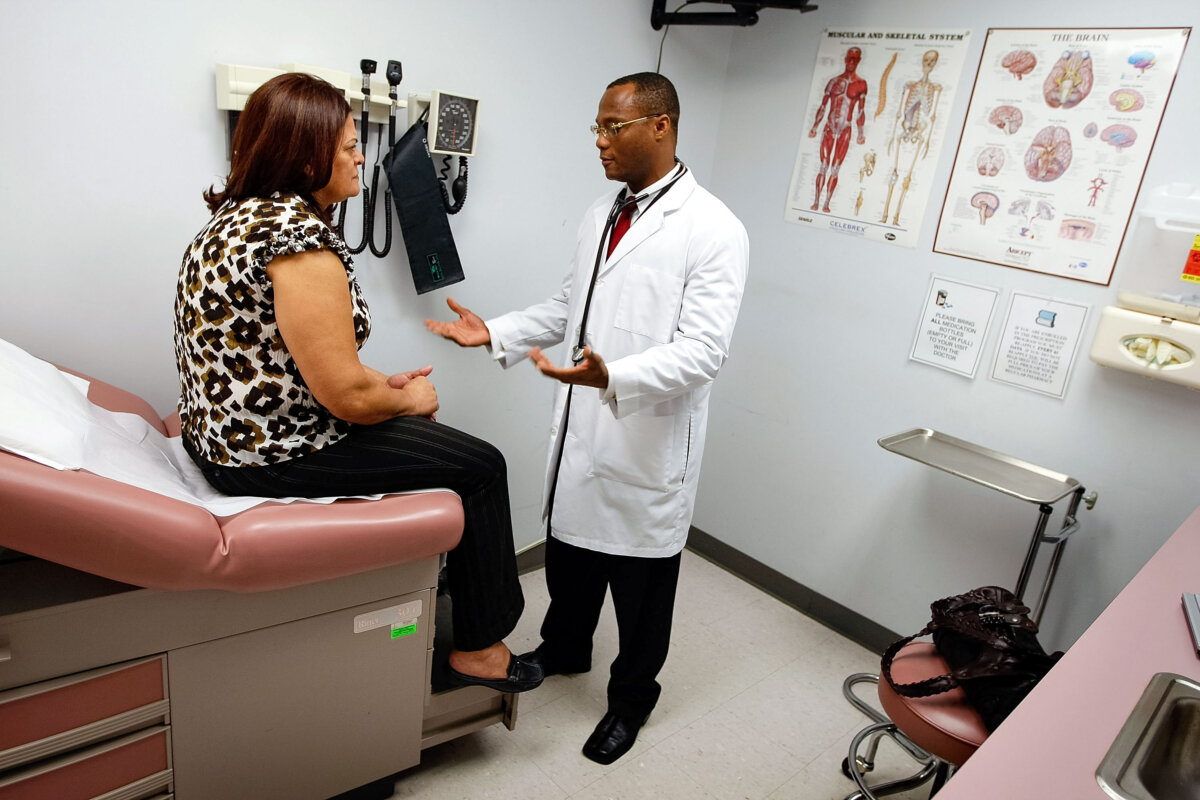

Reagan Noble leaped to block a shot on goal during the last game of the Eureka College soccer team’s 2022 preseason.
The blinding pain he felt on touching the ground came from a torn anterior cruciate ligament. As the 20-year-old was helped from the field, he began a weeks-long journey that included consultation with many doctors, diagnostic imaging, surgery, and physical therapy costing tens of thousands of dollars.
Hoping to return to soccer, he searched for a surgeon familiar with sports medicine. He researched procedures and spoke with several doctors, then settled on a physician in St. Louis.
The provider was a three-hour drive from Noble’s home, well beyond the reach of local insurance networks. Not that it mattered—the family was uninsured.
Joel Noble, Reagan’s dad, called the hospital to negotiate a fee for self-payment.
After surgery, Reagan Noble left the hospital with a repaired ligament. His father left with a 72-month payment plan.
All told, the injury racked up $70,000 in medical expenses. Yet within four months, every bill was paid in full.
The funds came not from a social media solicitation or GoFundMe campaign, but from members of Samaritan Ministries, a faith-based health care sharing ministry in which the family had participated for years and where Joel Noble is employed.
Health care sharing ministries are groups of like-minded members who pool their resources to share health care expenses.
Health shares are not insurance companies, but they have grown in popularity since the Affordable Care Act required the purchase of health coverage. Members of qualified health care sharing ministries are exempt from that requirement.
At least 1.5 million Americans now participate in health shares, according to a 2023 report by the state of Colorado.
As Congress considers changes to Medicaid and the Affordable Care Act marketplace that could leave millions of Americans looking for alternatives, proponents of health shares say they offer greater medical freedom and lower costs.
Critics warn that health shares do not operate under the same laws as insurance companies and could leave members facing unexpectedly high medical bills on their own.
Here’s a look inside the little-known world of health cost sharing.
Values-Based Ministries
Health shares have been around in their current form since the 1980s. There are now more than 100 such groups, most operated by small religious groups, according to Katy Talento, executive director of Alliance of Health Care Sharing Ministries.
Others are much larger and are open to the public with some restrictions.
To qualify for an exemption from the Obamacare insurance mandate, a health share must be a federally recognized nonprofit and submit to an annual audit by an independent, certified accounting firm.
The key criteria, however, are that the health share’s members must have a common set of ethical or religious beliefs and must share medical expenses among themselves in accordance with those beliefs.
This ethical or religious component is what leads most people to join a health share, according to Talento.
“The first reason why people would consider us instead of insurance is they don’t want their dollars to be subsidizing immoral procedures that violate their religious beliefs or conscience,” she told The Epoch Times.
Health shares typically won’t share the cost of abortions, contraceptives, or fertility treatments.
To join the group, members must affirm a statement of faith.
Some groups require members to make certain behavioral commitments, such as attending church and abstaining from alcohol, tobacco, and sex outside of marriage.
Some people are drawn to health shares for more pragmatic reasons, according to Lauren Gajdek of Christian Healthcare Ministries: They allow more freedom in choosing a health care provider, and they usually cost less than insurance.
Cost Sharing
Because health shares are not insurance companies, they avoid insurance-related terms. They use language such as “share” rather than “premium” and “personal responsibility,” or “household portion” rather than “deductible.”
Once approved, members contribute a monthly share, which can be as low as $89 or more than $800, depending on the household size, members’ ages, location, and other factors.
Members can usually choose a “level of personal responsibility,” which an insurance company might call a deductible. When that is reached, other members will share all or part of the remaining cost for a health event.
Some health shares require the personal responsibility threshold to be met for each incident. For others, the personal responsibility threshold is annual.
Health shares don’t pay claims. They share expenses among members on a voluntary basis.
Most health shares facilitate peer-to-peer payments, whereby members send checks or bank transfers directly to one another to pay medical bills that have been approved for sharing.
Sending personal notes and praying for sick or injured members is encouraged.
The personal contact is one reason that people become committed to health shares, according to Noble. “It [isn’t] just this anonymous, moving of funds behind the scenes,” he told The Epoch Times. “It’s very personal.”
Some health shares, particularly the few that have an agreement with a provider network, use a centralized payment system. Members deposit their share amounts into a bank account, and the health share withdraws the deposits to send either to the provider or to another member.
“We process the bill, we adjudicate the bill, we negotiate the bill, we apply discounts to the bill, and create a convenience for our members,” Marq James of Medi-Share told The Epoch Times.
It’s Not Insurance
The National Association of Insurance Commissioners has issued multiple consumer notices to clarify that health shares do not operate in the same manner as commercial insurers.
Thirty states had exempted health shares from insurance regulation as of 2024, according to the American Legislative Exchange Council.
Medi-Share, a subsidiary of Christian Care Ministry, gives this disclaimer on its website: “Medi-Share is not insurance and is not regulated as insurance. Neither [Christian Care Ministry] nor any Medi-Share member assumes any legal obligation to share in the payment of any medical expense incurred by another Medi-Share member.”
Still, stories abound of health share members who have been surprised that their medical bills, sometimes in the tens or hundreds of thousands of dollars, were not shared by the ministry.
There can be benign reasons for that, according to industry insiders.
One reason is that a health share may develop a backlog of share requests because of a technical problem.
A Nashville-based company that provides technology used to submit and process insurance claims was hacked in February, disrupting operations for both commercial insurers and some health shares, according to James.
At times, the number of requests in a given month may outstrip the members’ sharing commitment. When that happens, some health shares, such as Samaritan, pro-rate the amount shared to match funds available.
If that happens repeatedly, members vote on whether or not to raise their monthly shares.
To head off misunderstandings about which expenses are shareable and which aren’t, health shares often have rigorous enrollment processes.
“The average member has three or four conversations with our team [before enrolling],” James said. “At the end, they sign off that they’ve read the guidelines to ensure they’re aware of what they’re entering into.”
Regardless, some members are surprised to discover that their health share guidelines exclude pre-existing conditions or treatments related to behaviors that violate group commitments.
For example, health shares typically do not share costs related to a pregnancy conceived out of wedlock, or to alcohol or illegal drug use.
Not for Everyone
The Obamacare marketplace hit a record high enrollment of 24 million in 2024. Proposed changes to the marketplace and Medicaid could result in 11 million people losing health coverage over the next 10 years, according to the Congressional Budget Office.
Many of those people will be looking for alternatives. Both health sharing proponents and skeptics have warned consumers to exercise due diligence when entering the world of health shares.
Health shares take the religious aspect of their work seriously, including the lifestyle commitments that accompany it. And most don’t come close to matching the breadth of services covered by commercial insurance.
That’s part of both the draw of health shares for some people and the reason that others find them unappealing.
Shoppers looking for low-cost insurance that meets Obamacare requirements, or those who are unwilling to embrace the community aspect of some health shares, which can include praying for others, may not like the environment, according to Talento.
“We’re not for everybody,” she said.
Yet many people welcome the opportunity to participate in sharing the needs of members experiencing a serious health event.
“One of the biggest reasons we don’t have millions more in health care sharing is people don’t take the time to have a conversation,” James said.
 Friends Read Free
Copy
Facebook
Tweet
Friends Read Free
Copy
Facebook
Tweet