
Nine of the largest U.S. banks maintained policies that disadvantaged some customers because of their political or religious views or their affiliation with lawful but “disfavored” industries, according to a sweeping review by a federal banking regulator.
In its report published on Oct. 14, the Office of the Comptroller of the Currency (OCC) said it examined nearly 100,000 such complaints that occurred between 2020 and September 2025.
The banks named in the report were JPMorgan Chase, Bank of America, Citibank, Wells Fargo, U.S. Bank, Capital One, PNC Bank, TD Bank, and BMO Bank.
According to the OCC, the banks all used policies that could encourage or influence decisions to deny or limit financial services for reasons beyond financial risk.
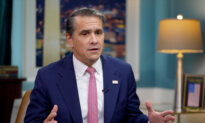
“Today’s report provides irrefutable evidence that the nation’s largest banks have denied, debanked and discriminated against customers and lawful businesses,” Comptroller of the Currency Jonathan Gould said.
‘Reputation Risk’ Under Scrutiny
At the center of the report were banks’ policies for managing “reputation risk,” or the possibility that serving a particular customer could damage a bank’s public image or business relationships.
The OCC said the banks “largely lacked clear and measurable standards and objective risk-based criteria” when assessing such risks.
In one example, PNC declined to provide a line of credit in late 2021 to a media company that its relationship manager described as growing and performing well financially.
According to the report, PNC employees raised concerns that one owner was “a conservative political commentator,” while another owner’s foundation had financed Christian conservative organizations, some of which had been designated as “hate groups” by the Southern Poverty Law Center.
One employee wrote that it was difficult to justify working with a company whose owners had expressed opinions “very contrary to PNC’s beliefs/values.”
The OCC also detailed several decisions involving WePay, a now-discontinued payment operation owned by JPMorgan Chase.
In February 2021, WePay closed the account of a merchant selling merchandise supporting President Donald Trump and the Make America Great Again movement after determining that the products promoted “hate, violence, or racial intolerance.”
The company’s internal screening tools at various times included search terms such as “MAGA,” “Make America Great,” and “America First.” Some political and religious terms were added after the Jan. 6, 2021, breach of the U.S. Capitol, according to the report.
The OCC said neither JPMorgan nor WePay had formal written standards at the time for determining when material constituted promotion of hate or violence.
Liberal Organizations Also Affected
The report found that politically sensitive policies did not exclusively affect conservatives.
Until 2025, one Capital One business line treated customers engaged in “partisan activity” as presumptively presenting high reputation risk, according to the OCC.
In 2023, Capital One declined a potential primary banking relationship with an organization that supported access to abortion. An employee evaluating the organization noted that about 95 percent of its political contributions went to Democrats.
The bank separately declined to serve another pro-abortion group, as well as a public-education organization whose political arm endorsed Democratic candidates.
Restrictions on Entire Industries
Banks also adopted policies limiting their exposure to industries that were legal but deemed politically or socially controversial, the report found.
Those restrictions affected businesses involved in firearms and ammunition, Arctic oil and gas drilling, coal mining and coal-fired power generation, detention facilities, tobacco, e-cigarettes, and digital assets.
In one case, Citibank refused to help a firearms company pursue an initial public offering because the company’s sales practices did not comply with the bank’s own “responsible firearms” standards, including restrictions on so-called “high-capacity” magazines and sales to customers under 21.
The OCC also found instances of smaller firearms businesses being denied services while larger, more lucrative clients in the same industry received exceptions.
The agency said such policies could hinder competition by making it harder for smaller businesses to obtain services from major financial institutions.
Further Regulatory Changes Possible
The OCC acknowledged limits to its findings. It said it could not comprehensively determine how many customers had been debanked or calculate the financial cost to affected customers.
The report did not announce fines or other penalties against the nine banks. The OCC said it is considering additional regulatory and supervisory changes and is separately examining whether anti-money-laundering rules have contributed to unnecessary debanking.
The review stems from an executive order that Trump signed in August 2025 directing federal banking regulators to combat what the administration described as “politicized or unlawful debanking.”
The agency noted that, during the period leading up to and following the executive order, banks moved “more rapidly to bring their operations closer in line with principles of fair access to financial services.”
“Notwithstanding certain efforts by the largest banks to rein in these practices, I am not confident that they will be enough,” Gould said. “Accordingly, the OCC will be assessing further changes to the regulatory and supervisory framework applicable to the largest banks.”
The OCC has already stopped considering reputation risk in its bank examinations and removed references to the concept from its supervisory guidance.
The Epoch Times has reached out to the banks for comment.
A spokesperson for JPMorgan Chase said that the bank prohibits discrimination against customers based on political or religious views.
“We take this seriously, learned from it, and improved the way we do business,” the spokesperson said of the findings related to WePay.
“We agree with the Administration on a broader point: years of operating in a regulatory environment that often second-guessed decisions contributed to a culture of caution across the banking industry,” the spokesperson continued. “That system needs fixing.”
A spokesperson for Citibank declined to comment.
 Friends Read Free
Copy
Facebook
Tweet
Friends Read Free
Copy
Facebook
Tweet