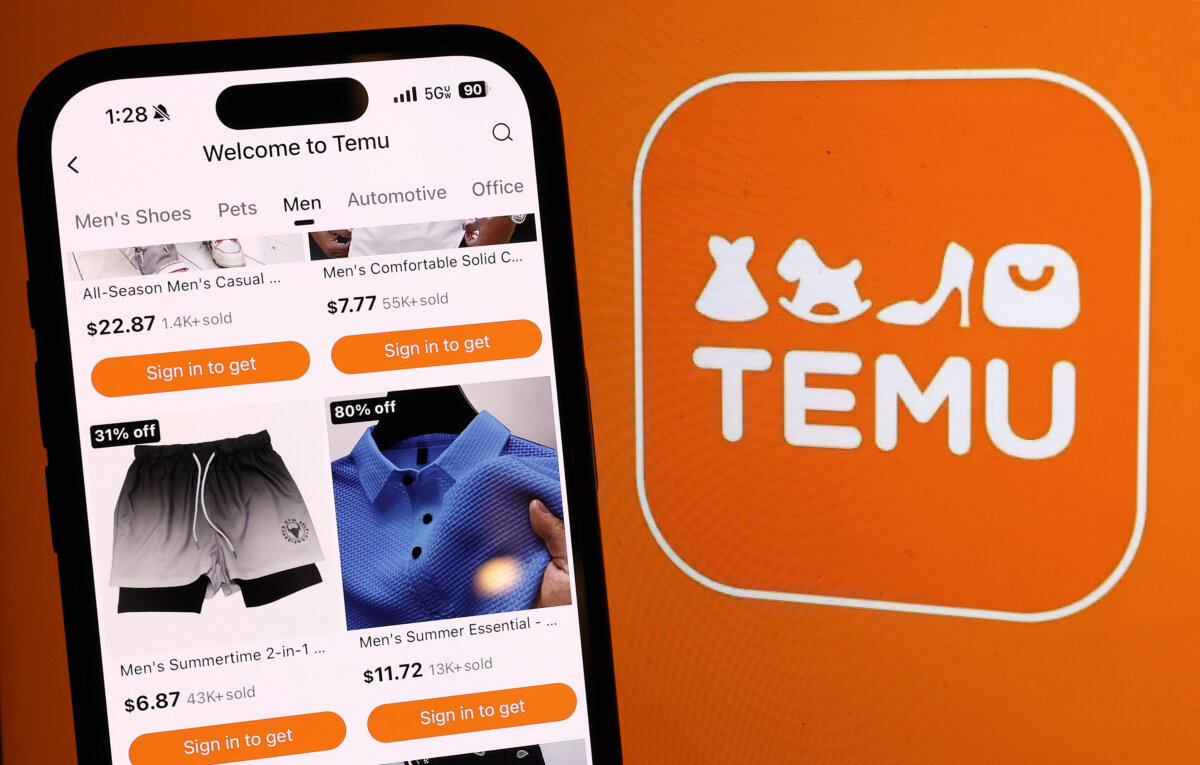

Missouri Attorney General Catherine Hanaway has sued Chinese online retailer Temu, alleging the company illegally collects personal data and deceives consumers.
Hanaway’s office announced the lawsuit on Oct. 13, alleging that Temu’s “aggressive and misleading data collection practices” could leave consumers’ personal data “at the mercy of the Chinese communist regime.”
“My advice to all Missourians is to delete this app. Temu lied to you, stole your data, packaged it up, and potentially delivered it to the CCP [Chinese Communist Party],” Hanaway said in a statement.
Missouri is the latest state to pursue legal action against Temu, following similar lawsuits in Arkansas, Nebraska, Kentucky, Arizona, Texas, and Oklahoma.
Temu’s platform, which began in the United States in September 2022, is owned by Chinese e-commerce giant PDD Holdings, which also operates the Chinese e-commerce platform Pinduoduo.
In January 2024, research firm Marketplace Pulse estimated that more than 100,000 China-based sellers were operating on Temu.
According to the complaint, Missouri hired forensic investigators to examine the Temu app, who found that it “is designed to collect sensitive user data without the user’s knowledge or consent and is purposely designed to evade detection of this type of data collection by third-party security researchers.”
Specifically, Temu was found to collect “an alarming amount of sensitive user data and personally identifiable information”—including users’ precise location, installed apps, and associated accounts, as well as cellular and WiFi network data—well beyond what a typical online shopping app would need.
“The app gets user’s real-time GPS location within an accuracy of at least 10 feet,” the complaint states.
Additionally, two app permissions “surreptitiously” gave Temu access to “all of the audio and visual recording and storage functions of a user’s device,” according to the complaint.
The investigation also found that the Temu app was designed to “prevent both users and security researchers from discovering the types and extent of data being collected,” through complex evasion tactics such as code obfuscation, encrypted transmissions, root detection, and unauthorized system access.
Another evasion tactic allowed Temu to change how its app worked on users’ devices without releasing updates through the Apple App Store or Google Play Store, according to the investigation.
“This allows the Temu app to skip all required tests for approval into the Google Play Store or Apple App Store, while retaining the ability to reconfigure itself once it has been downloaded onto a user’s device,” the complaint states.
The investigation also found that the Temu app “contains multiple portions of code that are recognized by cybersecurity professionals as hallmarks of spyware and malware.”
China lacks data protection guarantees comparable to those in the United States, the complaint said, noting that Chinese companies are required by law—such as the 2017 National Intelligence Law—to cooperate with Chinese intelligence agencies.
“In other words, it can reasonably be assumed that the data Temu is illicitly collecting from Missouri users is being sent to and used by the Chinese government,” the complaint states.
Temu also failed to implement “adequate age verification procedures,” the complaint states, putting minors at risk of having their data collected and exposing them to potentially dangerous products on the platform, including survival knives, smoking products, and drug paraphernalia.
Unlicensed products bearing the trademarks of professional sports teams, such as Kansas City Chiefs, St. Louis Cardinals, Kansas City Royals, and St. Louis Blues, were also listed on Temu because of its “convoluted and ineffective IP protection policy,” according to the complaint.
The complaint also questions Temu’s claims of being socially responsible as some products were “likely being produced using forced labor” by Uyghurs in China’s Xinjiang region, citing a report from the House Select Committee on the CCP.
The lawsuit names PDD Holdings, Whaleco Inc., a Delaware corporation that operates Temu’s U.S. marketplace, and Temu Payments, a registered U.S. money transmitter and payment processor, as defendants.
Hanaway is seeking a permanent injunction banning Temu from continuing to violate the rights of Missourians, civil penalties, and other relief for violation of the Missouri Merchandising Practices Act, according to her office.
The Epoch Times contacted Temu for comment but did not receive a response by publication time.
 Friends Read Free
Copy
Facebook
Tweet
Friends Read Free
Copy
Facebook
Tweet