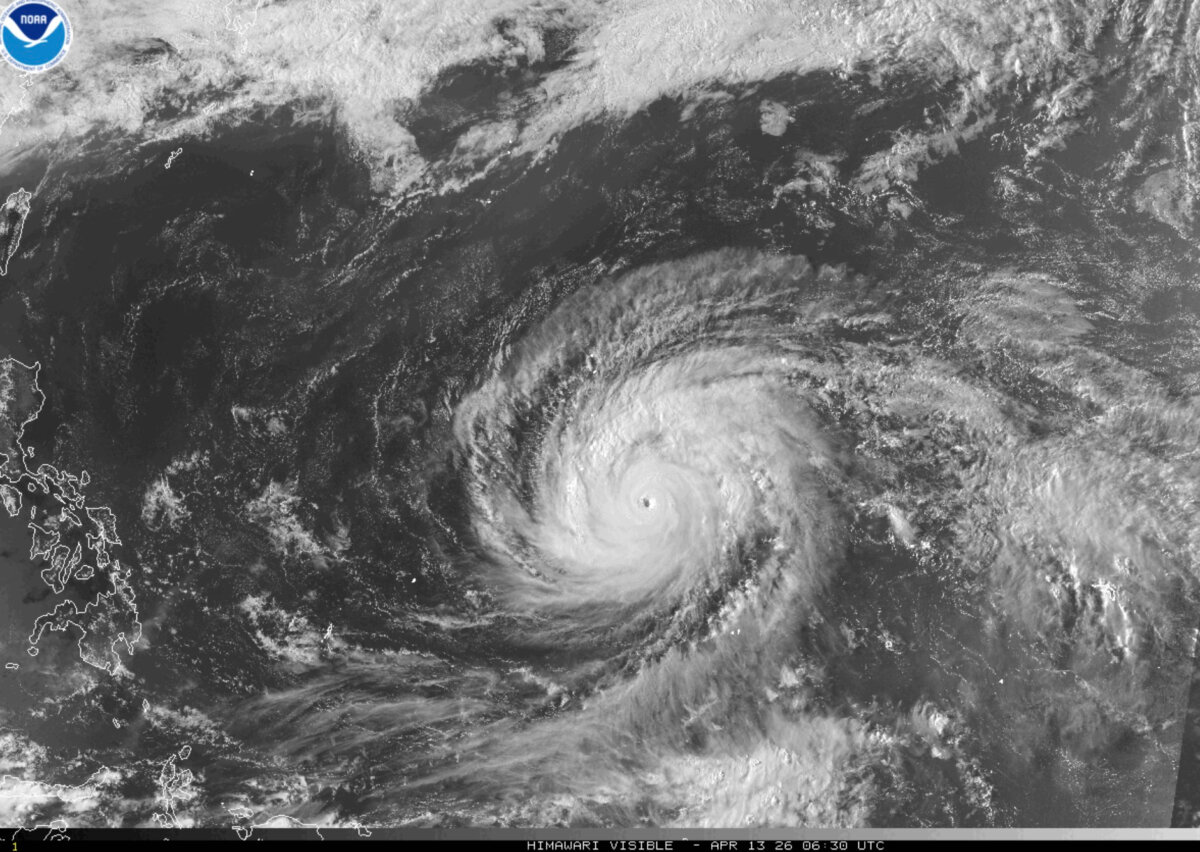

A massive typhoon strengthened as it headed toward the U.S. Northern Mariana Islands, remote islands in the western Pacific Ocean, while barely missing Guam, the National Weather Service (NWS) reported April 13.
Super Typhoon Sinlaku reached Category 5 with sustained winds of 175 miles per hour and intense electrical activity expected to reach the islands early April 14, making it the strongest tropical cyclone of 2026.
“Super Typhoon Sinlaku is as intense as a Category 5 hurricane,” NWS Meteorologist Owen Shieh said in a video posted on Facebook. “Destructive winds and extremely heavy rain are expected throughout the Mariana Islands through Wednesday.”
The typhoon is expected to pass dangerously close to the islands of Rota, Tinian, and Saipan, according to the U.S. Navy and Air Force Joint Typhoon Center.
The storm is the strongest to hit the islands since Super Typhoon Yutu in October 2018. Yutu was also a Category 5 monster storm and also made a direct hit on Tinian and Saipan islands, according to NASA Earth Observatory.
Residents of Saipan, the largest of the three islands with about 47,000 residents, were urged by the local government to stay home, secure their homes, stock up on essential supplies, and avoid the roads before the typhoon hit.
“We will weather this storm and get through it together!” the Saipan Mayor’s Office said on Facebook.
The mayor’s team was shown in a video removing fallen trees in the rain and clearing local roads as the storm entered the area late April 13.
Residents of Guam were getting hit with heavy rain and destructive wind gusts as a tropical storm warning and typhoon watch remained in effect April 14.
President Donald Trump approved a request from Guam Gov. Leon Guerrero’s for a presidential emergency declaration April 13 ahead of the storm and before the typhoon shifted northward.
“While the threat of typhoon force winds has significantly diminished, this remains a serious weather event,” the government stated.
The storm-force winds were expected to reach Guam, Rota, Tinian, and Saipan that evening, officials reported.
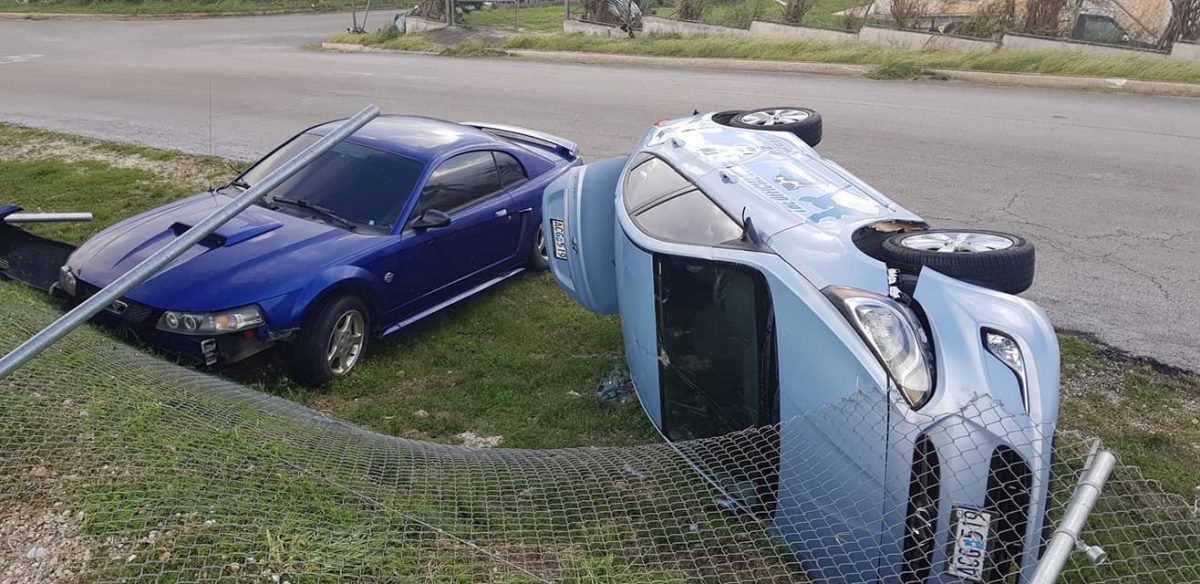
The emergency declaration authorizes the U.S. Department of Homeland Security’s Federal Emergency Management Agency (FEMA) to coordinate all disaster relief efforts for the island and provide emergency measures.
More than 100 Red Cross volunteers from across the United States were already headed to Guam ahead of the storm, the organization announced.
“We’re closely monitoring the situation and have prepositioned people and supplies to help families in the path of the storm,” Red Cross stated on X. “As soon as it’s safe, our teams will be ready to open shelters, serve meals, and provide critical relief.”
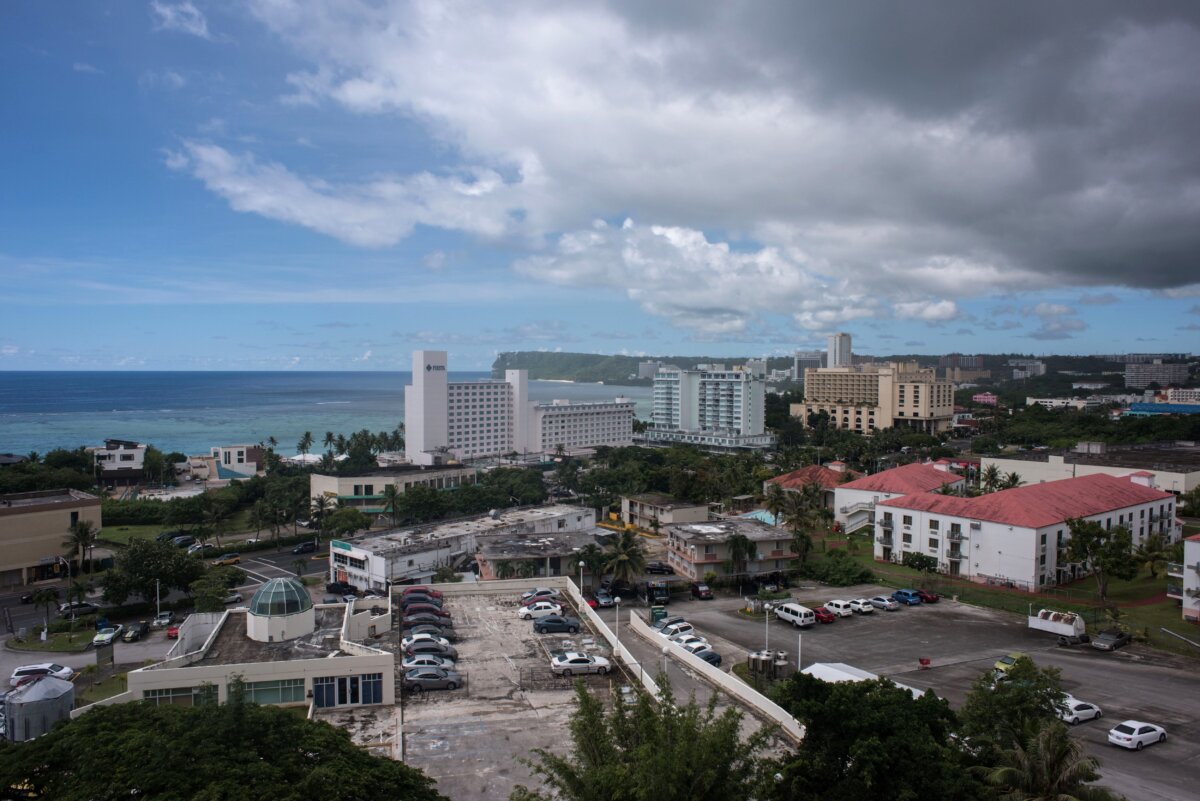
The Mariana Islands have survived destructive typhoons in the past. In 1986, a severe typhoon with winds in excess of 160 miles per hour struck Saipan Island for about three hours, damaging structures and leaving residents without electricity and other utilities for about two to four weeks.
In 1997, Typhoon Winnie delivered sustained winds of 160 miles per hour with gusts up to 195 miles per hour, uprooing trees in Saipan and Guam, and causing extensive damage in eastern China and Taiwan.
 Friends Read Free
Copy
Facebook
Tweet
Friends Read Free
Copy
Facebook
Tweet