
JACOB LAKE, Ariz.—For Melinda Rich, the Dragon Bravo fire did not feel like the end of a season at the Grand Canyon’s North Rim.
It felt as though the season never happened at all.
“Last year was terrible. Last year, we didn’t have a year,” said Rich, food manager at Jacob Lake Inn, located about 45 miles from the North Rim in Jacob Lake, Arizona.
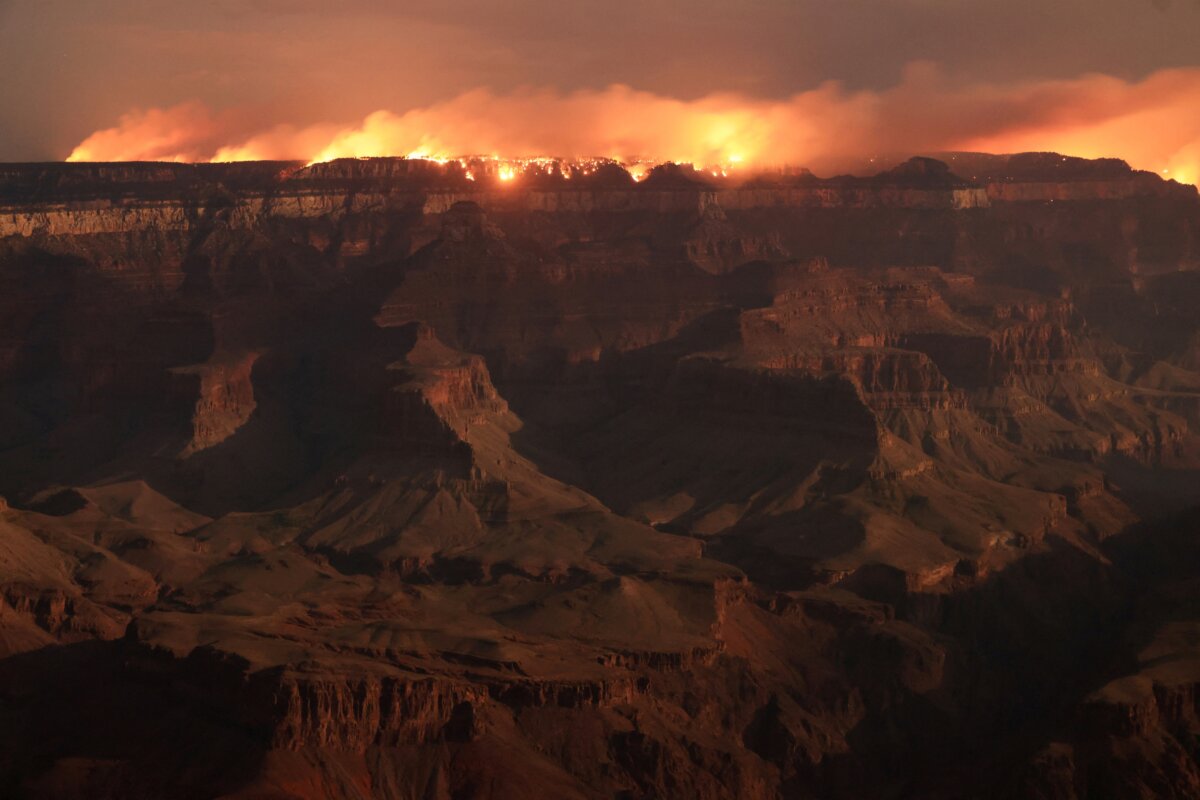
A lightning strike on July 4 sparked the Dragon Bravo fire, which scorched 145,504 acres and destroyed dozens of historic structures across the region.
Wildfires exceeding 100,000 acres are considered megafires.
Later that same day, another lightning strike ignited the White Sage fire roughly 50 miles to the northwest. That fire ultimately burned nearly 59,000 acres near Highway 89A.
Jacob Lake Inn and other local businesses shut down for weeks while firefighters battled the blaze.
As the fires swept across more than 230 square miles of terrain, one firefighter died in the line of duty.
In total, 114 buildings and historic structures were destroyed.
Among the hardest-hit areas by the Dragon Bravo fire was the Grand Canyon Lodge Historic District.
The Grand Canyon Lodge—lost for the second time in its 98-year history—was destroyed along with at least 80 surrounding cabins.
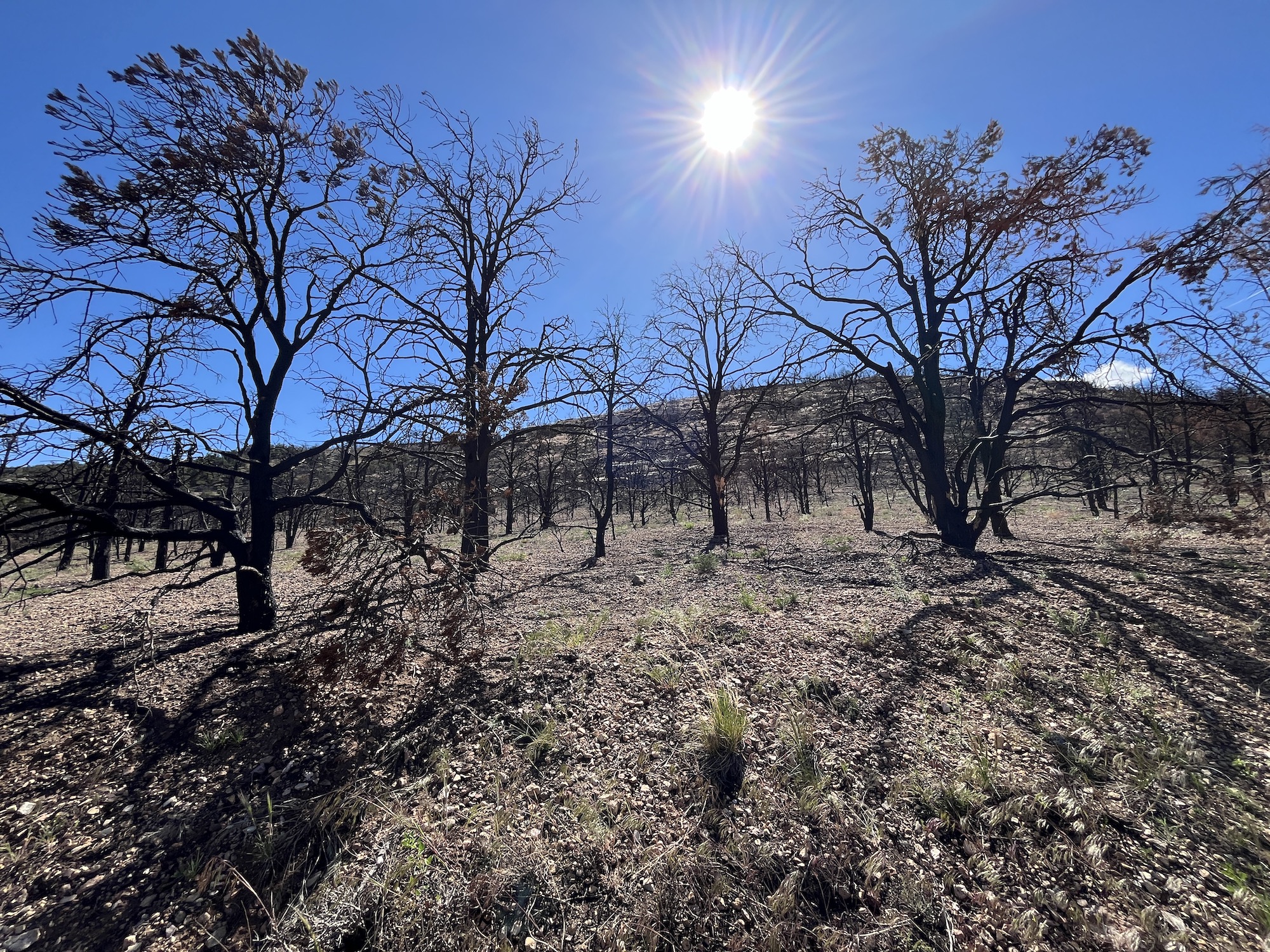 A grove of blackened trees from the Dragon Bravo fire near the Grand Canyon North Rim, Ariz., on May 19, 2026. (Allan Stein/The Epoch Times)
A fire nearly destroyed the original lodge in 1932, and it was rebuilt four years later using the original stonework.
Today, only piles of rubble and portions of the lodge’s stone foundation remain. The park’s famous “Brighty the Burro” statue was badly damaged in the blaze.
At the Grand Canyon North Rim Visitor Center, the destruction is similarly stark: a surviving foundation and entrance sign stand amid the ruins.
Along Highway 67, stretches of blackened forest interrupt otherwise green landscapes, the burn scars still visible months later. Deer wander near the fire line, grazing in areas that the flames spared.
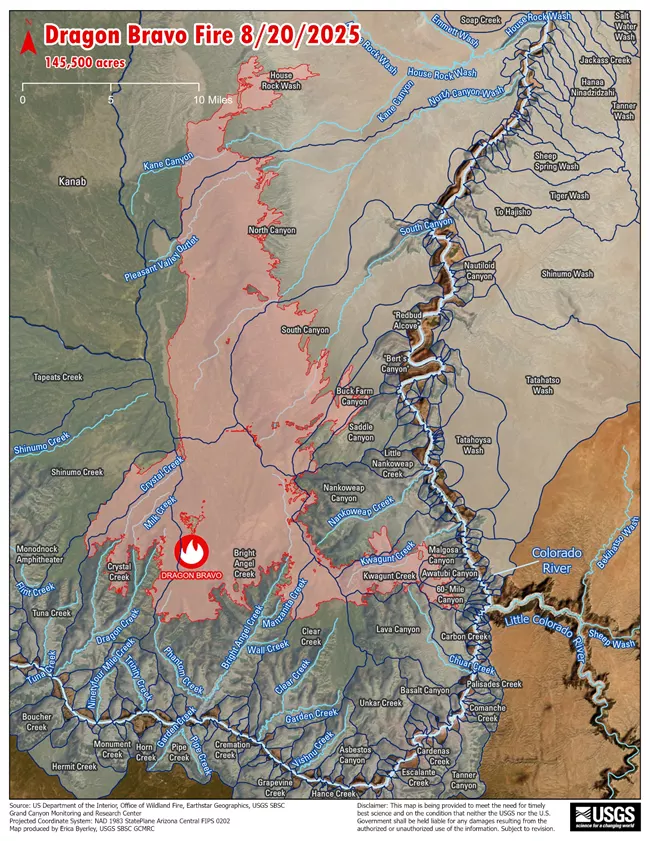 A map of the Dragon Bravo fire on Aug. 20, 2025. (U.S. Geological Survey)
Rich, who has spent most of her life around the Grand Canyon, said she has seen many wildfires over the years. But she described the Dragon Bravo fire as unusually fierce and devastating.
On May 15, the U.S. Forest Service reopened the North Rim gates in a tentative launch of the summer tourist season.
Business at the Jacob Lake Inn, including its restaurant and gift shop, was brisk on May 19, although Rich said visitor traffic still trails last year’s levels.
“We’re happy that it’s open,” she said. “It’s been good.”
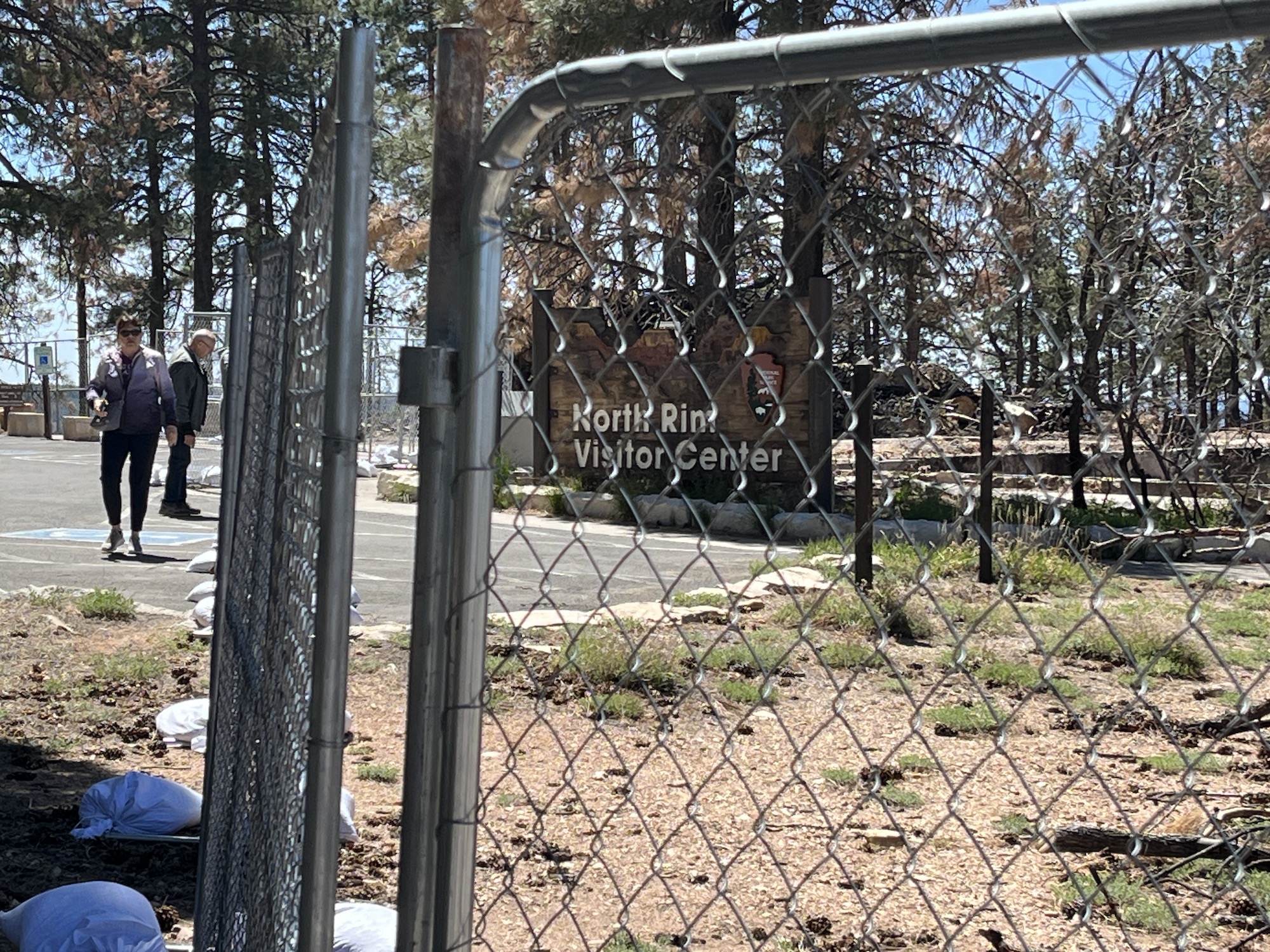 Visitors stand outside the chain link fence shielding the remains of the Grand Canyon North Rim Visitor Center, Ariz., on May 19, 2026. (Allan Stein/The Epoch Times)
Grand Canyon National Park attracts roughly 5 million visitors annually, split between the heavily visited South Rim and the quieter North Rim, known for its campgrounds and expansive canyon views.
The U.S. Forest Service manages approximately 1.6 million acres of the Kaibab National Forest surrounding both rims of the canyon.
The National Park Service oversees nearly 1,900 square miles within Grand Canyon National Park, including the canyon itself, surrounding plateaus, and 278 miles of the Colorado River corridor.
According to the National Park Service, the park spans about 1.2 million acres and reaches depths of roughly one mile.
The South Rim sits near 7,000 feet in elevation, while the North Rim rises roughly another 1,000 feet higher at its highest point.
The Aftermath
The Dragon Bravo fire was fully contained on Sept. 29, 2025, after burning for nearly three months. The White Sage fire was brought under control on Sept. 15, 2025.
In the aftermath, the Interior Department assigned a Burned Area Emergency Response (BAER) team to evaluate environmental and structural damage caused by both fires.
The team issued an executive summary on Feb. 16 based on field assessments conducted from Aug. 19, 2025, to Aug. 26, 2025. The report identified concerns involving aquifers, wildlife habitat destruction, and extensive damage within the North Rim Historic District, where 24 structures were lost, including 11 classified as historic.
According to the executive summary, much of the Dragon Bravo fire burned at low to moderate intensity, leaving large portions of the ecosystem capable of natural recovery.
Although some areas continue to pose hazards to infrastructure, visitors, and sensitive resources, officials believe that the overall burn pattern will allow for significant natural regeneration.
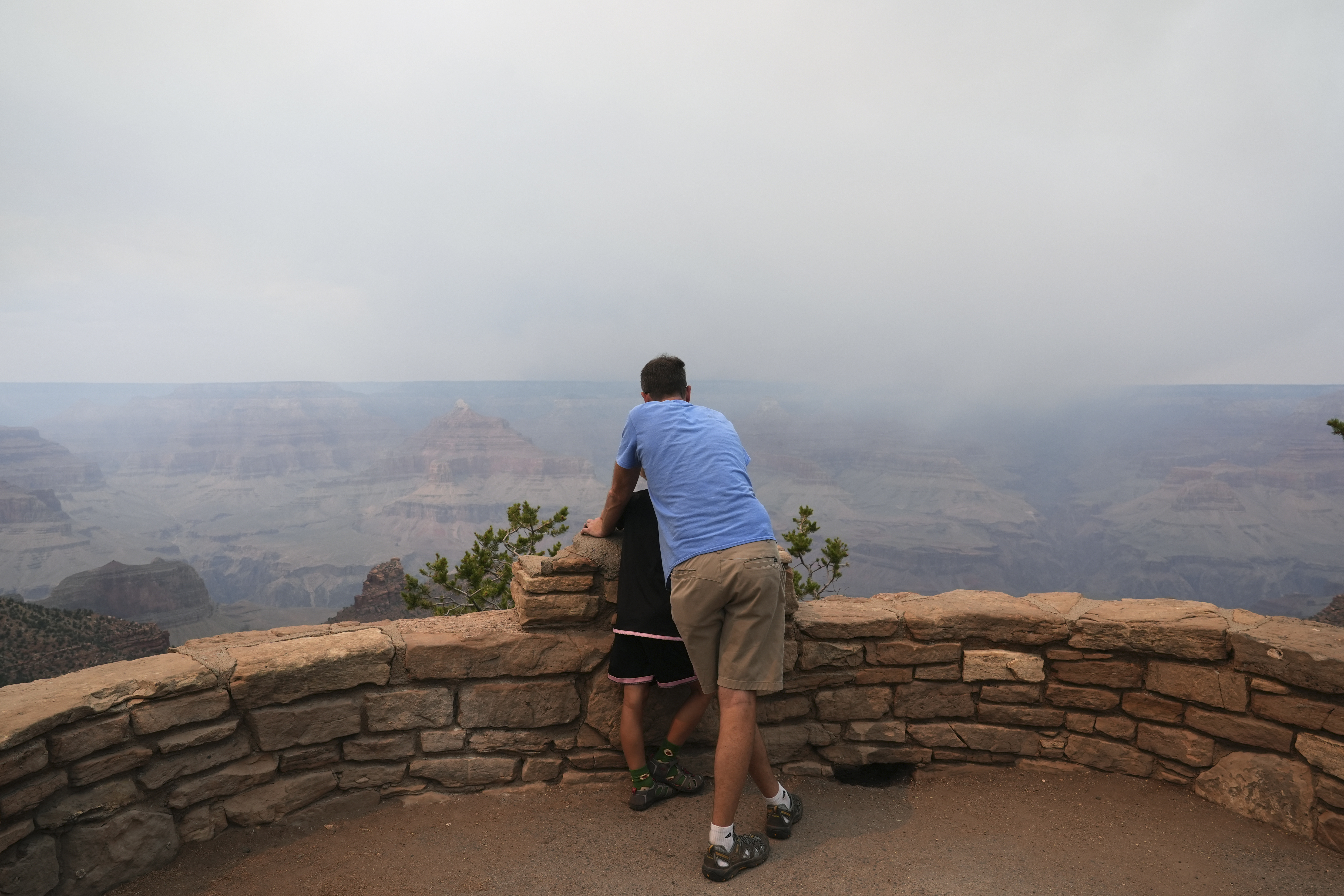 Smoke from the Dragon Bravo fire moves over the Grand Canyon from the North Rim in Grand Canyon National Park, Ariz., on July 14, 2025. (Ross D. Franklin/AP Photo)
To aid recovery, the Grand Canyon Conservancy established the Grand Canyon North Rim Fund, which supports trail restoration, temporary visitor services, and long-range recovery of historic and cultural landmarks.
Park officials are also moving forward with what they describe as an adaptive reopening strategy for the North Rim this summer as crews continue assessing infrastructure damaged by fire and winter weather.
The park’s communications office notes that facilities and access points will reopen gradually as conditions permit, with decisions guided by safety, resource protection, and operational readiness.
On May 15, officials reopened the North Kaibab Trail, the Bridle Path connecting the trailhead to the lodge parking area, and the Arizona Trail segment running through Grand Canyon National Park.
Several well-known destinations remain closed, including Bright Angel Point Trail, Widforss Trail, the Transept Trail, and the Ken Patrick Trail south of Cape Royal Road.
“Our goal is to provide access to the North Rim as quickly and responsibly as possible with an emphasis on safety,” Grand Canyon National Park Superintendent Ed Keable said in a statement.
“We are committed to keeping the public and our partners informed as we learn more about the impacts of winter weather and the Dragon Bravo Fire.”
Rich said she understands recovery will take time, but she remains hopeful the North Rim will recover.
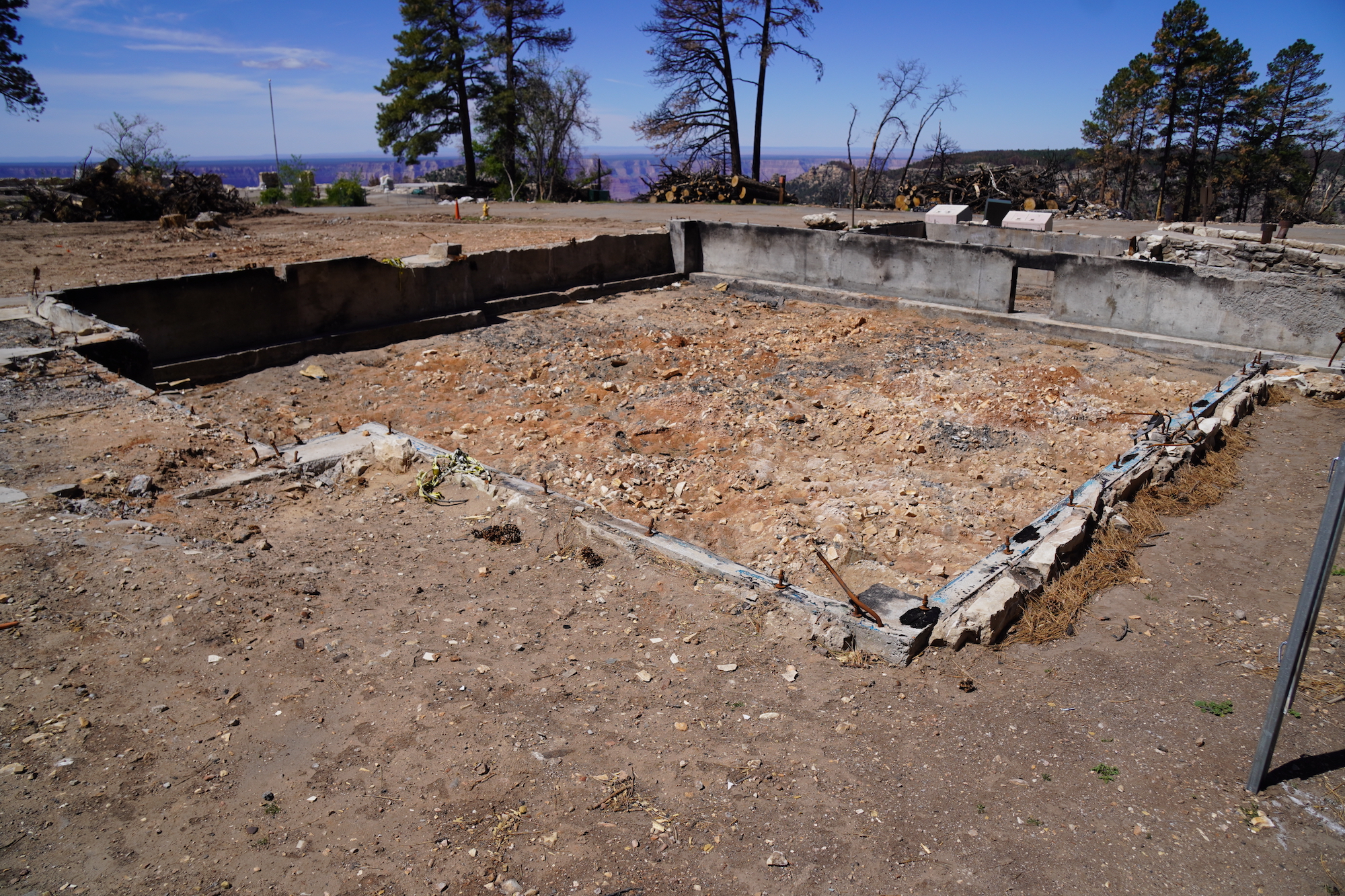 A building foundation at the Grand Canyon North Rim Visitor Center, Ariz., on May 19, 2026. (Allan Stein/The Epoch Times)
“We have a lot [to offer],” Rich told The Epoch Times. “We just don’t know what’s going to happen. We’re hoping it will get back to the way it used to be.”
On May 19, Gary House and his wife from Illinois arrived at the North Rim after driving from South Dakota through Yellowstone National Park to visit the canyon for the first time.
“Of all the days for a fire—the Fourth of July,” he told The Epoch Times as he watched cleanup crews working around the damaged visitor center from his pickup truck.
House said he believes that life at the Grand Canyon will eventually rebound and flourish once again.
“I’m glad that we can get to the area at least, but it makes you realize that nature is going to do what it’s going to do,” he said. “We’re just along for the ride.”
 Friends Read Free
Copy
Facebook
Tweet
Friends Read Free
Copy
Facebook
Tweet