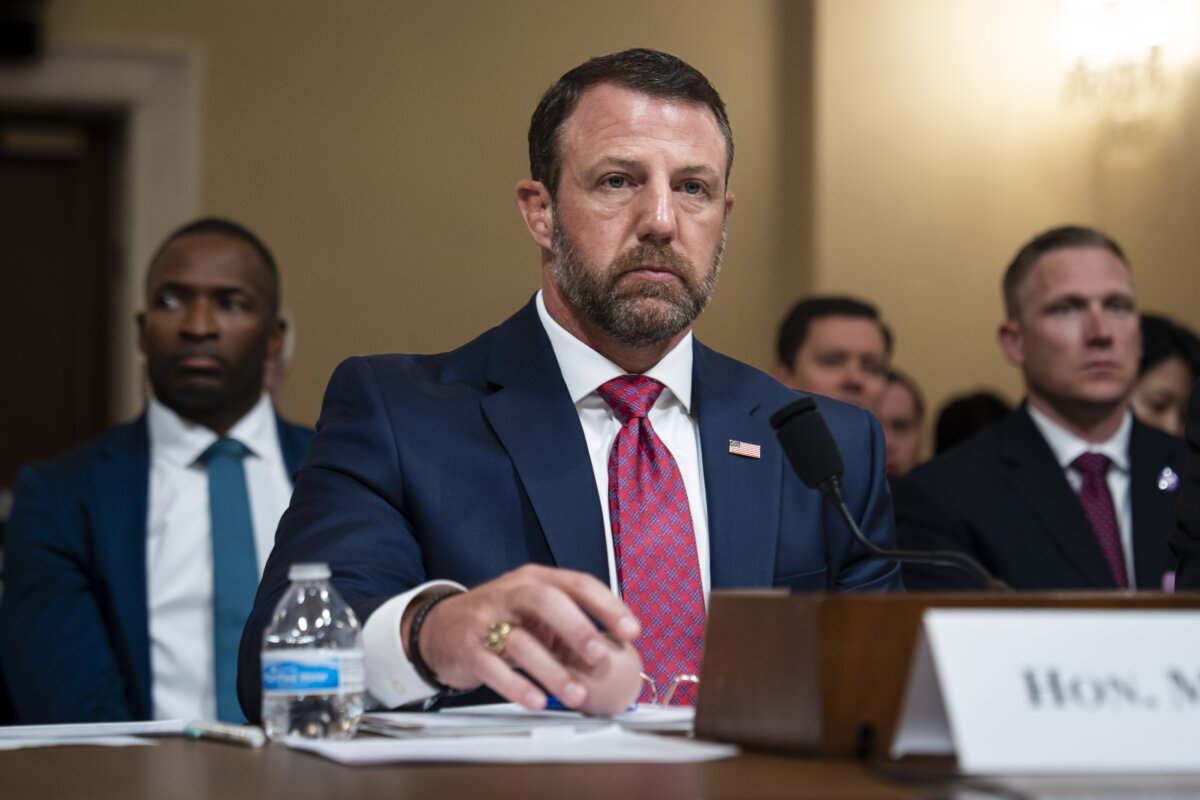

The Trump administration is encouraging those in the United States with Temporary Protected Status to either pursue a permanent legal immigration pathway or get federal help to voluntarily return to their home countries, according to Homeland Security Secretary Markwayne Mullin.
Mullin said on June 28 that recipients of Temporary Protected Status should recognize that the program was never intended to provide permanent residency in the United States.
Temporary Protected Status is a humanitarian program that allows nationals of designated countries experiencing armed conflict, natural disasters, or other extraordinary conditions to remain and work legally in the United States for a limited period.
“Either try to fill out the paperwork and be here underneath a permanent status, or we’ll help you get back to your country,” Mullin said in an interview on CNN’s “State of the Union.”
A Congressional Research Service report states that as of March 2025, nearly 1.3 million individuals from 17 countries had Temporary Protected Status in the United States.
Mullin said he could not promise everyone would be accepted, but nothing was preventing them from applying. He said the social welfare programs subsidizing people on Temporary Protected Status will not be extended, saying that while the program is supposed to only last up to 18 months, some of the people on it have been in the country for decades.
The administration is offering departure assistance for those who voluntarily leave the United States.
“We’ll actually give you a plane ticket, plus roughly $2,100 to help you reestablish when you get there, but Temporary Protective Status, according to the courts and in its name itself, is not permanent status,” Mullin said.
The Supreme Court on June 25 ruled that the Trump administration could end Temporary Protected Status for people from Haiti and Syria.
The administration has argued that conditions in some countries no longer justify continuing the temporary status and that the program has expanded beyond its original purpose. Administration officials have also said that individuals who wish to remain in the United States should seek another lawful immigration status if they qualify.
Supporters of extending Temporary Protected Status say many recipients have lived and worked in the United States for years, established families and businesses, and contribute to local economies. They contend that ending the protections could separate families and return people to countries that continue to face economic instability or security concerns.
The Supreme Court’s order allows the administration to implement its policy while litigation proceeds. A final decision on the legality of ending the protections will ultimately be determined through the federal court system unless Congress acts to change immigration law.
 Friends Read Free
Copy
Facebook
Tweet
Friends Read Free
Copy
Facebook
Tweet