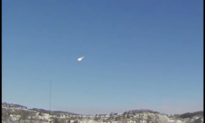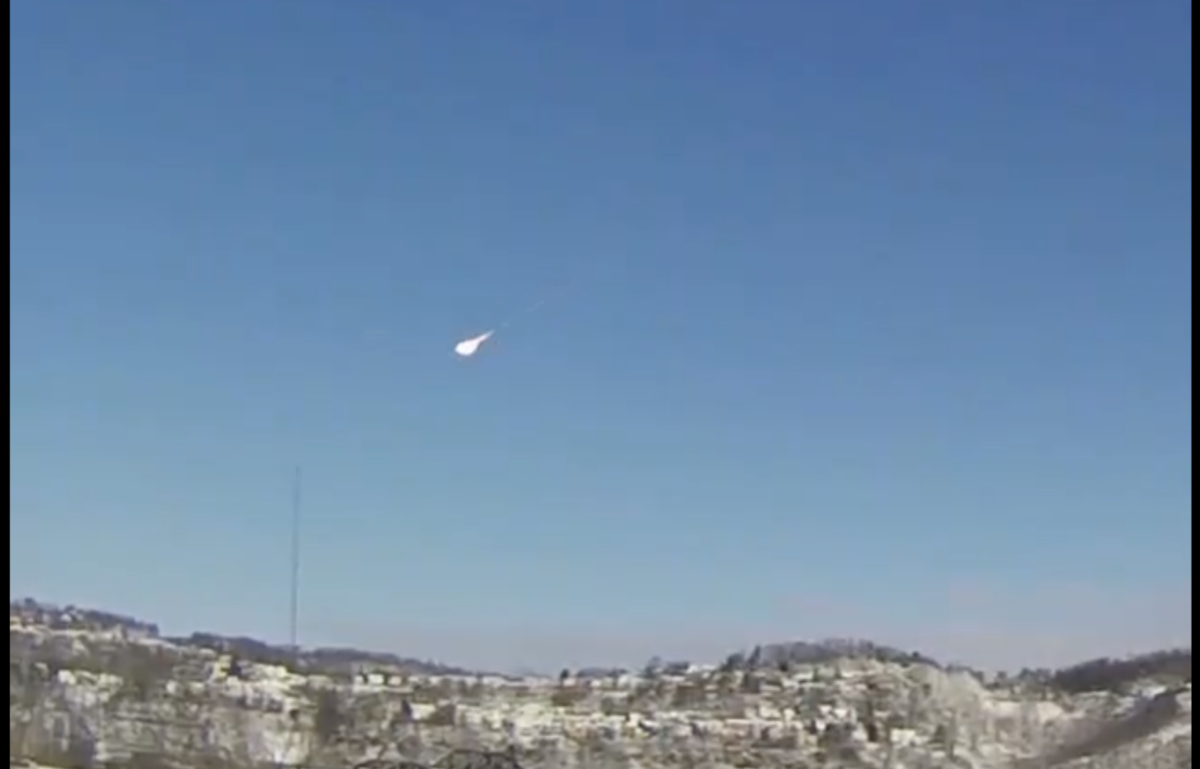

NASA confirmed that a meteor hit the Earth’s atmosphere and exploded over Ohio on the morning of March 17, after eyewitnesses reported seeing a fireball in the sky.
“The fireball—caused by a small asteroid nearly 6 feet in diameter and weighing about 7 tons— moved southeast at 45,000 mph before fragmenting over Valley City,” NASA said on X. “The fragments continued on to the south, producing meteorites in the vicinity of Medina County, Ohio.”
NASA released an event report based on data collected from eyewitness accounts submitted to the American Meteor Society from Delaware, Illinois, Indiana, Kentucky, Maryland, Michigan, New York, Ohio, Pennsylvania, Virginia, Washington, D.C., and Ontario, Canada that stated they saw “a very bright daytime fireball” around 8:57 a.m. ET on March 17. NASA added that the Geostationary Lightning Mapper on the GOES satellite also saw the event, as well as several cameras set up in the area.
When the asteroid was first spotted over Lake Erie, specifically off the beaches of Lorain, Ohio, it was at an altitude of 50 miles, moving south-southeast. It traveled 34 fiery miles through the Earth’s atmosphere and dropped 20 miles in altitude before fragmenting over Valley City, Ohio, spreading meteorites across Medina County.
“This one really does look like it’s a fireball, which means it’s a meteorite—a small asteroid,” said astronomer Carl Hergenrother, American Meteor Society’s executive director.
“So much stuff is being launched that a lot of times what you see burning up is just reentering satellites. But usually those don’t get especially bright,” he said.
The National Weather Service’s (NWS) Pittsburgh office released a video taken by one of its employees of the fireball streaking across the sky, first increasing in size and then going out.
“The asteroid unleashed an energy of 250 tons of TNT when it fragmented, resulting in a pressure wave which propagated to the ground, causing the booms and explosive noises heard by many of the public,” NASA said in its event report. “It may have also shook houses north of Medina.”
No reports of any fallen debris were included in NASA’s report, nor were they shared by the National Weather Service office in Cleveland.
“There could be some small fragments, but a lot of it would have burned up in the atmosphere,” NWS meteorologist Brian Mitchell said. He added that meteors normally hit the Earth’s atmosphere about once a day. While they are already tracked by scientists on a special network of cameras, more and more falling space rocks are being recorded by the public using their smart phones or security cameras.
The Associated Press contributed to this report.
 Friends Read Free
Copy
Facebook
Tweet
Friends Read Free
Copy
Facebook
Tweet