
North Carolina lawmakers on Oct. 22 passed a bill that would transform a Democratic-leaning electoral district in the U.S. House into a Republican-leaning one.
Senate Bill 249, known as the Realign Congressional Districts Act, would transfer several Democratic-leaning counties in suburban areas around Raleigh from the state’s First Congressional District to the Third District.
It would also move nearly all counties in the Republican-leaning coastal areas of the state to the First District.
The exchange will result in two Republican-leaning U.S. House districts and may flip the First District—currently held by Rep. Don Davis (D-N.C.)—to the GOP in the 2026 congressional general election, according to an analysis by The Associated Press.
The bill was passed by the North Carolina House of Representatives by a vote of 66–48, with no Democrats voting in favor.
One day earlier, on Oct. 21, the bill was passed by the North Carolina Senate on a similar party-line vote of 26–20.
The state’s constitution prevents the governor of North Carolina from vetoing redistricting bills, meaning that the House’s action enacts the bill into law.
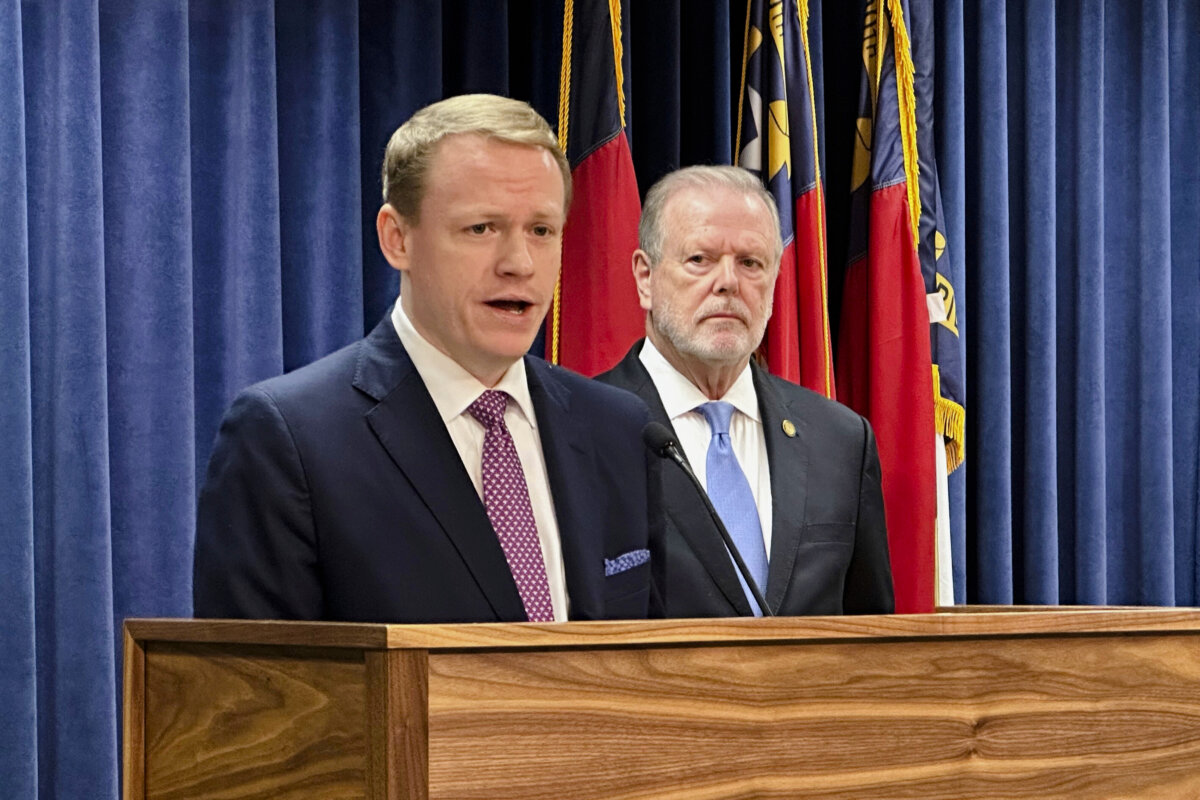
“North Carolina won’t allow radical Dems like [California Gov. Gavin Newsom] to redraw districts and undermine the will of the people. We will stand with the president, defend the GOP majority, and secure an additional Republican congressional seat,” state House Speaker Destin Hall wrote on social media on Oct. 13.
President Donald Trump has both endorsed and argued for such redistricting efforts by Republican-led states.
Texas was the first state to begin the process, and on Aug. 29, House Bill 4 was signed into law by Texas Gov. Greg Abbott.
That law would alter the boundaries of House districts surrounding the Democratic-leaning cities of Austin, Dallas, and Houston to favor Republicans, as well as similarly adjust the boundaries of two districts in the Democratic-leaning areas of South Texas.
Ohio, Kansas, and Indiana are other states controlled by the GOP where redistricting efforts are underway.
North Carolina’s Republicans have attributed their action to California’s Democratic-backed referendum initiative, Proposition 50, that would temporarily revise the state’s congressional districts to the GOP’s disadvantage.
 Friends Read Free
Copy
Facebook
Tweet
Friends Read Free
Copy
Facebook
Tweet