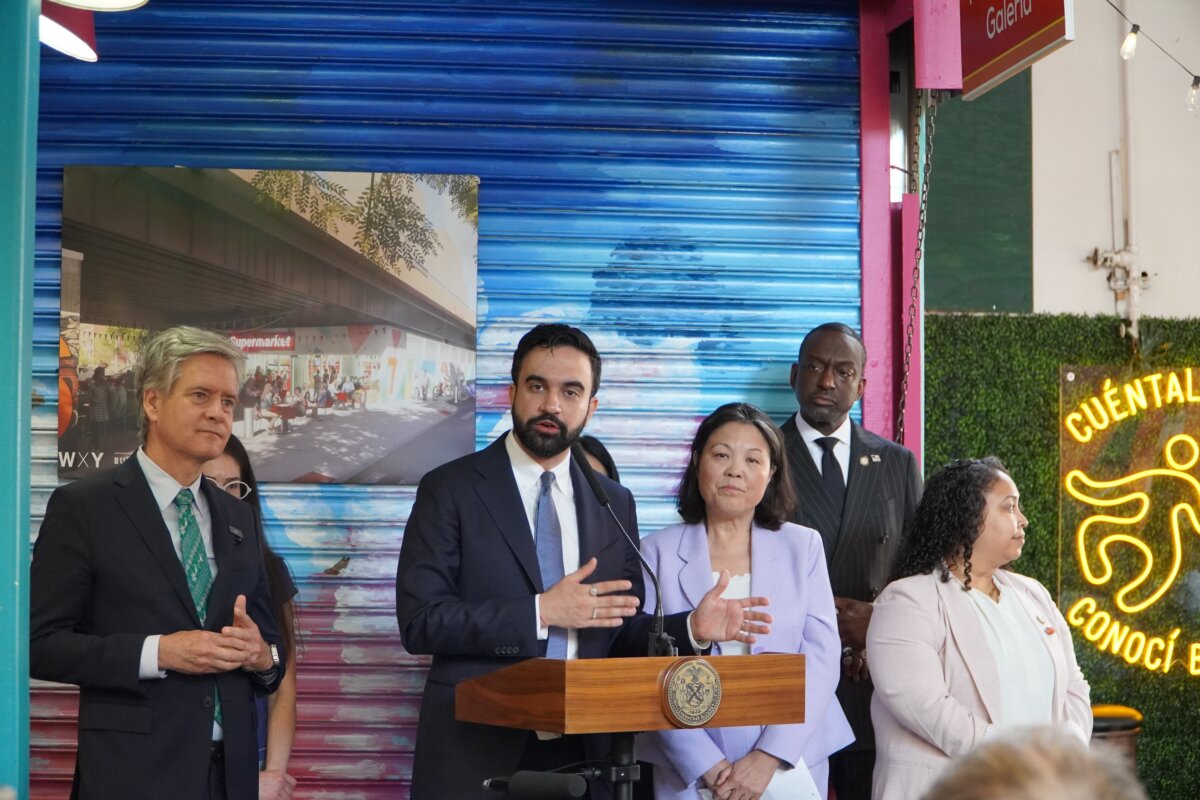

NEW YORK CITY—City-owned grocery stores will use city land but leave daily operations to a private operator, which will be contracted to sell a core set of essential groceries at a set percent cheaper than market prices, Mayor Zohran Mamdani said on April 14, speaking from La Marqueta, a public market run by the NYC Economic Development Corporation.
The city will require the private operator to pass on savings to consumers.
“We have heard corporate leaders on earnings calls talking about how those prices have stayed up, even as some of those costs have come down,” Mamdani said, asserting that when the market is broken, the city needs to step in.
When asked why not cut back regulations and other cost drivers for grocery stores, Mamdani said that the city tried incentives and tax breaks through the City FRESH program, which offers incentives and tax breaks for grocers to open stores in food deserts.
The city “invested $30 million into that program. Those savings have not been passed on to New Yorkers,” Mamdani said.
“Oftentimes when the government creates a subsidy or a tax break, it’s doing so in the hopes that it will be passed on to the consumer,” Mamdani said, explaining now the city has to step in to guarantee consumers benefit from lower prices.
Mamdani has set aside $70 million to set up five stores over the next four years. In East Harlem, the city will design and build a 9,000-square-foot store just blocks from the site of La Marqueta. The mayor said the city-owned stores won’t compete with bodegas selling tobacco products or lottery tickets.
Other local governments in Florida and Missouri have also launched city-owned grocery stores.
The town council of Baldwin, Florida, started operating a grocery store in September 2019, a year after for-profit grocer IGA closed its outpost in the town. The town council was concerned about older residents having access to fresh groceries, as the closest grocery store was miles away. During the pandemic the store did well, but annual losses of six figures—$178,000 in fiscal year 2021, $171,000 in fiscal year 2022—made the endeavor unsustainable. The town closed the grocery store in March 2024.
Kansas City, Missouri, also had to close down a city-owned grocery store in 2025. The store was operated by a nonprofit, Community Builders of Kansas City. Crime and security concerns hurt foot traffic at the store, forcing it to hire private security. Spending $5,000 to $6,000 per week on security was found to be unsustainable and the store closed.
 Friends Read Free
Copy
Facebook
Tweet
Friends Read Free
Copy
Facebook
Tweet