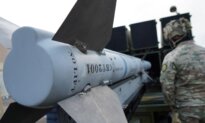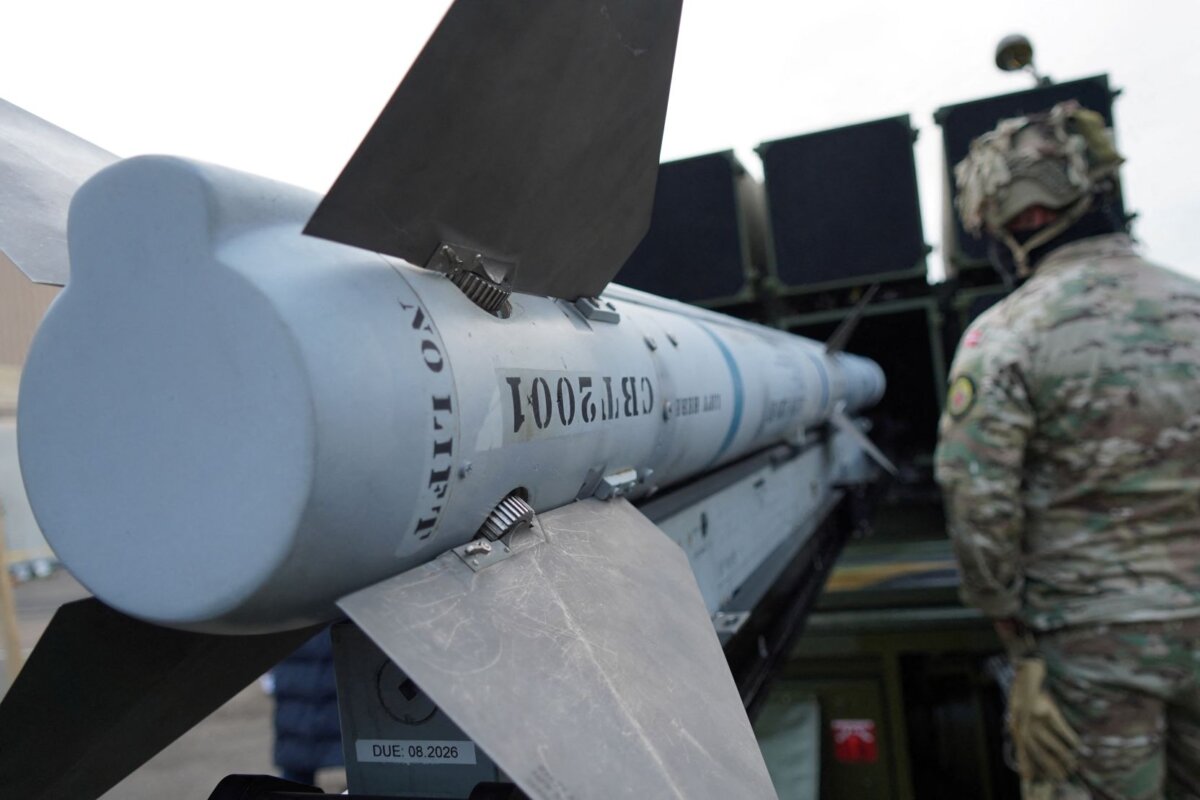

As the U.S. war on Iran continues to draw down weapons stockpiles, aerospace giant Raytheon on Monday secured a multiyear contract valued at up to $20.7 billion to speed production of the Advanced Medium-Range Air-to-Air Missile, known as AMRAAM.
The deal runs for five years and includes two option years, which allow the government to extend the contract without new talks. The Department of War awarded it under its Arsenal of Freedom effort.
Raytheon parent company RTX said the contract follows a landmark agreement announced earlier this year that supports annual production of at least 1,900 of the missiles.
Raytheon President Phil Jasper said in a press release that the company is investing heavily to increase production “and meet surging demand from the U.S. Air Force, Navy and our international partners.”
Production nearly doubled in 2025 from 2024, according to the company. The work will involve hundreds of small and mid-sized suppliers nationwide, and the defense company is also considering international co-production.
The missile, which is in its fifth generation, operates on 14 platforms and is fielded by 44 countries. Upgraded processors allow software updates “to outpace current and future threats,” the statement said.
Monday’s award is the latest in a string of Pentagon production pacts since the summer, as officials moved to restock weapons deployed in the Iran war and earlier transfers to Ukraine.
Missile Stockpiles Strained
In August, the Department of War announced seven-year framework agreements with General Dynamics Ordnance and Tactical Systems and Lockheed Martin to increase the output of factory parts that go into two kinds of U.S. interceptor missiles, the Patriot and Terminal High Altitude Area Defense (THAAD).
A July 27 Center for Strategic and International Studies report estimated the Patriot interceptor stockpile fell by at least 65 percent after the Iran war began Feb. 28, while THAAD stockpiles dropped by at least 38 percent.
Katherine Thompson, a Cato Institute senior fellow and former Pentagon official, told The Epoch Times that six months of fighting “exacerbated the stress on U.S. critical munitions stockpiles already facing limitations.”
“Many of the munitions under the greatest strain, including Patriot, THAAD, and Tomahawk, are essential to the U.S. ability to meet its highest-order strategic priority: resourcing deterrence in the Indo-Pacific vis-a-vis China,” she said. “Between the heavy expenditure of the Iran war and the prior drawdowns to arm Ukraine, the U.S. now faces a real overextension of its military power relative to its ability to resource its commitments.”
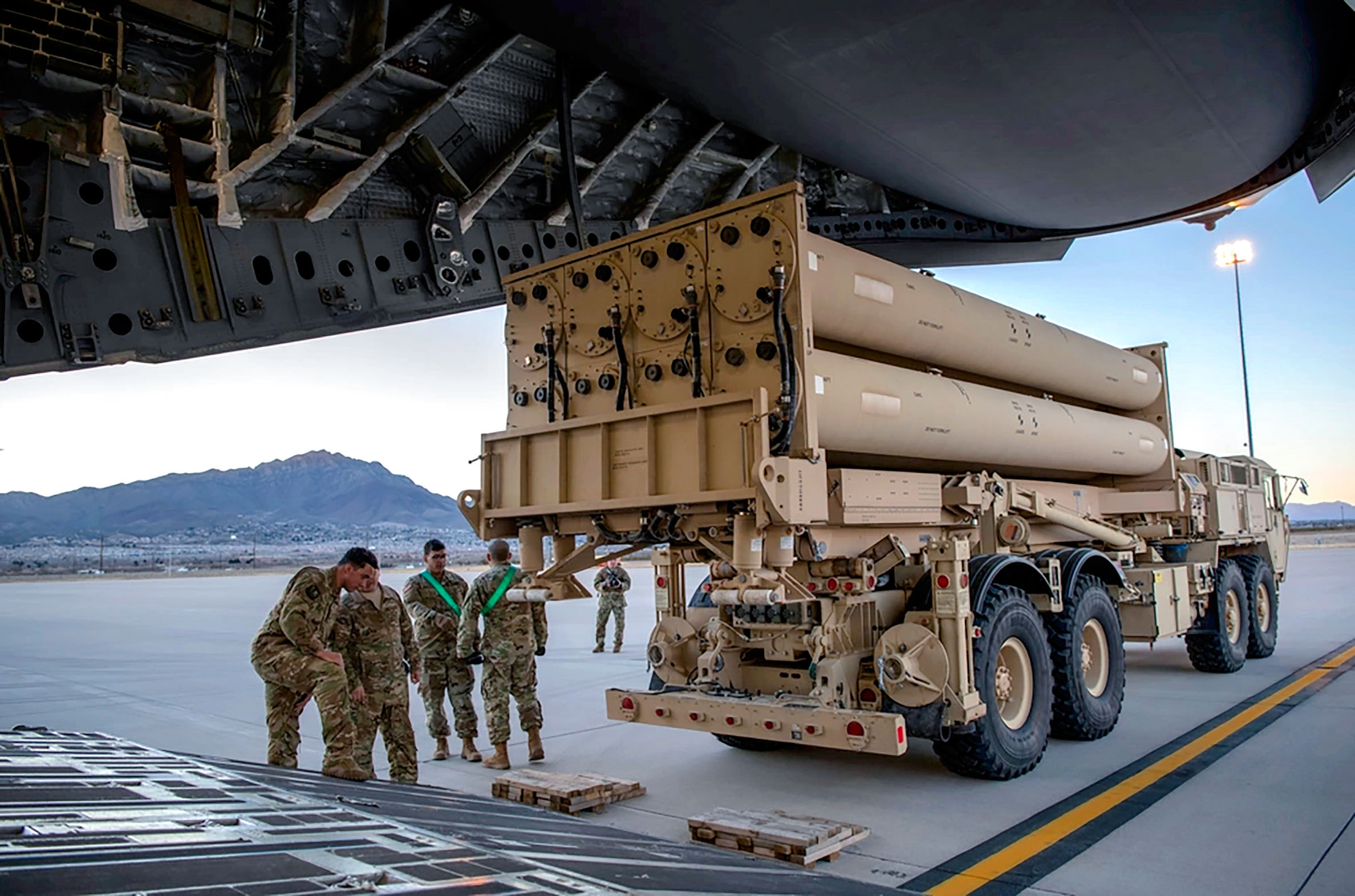 A Terminal High Altitude Area Defense (THAAD) launching station preparing to load onto a 4th Airlift Squadron C-17 Globemaster III at Fort Bliss, Texas, on Feb. 23, 2019. (Staff Sgt. Cory D. Payne/U.S. Air Force via AP)
President Donald Trump, asked about inventories, told Fox News on Aug. 17, “What we’ve used is peanuts.” He added, “We have a lot of mid-level weapons.”
Three days earlier, the department signed framework agreements with Boeing and Raytheon to expand hardware for Standard Missile-3 Block IB and Block IIA interceptors. That followed a $745 million Raytheon contract for SM-3 Block IIA production and sustainment.
A Sept. 15 report from the Congressional Budget Office said the war with Iran has cost $38.1 billion through Aug. 1 and could add $2 billion to $3 billion for each additional month of fighting depending on the level of violence
Timothy Frudd contributed to this report.
 Friends Read Free
Copy
Facebook
Tweet
Friends Read Free
Copy
Facebook
Tweet