
The Pentagon directed 30 academic institutions in the United States on Aug. 17 to immediately audit their academic, financial, and research collaborations with foreign entities deemed a threat to national security.
The notices were sent to universities that were connected to or actively working with foreign schools or research facilities in China, Russia, or Iran that are listed as known foreign entities considered a threat by the War Department.
The 30 universities that received the notice were not named, and a request to the War Department for the names of the universities was not returned.
The institutions are also required to report their audit findings and actions to the department by Aug. 31.
“The Department of War has zero tolerance for academic partnerships that compromise our national security,” Under Secretary of War for Research and Engineering Emil Michael said in a statement.
“Institutions that receive funding from American taxpayers must uphold the highest standards of research security, and these mandated audits will ensure accountability across the board.”
Organizations associated with China’s rebranded Confucius Institutes were also considered threats, according to the War Department.
The action is designed to protect public research funds from unauthorized technology transfer, intellectual property theft, and adversarial exploitation, the Pentagon stated.
The directive comes days after the House Select Committee on China and the House Education and Workforce Committee released a report alleging that Harvard University created a nonprofit called Harvard Global to circumvent federal requirements for disposing of foreign donations to higher education.
It’s not known whether Harvard was on the list to receive a notice from the Pentagon on Aug. 17.
The House committee’s report alleged that Harvard’s collaboration with China is “widespread.”
The Chinese Communist Party’s interests were infused across multiple domains at the university at the expense of U.S. national security, according to the report.
Harvard is the nation’s top recipient of gifts and funding from China, receiving nearly $687 million as of July 31, according to the Education Department.
To be eligible for future federal research funds, the notified universities must complete a comprehensive audit of all identified foreign collaborations.
The schools must assess exposure of sensitive or export-controlled research and start strict mitigation plans, including ending the partnerships.
“Universities are critical partners in executing a wide range of Department of War research programs, and the department must therefore ensure that our research investments are well protected from foreign exploitation,” Joseph Jewell, assistant secretary of war for science and technology, said in a statement.
The 1286 list was amended by the War Department for the Fiscal Year 2019 National Defense Authorization Act.
The Pentagon also reaffirmed the 2024 list of foreign talent recruitment programs that the department says pose a threat to national security.
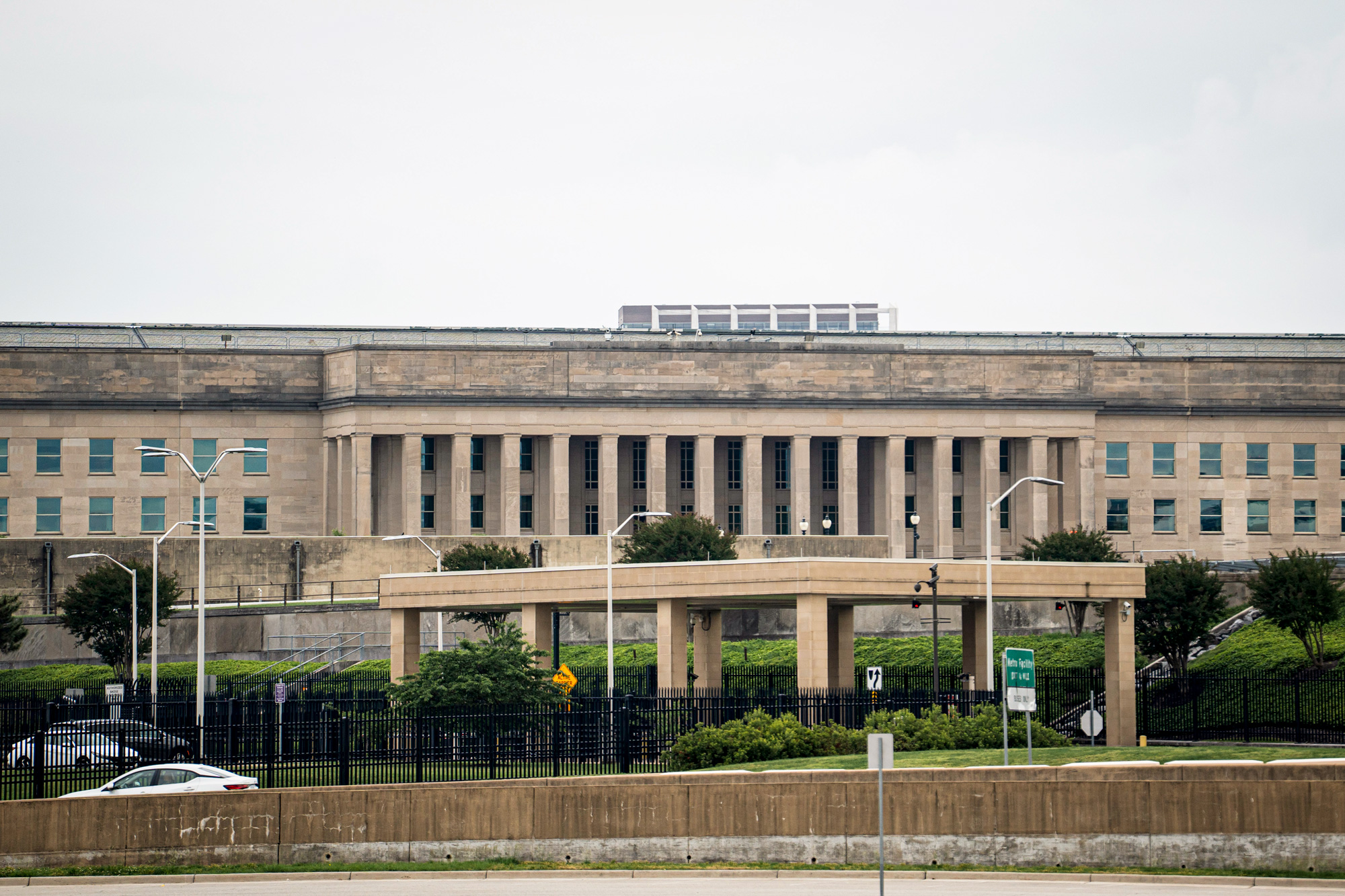 The Pentagon in Arlington, Va., on May 25, 2026. (Madalina Kilroy/The Epoch Times)
It also targets foreign entities and talent programs used by companies to recruit and develop workers from foreign countries that are a threat to national security.
This year, the Pentagon prohibited using any of its funding on research that involved collaborating with any entity on the Section 1286 list.
The restriction includes banning research or using equipment from any listed entity.
The ban also extends to all employees of the institutions.
Researchers were warned by the Pentagon that collaborating with anyone affiliated with an entity on the list could negatively affect their ability to receive federal funds in the future.
The list is comprised of Chinese, Russian, and Iranian universities and technology institutes, along with military and defense academies and laboratories.
The list includes Baqiyatallah University of Medical Sciences in Iran, Bauman Moscow State Technical University, China Academy of Engineering Physics and affiliates, Chinese Academy of Sciences, Chongqing University of Technology in China, and the Imam Hussein University in Iran.
 Friends Read Free
Copy
Facebook
Tweet
Friends Read Free
Copy
Facebook
Tweet