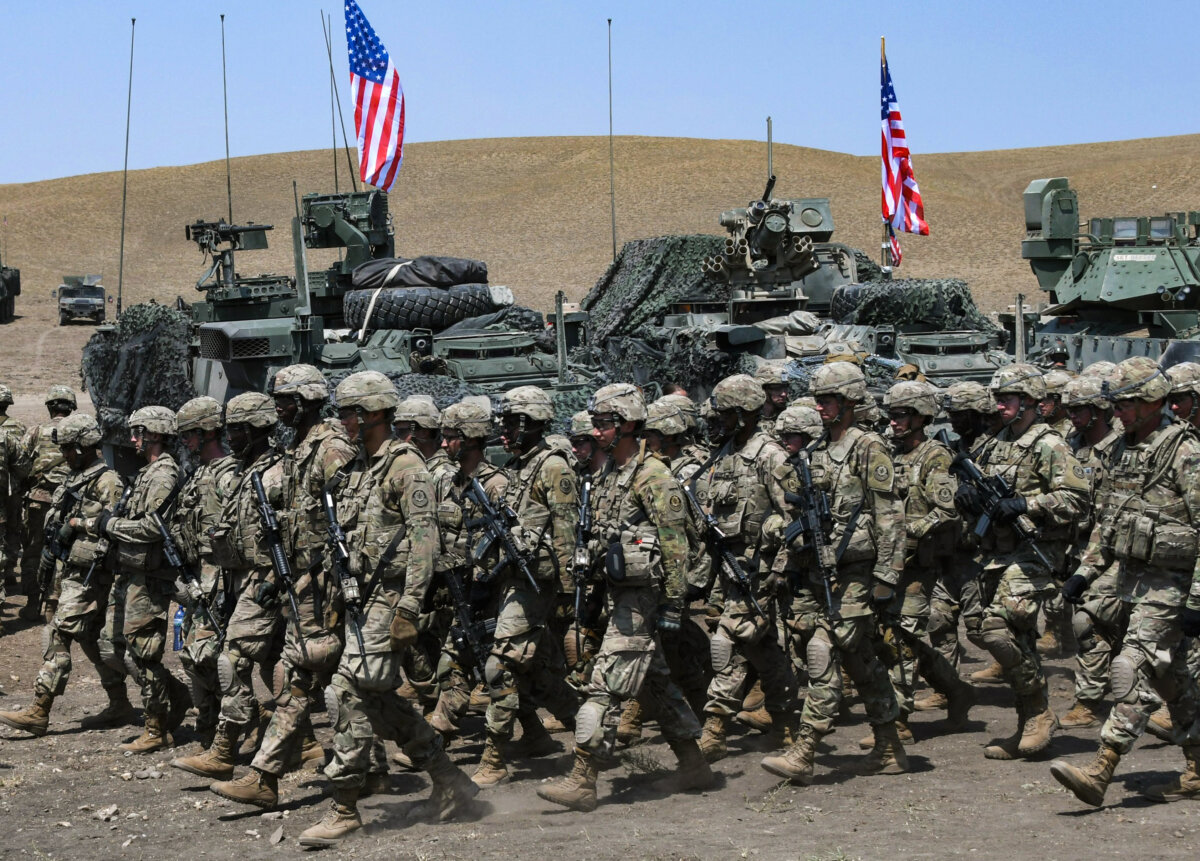

The Department of War implemented increases in hostile fire pay and imminent danger pay for U.S. military members on Oct. 1, marking the first increase in the stipends since 2002.
A memorandum issued by Timothy Dill, assistant secretary of war for manpower and reserve affairs, increased hostile fire pay to $450 per month and imminent danger pay to $275 per month. Before the change, both hostile fire pay and imminent danger pay had been capped at $225 per month for 24 years.
“Our troops in harm’s way deserve compensation that reflects their risk. For the first time in over two decades, the Department of War is increasing Hostile Fire Pay and Imminent Danger Pay,” chief Pentagon spokesman Sean Parnell wrote in an X statement on Thursday.
Under Secretary of War Pete Hegseth’s leadership, the Pentagon is “recognizing the real operational risks our warfighters face daily,” Parnell said.
The increase comes more than seven months after the start of the war with Iran. As of Sept. 29, the Pentagon reported 19 U.S. troops have been killed, and 861 have been wounded since the start of the conflict on Feb. 28.
“Those who face combat deserve higher compensation that reflects the risks that they willingly undertake on behalf of our nation,” Anthony Tata, undersecretary of war for personnel and readiness, said in a statement. “Raising imminent danger and hostile fire pays for the first time in two decades is a step toward recognizing that sacrifice.”
While the memorandum establishing the changes was signed on July 14, the changes were not scheduled to take effect until the start of the new fiscal year on Oct. 1.
The memorandum also decreased “hardship duty pay-location”—a monthly stipend for service members stationed in substandard areas—from $150 to $100 per month to prevent service members from exceeding the maximum amount allowed for combined payments.
The financial management regulations note that a U.S. service member is eligible for hostile fire pay if the service member “performs duty in a hostile fire area … is exposed to a hostile fire event … is on duty during a month in an area in which a hostile event occurred that placed the member in grave danger of physical injury; or … is killed, injured or wounded by a hostile fire event.”
The regulations also state that a service member is eligible for imminent danger pay when they are “subject to the threat of physical harm or imminent danger based on civil insurrection, civil war, terrorism or wartime conditions in a designated foreign area.”
Under the Pentagon’s memorandum, the various military services are expected to coordinate with the Defense Finance and Accounting Service to ensure that military members do not receive both hostile fire pay and imminent danger pay at the same time.
Parnell said that U.S. military commanders can immediately transfer service members from imminent danger pay to hostile fire pay if a designated imminent danger area escalates into active combat.
“This provides a clear and timely mechanism to acknowledge heightened risk levels,” he said.
The Marine Corps announced the pay increases last week in an “advance notification.”
 Friends Read Free
Copy
Facebook
Tweet
Friends Read Free
Copy
Facebook
Tweet