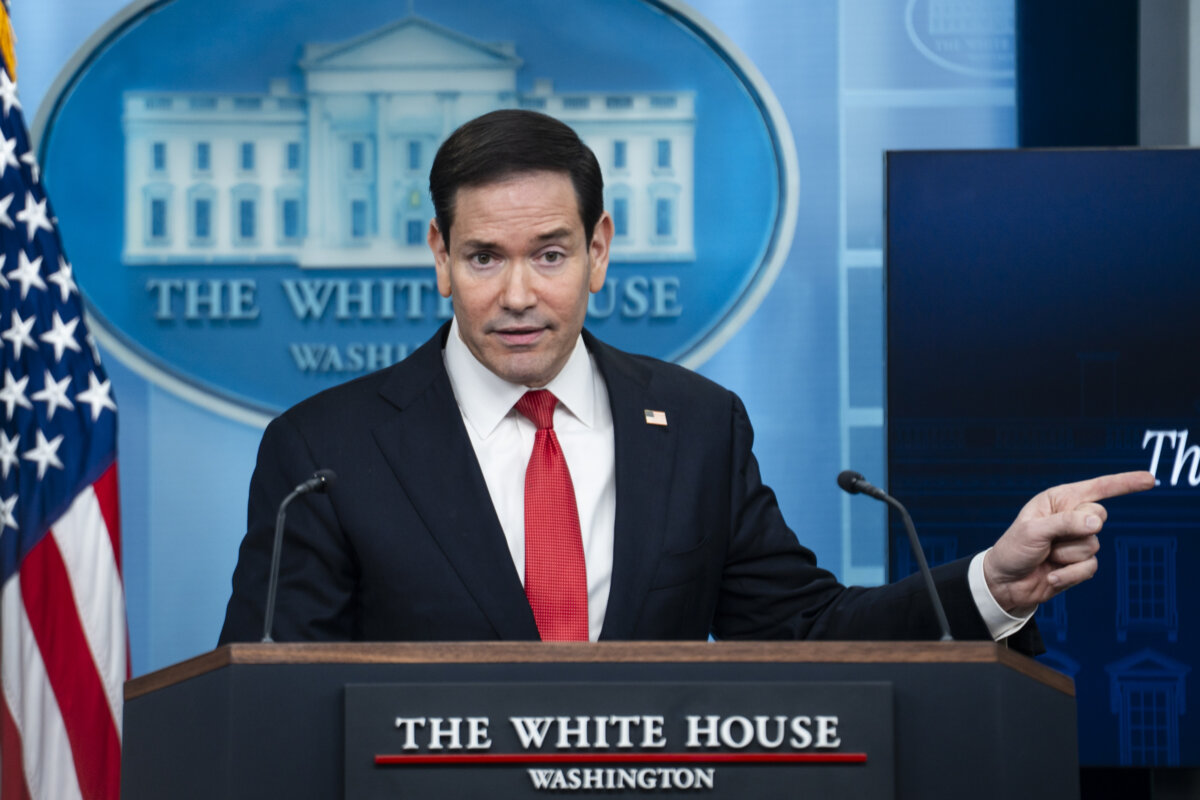
U.S. Secretary of State Marco Rubio met with Pope Leo XIV at the Vatican on May 7, amid a war of words that has broken out between the head of the Catholic Church and U.S. President Donald Trump.
Rubio, who also serves as Trump’s national security adviser, arrived at the Apostolic Palace around 11:10 a.m. local time for the visit, which will be the first between the pontiff and a Trump Cabinet official in almost a year.
The secretary of state was at the Vatican for around two hours before driving away in a convoy, during which time he met with Leo before sitting down with senior Vatican officials, including his opposite number at the Holy See, Vatican Secretary of State Cardinal Pietro Parolin.
Neither the Vatican nor the U.S. State Department provided any immediate details about the meetings.
Parolin, on May 6, described Trump’s recent remarks about the pope as “a bit strange,” but stressed that the Holy See still valued its relationship with Washington, saying that the White House had requested the audience, and that the pope was open to continued dialogue.
“How can one do without the United States? One cannot do without the United States,” Parolin said, according to Vatican News.
“Despite some difficulties occurring, they certainly remain an interlocutor for the Holy See. Also, because they have a role in almost all the situations we are experiencing today.”
Leo, the first American to hold the papacy, drew criticisms from Trump after comments he made regarding the Iran war and the administration’s immigration policies.
Trump most recently criticized the pope on May 4 for saying he believed it was OK for Iran to obtain nuclear weapons.
“The Pope would rather talk about the fact that it’s OK for Iran to have a nuclear weapon,” Trump told Hugh Hewitt in a radio interview.
“I think he’s endangering a lot of Catholics and a lot of people. But I guess if it’s up to the Pope, he thinks it’s just fine for Iran to have a nuclear weapon.”
Leo later told journalists that his focus was on spreading the Christian message of peace and rejected the idea that he had ever supported nuclear weapons.
“The mission of the Church is to preach the Gospel, to preach peace,” said the pope, according to Vatican News. “The Church has spoken out for years against all nuclear arms, so there is no doubt on that point.”
Leo, who will mark his first full year as pope on May 8, recently said during a tour of African nations that the direction of global leadership needed a “decisive change of course” and that the world was “being ravaged by a handful of tyrants.”
“Jesus told us: Blessed are the peacemakers! But woe to those who manipulate religion and the very name of God for their own military, economic, or political gain, dragging that which is sacred into darkness and filth,” the pope said in Bamenda, Cameroon, on April 16.
“Peace is not something we must invent: it is something we must embrace by accepting our neighbor as our brother and as our sister. We do not choose our brothers and sisters: we simply must accept one another!” he added.
Leo later clarified on April 18 that these comments were not aimed at Trump, saying that the speech had been made two weeks in advance and “well before the president had ever commented on myself and the message of peace that I am promoting.”
“As it happens, it was looked at as if I was trying to debate, [against] the president, which is not in my interest at all,” he said.
A number of high-profile members of Trump’s administration are Catholics, including Rubio, Vice President JD Vance, and Secretary of Health Robert F. Kennedy Jr.
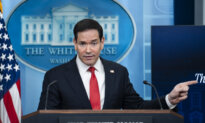
Rubio said at a White House briefing on May 5 that he expected to discuss Cuba and concerns over religious freedom around the world with the pope.
He is set to spend two days in Rome, where, along with the pope, he is due to meet with Italian Prime Minister Giorgia Meloni.
Reuters contributed to this report.
 Friends Read Free
Copy
Facebook
Tweet
Friends Read Free
Copy
Facebook
Tweet