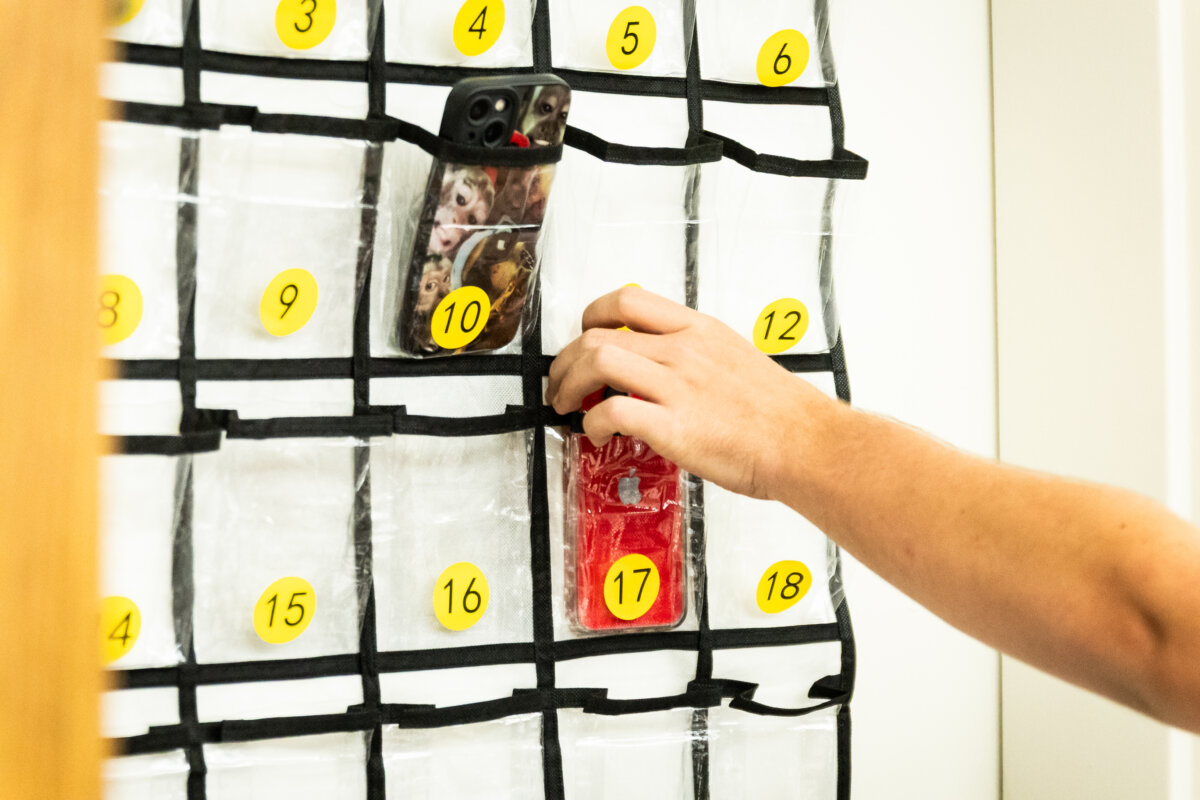

Beyond smartphones, television, and digital workstations, there is a beautiful world awaiting rediscovery, screen-free advocates say. Everyone is welcome there, to spend time in tech-free spaces—to see, hear, smell, and touch tangible things in real time.
At this year’s national Screen-Free Week initiative, May 4–10, organizers are hoping families—children and adults—will accept their invitation to find time to “dream, connect, and play” without screens.
Hundreds of schools, libraries, and community institutions will be celebrating the movement—however, real change begins at home, a national organizer told the Epoch Times.
“It’s so sad that family connections are moving further apart,” Debra Lawrence, president of the U.S. affiliate of the International Play Association, said on April 17. “I think we just need to reset and give families options and alternatives.”
Lawrence’s organization, along with the Fairplay Screen Time Action Network, promotes Screen-Free Week. Its website provides celebration suggestions and guides for families, schools, libraries, and communities, with feedback from people and organizations that, in the past, had positive or even life-changing experiences after they turned off their screens for observations of past screen-free weeks.
“I saw my 9-year-old daughter laying on the floor, just daydreaming. I immediately thought, ‘Oh no,’ she is bored, maybe she could … then I stopped myself and just let her lay there. She wasn’t bored, just deep in thought. We don’t always have to be doing something,” Kim G, a mother from Utah, wrote on the website.
And there was this contribution from Damien, a first grader from Massachusetts: “I wanted to play on my screen, then I thought of something I really wanted to do—play with my friends.”
For this year’s observation, Screen-Free Week organizers asked the governors in all states to issue a proclamation promoting a pause from screens. Lawrence said she and her colleagues will post those signed documents on partner websites. She called this an important step for committing to gradual change in households, schools, and communities, or at least raising awareness about the harmful effects excessive screen time can have on children.
“Every part of a young person’s development is harmed by some robotic voice. It even hurts their eyes,” Lawrence said. “It’s so dangerous what we are doing right now.”
The American Academy of Pediatrics works closely with the International Play Association and the other Screen-Free Week partners. Lawrence cited guidelines that state children under 2 should avoid screens and digital devices entirely, except for Zoom or other video conversations involving a loved one. For children between 3 and 5, the recommended daily limit is just one hour.
She also noted recent studies of high-functioning, high-performing schoolchildren in Finland. The students participated in 15 minutes of outdoor recess for every 45 minutes of instruction, regardless of the season or weather. Researchers found that those incremental break periods with physical activity benefit short-term memory.
“They need processing time,” Lawrence said.
Lawrence, who worked as a kindergarten teacher before joining the faculty of the teacher training program at Delaware Community College in Pennsylvania, has been observing the growth of this movement since it originated as TV Turnoff Week in 1994. She has also witnessed how smartphones, video games, social media, and ubiquitous digital classrooms and workplaces have negatively affected behaviors and connections for both children and adults.
She recalled a recent incident where a young mother, clearly tired after a day of work, handed her phone to her three bored young children as she tried to finish grocery shopping. Within a few minutes, the kids fought over control of the device, prompting their mother to shout at them in public.
“Parents are so tired, but they don’t recognize the dangers and the bad behavior that’s just going to escalate,” Lawrence said. “That’s why we’re in this trap.”
A family hike, game night, or just good old-fashioned storytelling can be a great break from the madness.
Lawrence recalled daily conversations with her mother as dinner was being prepared. They conversed every evening over the course of a decade.
“Watching her cook for five people every night, it gave me this internal timing mechanism,” she said. “We just talked for hours. I didn’t realize that making Thanksgiving dinner would be a cinch for me years later!”
Advocates suggest individuals or families try to go screen-free for a week or even just one day—and feel free to stay a lifetime. This free offer never expires.
 Friends Read Free
Copy
Facebook
Tweet
Friends Read Free
Copy
Facebook
Tweet