
Senate Parliamentarian Elizabeth MacDonough announced on June 21 that the Republican-backed measure to put a temporary block on states’ regulation of artificial intelligence (AI) can remain in the One Big Beautiful Bill.
This means that the bill’s proposal to restrain state AI laws for 10 years can be part of Congress’s reconciliation process and could be passed with a simple majority.
Under the proposal, states that want access to federal funding from the Broadband Equity, Access, and Deployment (BEAD) program would be prohibited from regulating AI at a state level till 2035.
Should the measure pass, states that adhere to the nonregulation policy would have access to a portion of the $500 million headed to the Department of Commerce for the modernization and security of information technology systems.
The announcement came alongside advice from the parliamentarian that a number of other provisions in the bill would be subject to a 60-vote threshold, rather than a simple majority, if included in the bill. These include several immigration measures, among other provisions.
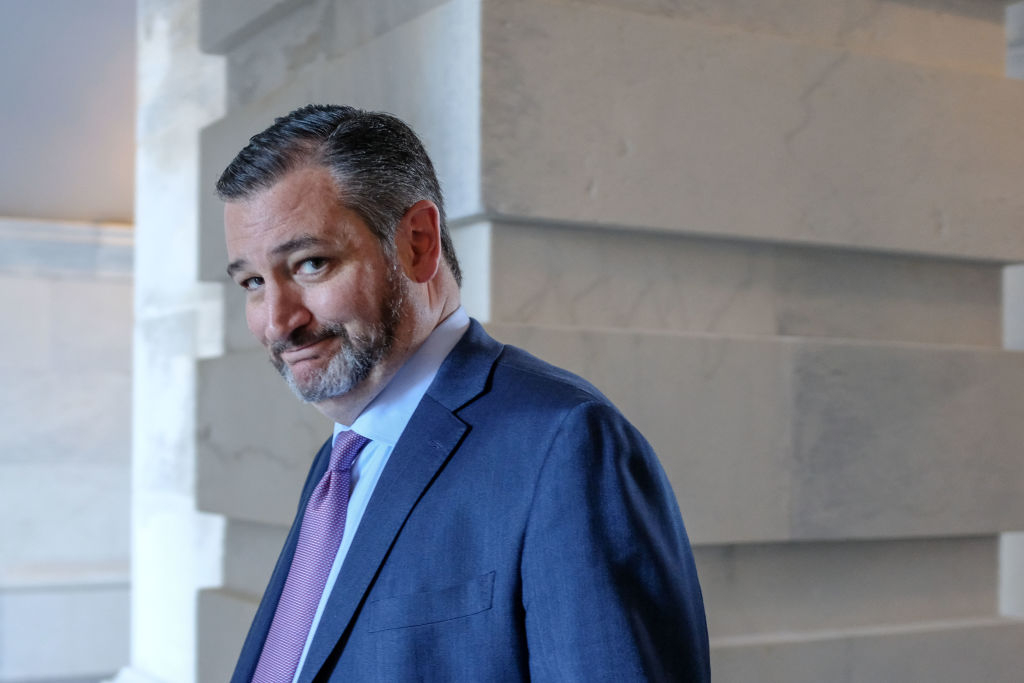
This AI policy, which originates from the Senate Commerce Committee and Chairman Ted Cruz (R-Texas), is a change from the House version of the bill.
The House-passed legislation had a 10-year ban on any current or future AI regulations by the states. The Senate’s addition included a proposal to deny states federal funding for broadband projects if they regulate AI.
“These provisions fulfill the mandate given to President Trump and Congressional Republicans by the voters: to unleash America’s full economic potential and keep her safe from enemies,” Cruz said on June 19, several days after the text was unveiled.
Opposition to the Measure
A group of Democratic senators from the Senate Committee on Commerce, Science, and Transportation voiced objection to the bill’s AI policy in a June 11 letter to Cruz.
In their letter, the senators also took issue with the AI moratorium in the commerce title of the bill, saying, “The AI moratorium proposal tramples states’ rights and holds the $42 billion BEAD program hostage, further delaying the broadband Americans desperately need.”
The committee Democrats also cited bipartisan concern after a House Freedom Caucus memo was sent to Senate Republicans, stating that, “The federal government should not prevent states from being able to regulate artificial intelligence for the next 10 years, something Congress is still actively investigating and does not fully understand the implications.”
Even some Republicans stood individually against the measure backed by Cruz and others.
Rep. Marjorie Taylor Greene (R-Ga.) spoke out after voting for the bill in the House, saying she was unaware of the policy details and that the bill “strips states of the right to make laws or regulate AI for 10 years.”
“I am adamantly OPPOSED to this and it is a violation of state rights and I would have voted NO if I had known this was in there,” Greene wrote in a post on social media platform X. “We have no idea what AI will be capable of in the next 10 years and giving it free rein and tying states hands is potentially dangerous. … We should be reducing federal power and preserving state power. Not the other way around.”
Cruz Promises to Pass the BBB
In a June 13 interview about the president-backed One Big Beautiful Bill, Cruz vowed, “We’re going to get this done … and the reason we’re going to is because we have to.
“[The Bill is] the main vehicle to carry out the mandate from the election. It’s the main vehicle to secure the border, to rebuild the military, to unleash jobs and small businesses in America to unleash American energy, and so we will get it done. The Senate is in the process of changing it, and my hope is the Senate will make it better.”
The lawmaker referenced other things the bill could accomplish, including $2 trillion in federal savings over a decade, by cutting spending. Cruz offered the example of “removing illegal aliens from federal government welfare benefits,” saying it would save “hundreds of billions of dollars,” as would work requirements for federal benefits.
The Senate’s version of the bill also includes legislation that bans tax on tips and offers a federal tax credit incentive for school choice programs, as well as a new Invest America program, which provides $1,000 for every newborn child and will be invested for them in a so-called “Trump Account.”
 Friends Read Free
Copy
Facebook
Tweet
Friends Read Free
Copy
Facebook
Tweet