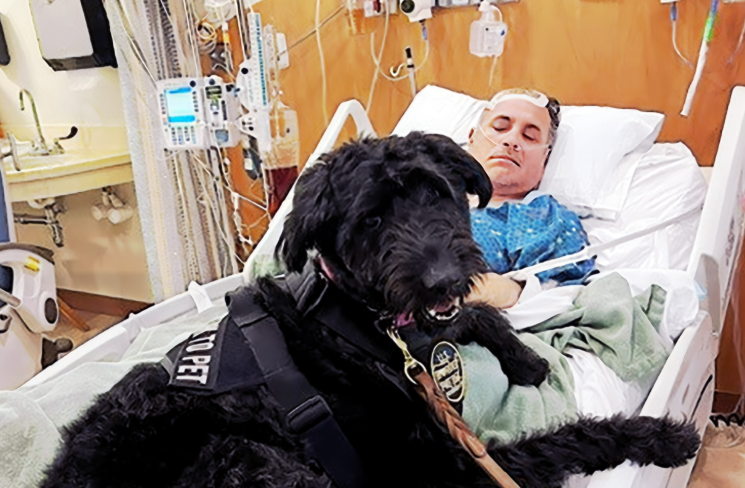

U.S. Customs and Border Protection (CBP) initiated its first rescue dog as a Critical Incident Response Canine.
Chloe, a former rescue dog from the streets of Deming, New Mexico, got a second chance and a new lease on life, according to a Sept. 16 CBP announcement about her placement.
The pup, a 2½-year-old, large schnauzer-poodle mix, was sworn in by Stephen D. Crump, director of the Border Patrol Canine Academy, on May 15 and was the first dog to graduate from the academy in El Paso, Texas, as a Critical Incident Response Canine.
The critical incident response canine handler course is a five-week certification program held at the academy. Dogs learn basic obedience, critical incident response training, and deployment preparation, all done with their handler.
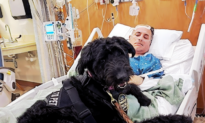
Chloe was assigned to U.S. Border Patrol Agent Miguel Carrillo at the Baton Rouge, Louisiana, station, and the pair have been deployed across the Gulf Coast. According to the federal agency, Chloe is “making a real-life impact.”
“Chloe’s story reflects the very best of service, resilience, and compassion,” said Adam Calderon, acting chief patrol agent, U.S. Border Patrol New Orleans Sector.
“From being rescued in New Mexico to becoming the first rescue dog to graduate from the U.S. Border Patrol Canine Academy as a Critical Incident Response Canine, Chloe represents the power of second chances.”
The CBP Support Canine Program was renamed the Critical Incident Response Canine Program following the May 24, 2022, shooting at Robb Elementary School in Uvalde, Texas, where 21 people were killed.
Then U.S. Border Patrol Chief Raul Ortiz discovered in the aftermath that individuals close to such tragedies needed additional support. The program supports employees of the department exposed to trauma.
Late in 2025, CBP tasked trainers with looking for shelter dogs to be used in the program.
“The mission of the Critical Incident Response Canine Program is to help reduce stress, anxiety and depression, lessen the effects of trauma after critical incidents, improve staff morale, and assist employees and families as they process grief and loss,” CBP’s website says.
Any Critical Incident Response Canine can be deployed to provide support to CBP agents, as well as staff and families experiencing crisis events.
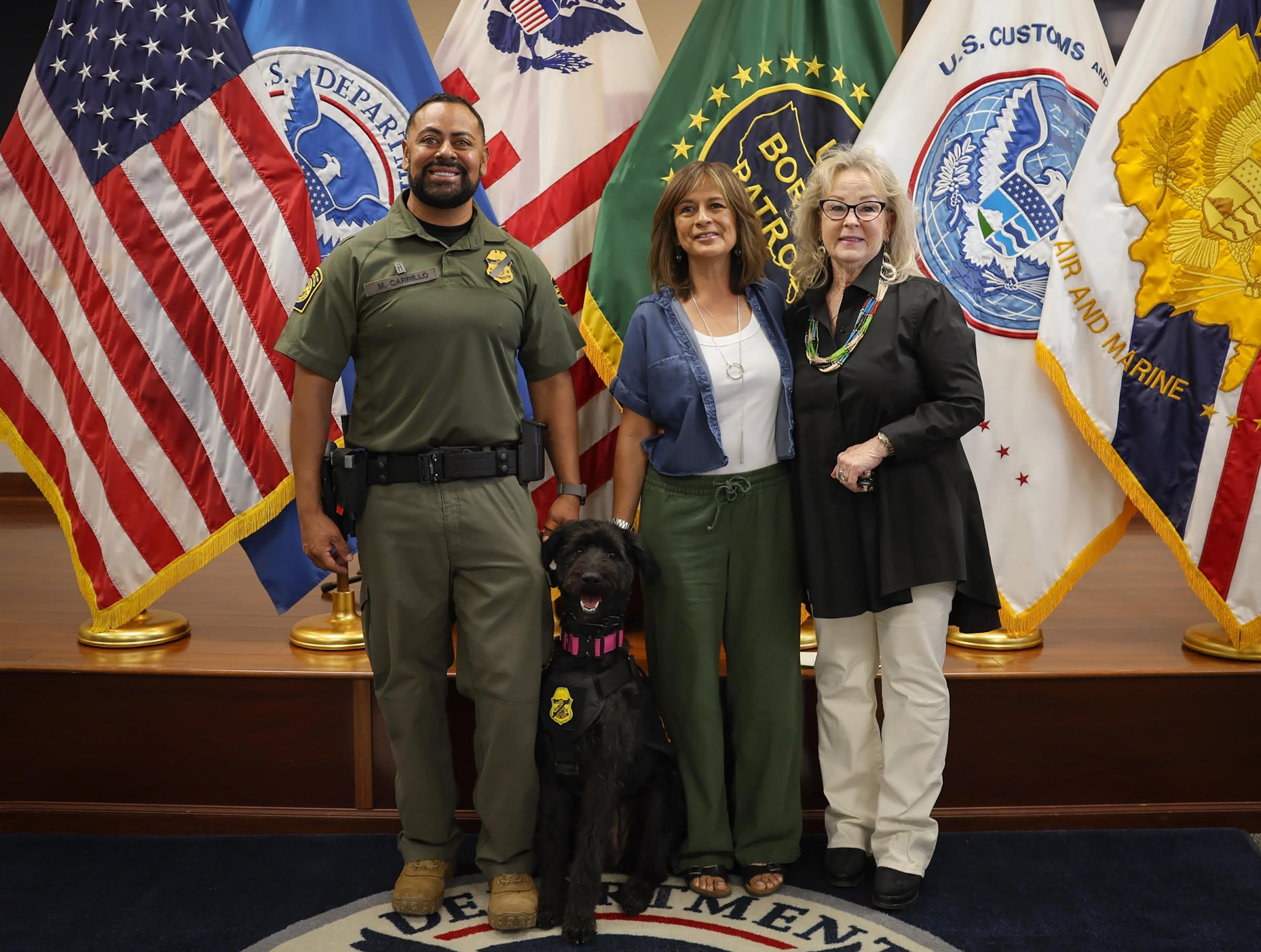 From left, Border Patrol Agent Miguel Carrillo, Chloe, and Lety Medrano and Loretta Hyde of the Animal Rescue League of El Paso at Chloe’s swearing-in ceremony at the Border Patrol Canine Academy in El Paso, Texas, on May 15, 2026. (Courtesy of CBP)
Her handler tells Chloe to “go say hi,” prompting her to engage with those in need.
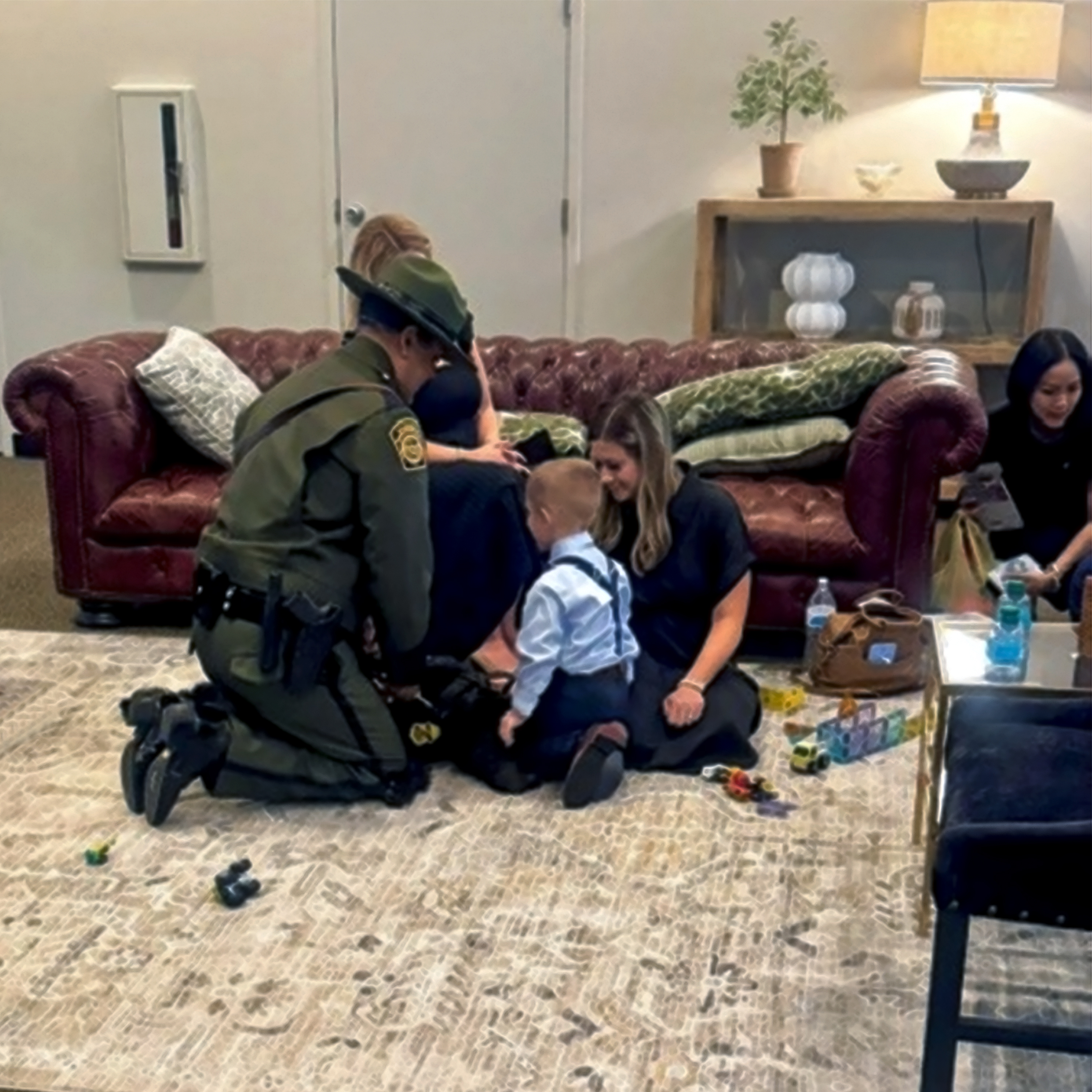 Chloe and a Border Patrol agent support the family at the funeral for Deputy U.S. Marshal Drew Hanson on July 18, 2026. Hanson was shot and killed in the line of duty on July 13. (Courtesy of CBP)
This was before the Animal Rescue League of El Paso pulled her out and brought her to its facility in Texas on Feb. 10. The shelter founder, Loretta Hyde, recognized the potential in Chloe, and she was eventually selected by CBP to take part in their course.
“Chloe’s journey is a powerful reminder that with patience, purpose and a second chance, extraordinary things are possible,” said Carrillo. “She is serving those who serve our nation, and her work is already making a meaningful difference.”
 Friends Read Free
Copy
Facebook
Tweet
Friends Read Free
Copy
Facebook
Tweet